
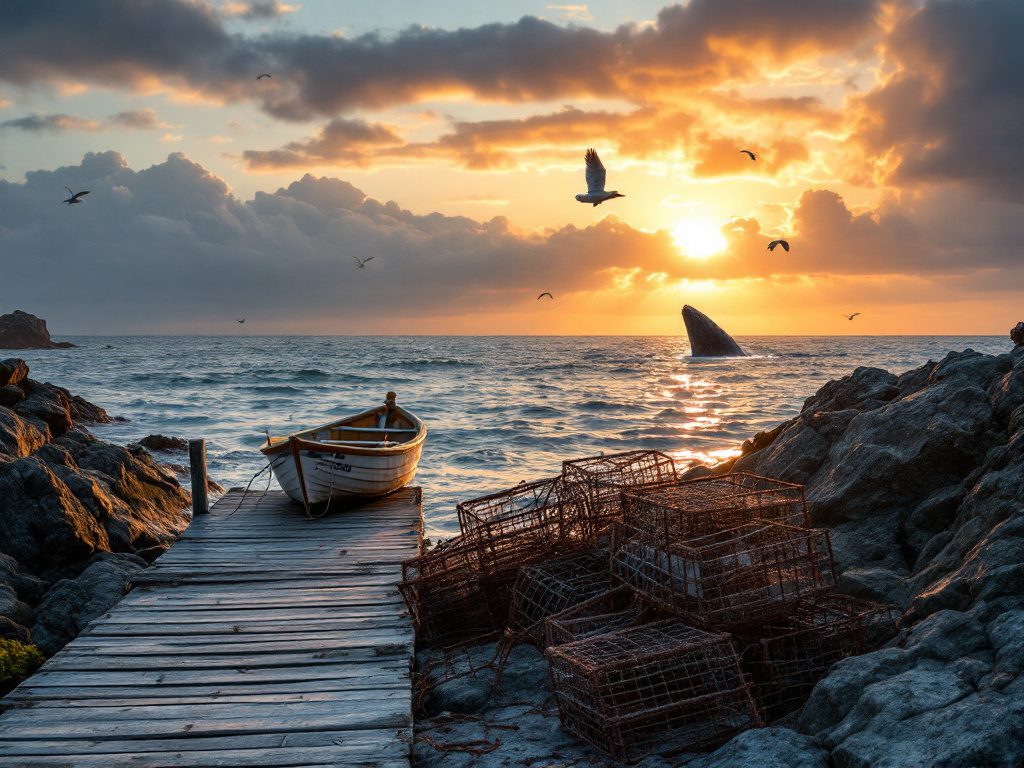
Imagine a whale dragging a tangled mess of ropes and buoys, struggling to swim freely or feed effectively off the California coastline. Unfortunately, this isn’t a fictional scenario—it’s exactly what marine experts have witnessed recently, leading California authorities to close commercial Dungeness crab fishing along the state’s southern coastline starting April 15.
A Critical Decision Aimed at Preservation
The decision was driven by observations of a humpback whale in Monterey Bay entangled in fishing gear, carrying the weight of six buoys—a distressing sight that has become sadly indicative of a broader environmental issue. Dungeness crab fishing gear poses significant dangers, creating traps that whales can inadvertently swim into, with heartbreaking consequences. This whale has been suffering since October, prompting environmentalists and wildlife authorities to advocate urgently for change.
California’s Department of Fish and Wildlife Director Charlton H. Bonham declared commercial fishing closures effective for Fishing Zones 4, 5, and 6, spanning from Pigeon Point down to the U.S.-Mexico border. Additionally, recreational crab trap restrictions are to be enforced in Zone 4, from Pigeon Point to Lopez Point in Monterey County. This move underscores the urgent efforts underway to protect marine life, acknowledging the difficult balance between ecological preservation and the livelihoods dependent on crabbing.
Implications for California’s Fishermen
For crabbers along California’s coast, adapting to these closures has been challenging. Dick Ogg, a respected crab fisherman out of Bodega Bay, termed the allowance of limited fishing northward of Pigeon Point a “great compromise”, recognizing that fully closing the fishing zones would devastate the local economy. Crab fishermen have frequently expressed the challenges they face adapting to constraints set out by ecological mandates, yet there remains a collective understanding of the importance of protecting these magnificent marine mammals.
“Now is the time to test and use pop-up gear that lets fishers stay on the water while still protecting whales,” emphasized Ben Grundy, oceans campaigner at the Center for Biological Diversity.
Grundy’s statement underscores a critical debate within California’s fishing community: implementing safer, sustainable fishing methods. These innovative pop-up gear systems employ far fewer ropes, significantly reducing the risk of whale entanglement. However, transitioning to these technologies will require investment, education, and commitment from government, industry, and environmental bodies collaboratively.
Addressing the Bigger Ecological Picture
Beyond the immediate threat to whales, this situation reveals growing concerns about marine ecosystem health. Marine biologists have noted that changing ocean temperature patterns, intensified by climate change, are affecting whale migration routes. These magnificent mammals are returning to forage closer and closer to the coast, increasing their interactions with fishing gears.
Repeated early seasonal closures, now becoming routine over the past six or more years, are not merely incident responses; they reflect broader ecological shifts. Marine ecosystems function delicately, balancing countless interconnected species. Disrupting one aspect of this network can trigger profound ecological consequences, potentially damaging California’s rich biodiversity in ways yet unforeseen.
Climate experts repeatedly underscore that addressing global warming is imperative not only for species protection but also for maintaining California’s rich marine resources. Whale entanglement is just one symptom of deeper ecological disruptions.
Centers for Biological Diversity experts advocate for broader, significant policy changes and technological improvements that will allow fishermen to continue earning livelihoods sustainably—without risking extinction crises among California’s marine species.
Ultimately, the closure of the crab fishing zones this April must be viewed as more than an immediate response to a single, distressing entanglement. Instead, it serves as a potent reminder of our collective responsibility to preserve and protect marine life. Achieving this requires not just temporary bans but more in-depth, systemic transformations in how we harvest the ocean’s bounty while safeguarding its magnificent inhabitants. Can California find a way to effectively navigate these turbulent waters? The answer may lie in a commitment to innovation and collective ecological stewardship—a path as clear as the waters we hope to preserve.
