
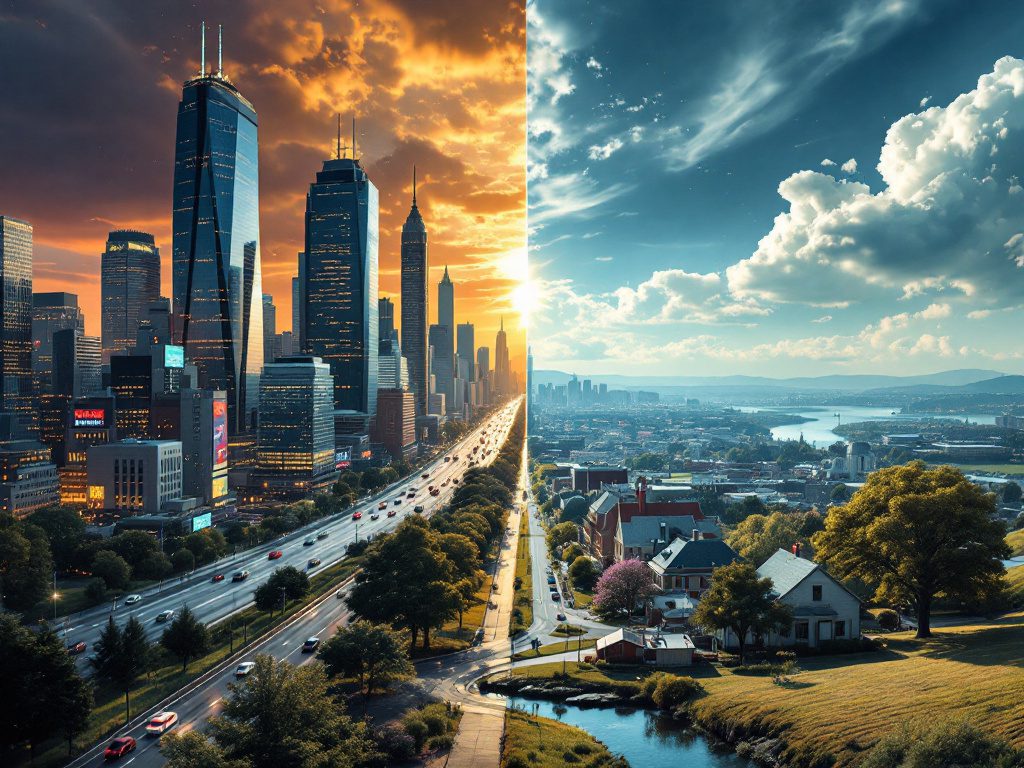
The Carnegie Fellowship: Investing in Solutions for a Divided Nation
A nation increasingly frayed by partisanship is about to undergo deeper scrutiny, thanks to an unprecedented cohort of scholars—each determined to unravel the roots and ramifications of America’s political polarization. The 2025 Andrew Carnegie Fellows Program has named 26 new fellows drawn from a staggering pool of more than 300 nominees, bestowing each with a $200,000 research grant that signals both prestige and urgent responsibility. As anxiety around bitter division intensifies across every corner of public life, these fellowships arm leading historians, political scientists, and sociologists with resources and public platforms to expose and address the machinery fueling the nation’s divides.
The stakes are hardly theoretical. According to Pew Research Center, nearly 80% of Americans today say the country is more divided than they can ever remember—a figure that has steadily climbed over the past decade. This is more than a talking point on cable news; it’s an everyday reality felt in voting booths, family dinner tables, and digital town squares, permeating how issues from public health to climate policy are debated and decided. Carnegie’s 2025 fellows, many of whom have been sounding alarms for years, now undertake a bold challenge: to chart how we arrived at this political impasse, and to imagine exits from it.
How can $18 million fuel the search for answers? For these scholars, the funding means deeper investigations, larger interdisciplinary teams, robust data sets, and a public storytelling mandate that reaches far beyond university walls. But their work also comes with risks—the challenges of studying weaponized misinformation, election anxiety, and institutional distrust are not for the faint-hearted.
Meet the 2025 Fellows: Diverse Projects with a Common Purpose
This year’s fellowship class, representing institutions from the Midwest to the West Coast, focuses intently on the crosscurrents of polarization, democracy, and civic resilience. Among the most notable is Dr. Kathryn Cramer Brownell of Purdue University, a historian who directs the Center for American Political History and Technology. Brownell’s upcoming book project, “The Enemy Makers,” seeks to expose how consultants, partisan media, and tabloid entertainment industries, particularly since the 1980s, have actively profited from—and exacerbated—political discord. Her research, supported not only by the Carnegie Corporation but also campus-level initiatives at Purdue, will include the development of innovative curricula and “digital navigation tools” to help Americans sift fact from fiction. Brownell’s approach underscores one of the fellowship’s central tenets: communicating research widely beyond academia.
In Ohio, University of Cincinnati political scientist David Niven is breaking new ground as both the first UC faculty member and the only Big 12 institution representative to earn the Carnegie distinction this year. Niven will probe the American polling system to assess how yawning disparities in polling environments shape citizen participation and public trust. Citing years of research, he warns that unequal polling conditions—from long lines in minority precincts to last-minute location shifts—don’t just represent inconvenience, but strike at the heart of democratic fairness.
“If we want to rebuild trust in our elections, we have to confront the barriers—both visible and invisible—that tilt the scales against equal participation. The right to vote remains curiously fragile in America.” — David Niven
Out West, UC Irvine sociologist David S. Meyer trains his lens on the role of social movements amid polarization. Meyer, whose work has garnered support from the National Science Foundation and other major research bodies, emphasizes that polarization is a double-edged sword: while it can entrench gridlock and tribalism, it also catalyzes advocacy, energizing communities that demand policy changes long denied. His current research asks whether movements born of division can ultimately be harnessed for progressive reform—or if they inadvertently deepen our schisms. Meyer’s previous analyses of movements such as Black Lives Matter and Occupy Wall Street provide cautionary tales and templates alike.
Michigan State’s Dr. Matt Grossmann will use the fellowship to dissect bipartisan legislative progress in a hyper-partisan age. His work, “Policymaking for Realists: Bipartisan Progress in a Polarized Age,” insists that even in these contentious times, the machinery of democracy can churn out compromise and progress—when parties are willing to stay at the table. Grossmann’s work will explore those rare instances of cross-aisle collaboration, hoping to extract replicable lessons for policymakers and citizens alike.
The Broader Context: Why This Research Matters Now
These ambitious projects arrive at a crossroads for American democracy. Republican-led voter restrictions, partisan gerrymandering, and the amplification of disinformation via right-wing media have, by design, sowed distrust and dampened turnout among marginalized communities. The Trump era didn’t invent polarization, but it threw gasoline on a fire already lit by decades of media deregulation, campaign financing changes, and shifting party coalitions. As Harvard historian Jill Lepore has written, “Every era of American history comes with its own brand of conflict, but weaponized division as a political tool is a relatively recent—and deeply corrosive—phenomenon.”
Unpacking these patterns isn’t just academic nitpicking. It’s about survival. As Brownell’s research makes plain, the industries that profit from outrage are here to stay—unless voters and leaders can be empowered with the kind of curriculum and communication tools her team aims to provide. Grossmann’s hope for renewed bipartisanship rests on confronting, not just ignoring, the mechanisms of gridlock; Niven’s laser focus on polling environments targets a system that, by some estimates, disenfranchises millions of voters every cycle.
Beyond that, the fellowship’s emphasis on sharing findings with the general public signals a shift away from ivory tower isolation and toward a more vital, democratized scholarship. These scholars recognize their role not merely as observers, but as participants fighting—through facts and honest narrative—for a more equitable, informed, and resilient republic.
Do these efforts guarantee a swift reversal of polarization’s tide? Of course not. History suggests progress isn’t linear. Yet by investing in understanding—rather than stoking—America’s divides, the Carnegie Fellows stand as a rebuke to apathy and cynicism. Their work is a reminder that the future of democracy depends on the courage to confront uncomfortable truths—and the collective will to steer toward something better.
