
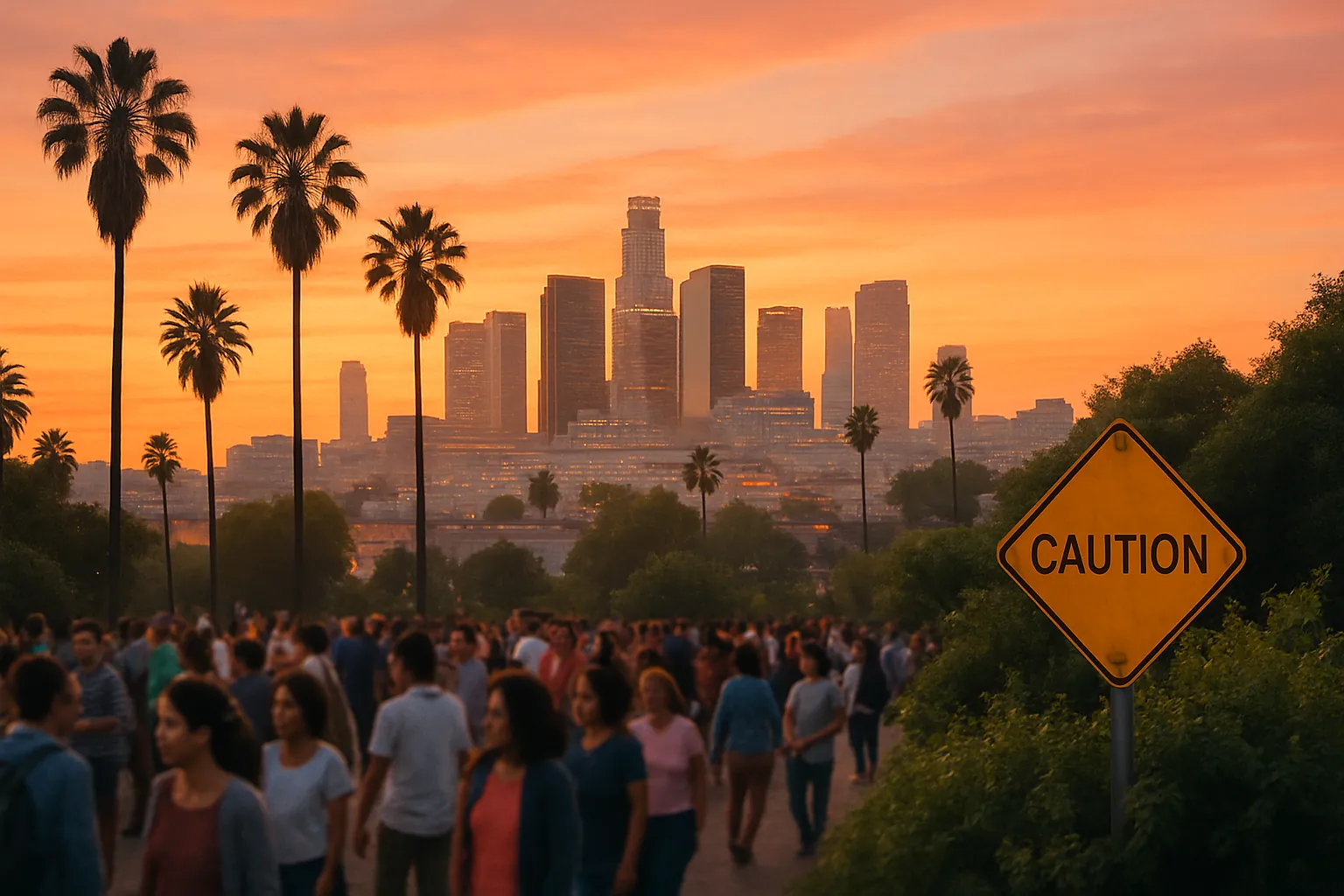
Escalating Unrest Puts Los Angeles on Global Radars
Flames illuminated the night sky over downtown Los Angeles as crowds clashed with law enforcement, and the world watched—anxiously and with not a small amount of disbelief. Streets that are usually filled with hopeful immigrants and cultural celebrations have become battlegrounds in the latest standoff over federal immigration raids. The turning point? A White House memorandum, signed by President Donald Trump, deploying 2,000 National Guard troops against the desires of local leaders, intensifying an already volatile atmosphere. This moment, with burning cars, mass arrests, and anguished cries for justice, has caught international attention—and foreign governments are now speaking out.
The Chinese consulate in Los Angeles moved swiftly, warning its nationals to stay away from protest zones, avoid going out at night, and double down on safety measures. These alerts are not uncommon during major unrest, but their urgency signals a sharp concern: citizens abroad could find themselves swept up in chaos simply for being in the wrong place at the wrong time. The Hong Kong Special Administrative Region echoed this, updating its Outbound Travel Alerts and opening hotline services for anxious families back home. What began as another heated debate over immigration has now become a diplomatic embarrassment, a security dilemma, and a reminder of just how intertwined America’s domestic and international reputations truly are.
Is America’s legacy as a safe harbor at risk? Critics are already framing these warnings from Beijing and Hong Kong as a devastating challenge to the myth of the United States as a refuge—a narrative that resonates particularly strongly among America’s immigrant communities.
Immigration, Protest, and a Growing Culture of Fear
President Trump’s decision to unleash the National Guard, aiming to restore “very strong law and order,” stands as a flashpoint in the ever-widening gulf between federal edicts and local governance. City officials in Los Angeles and across California denounced the intervention as both “purposefully inflammatory” and counterproductive, noting that the presence of fatigued, armed soldiers on city streets recalls some of the nation’s darkest chapters—Watts in 1965, Rodney King in 1992, and the summer of 2020.
Recent days saw at least 44 arrests in Los Angeles and 60 in San Francisco, including juveniles, as police deployed tear gas and flash grenades to disperse demonstrators. National Guard troops reportedly faced off against groups of over 200 protestors, and scenes of rioting and looting—burning vehicles, shattered storefronts—were broadcast around the world. For many observers, such imagery throws the American promise of inclusivity and order into stark relief against harsh realities. Harvard sociologist Dr. Emily Rivera notes, “When the U.S. government deploys military force on its own citizens, it’s not just a matter of public safety—it signals a fundamental breakdown in trust and democratic norms.”
These domestic consequences are acutely felt by immigrant families now caught in the crossfire—both physically and politically. The Chinese consulate’s plea to avoid trouble spots, and its advice to call 911 and request Chinese-language assistance if needed, reveals a sobering truth: American streets, for some, are no longer sanctuaries but hazards. The very communities that built Los Angeles now find themselves marginalized—first by punitive immigration policies, then by a law enforcement response that sees protest as threat, not as the exercise of constitutional rights.
“The deployment of armed troops against peaceful protestors marks the line between democracy and repression. Once that line is crossed, trust in the government is hard to regain.”
— Dr. Emily Rivera, Harvard University
Trust, so hard-won by generations of newcomers, can unravel in a matter of days. That unraveling—the feeling of being targeted for who you are, where you were born, or what language you speak—has lasting repercussions not just for individuals, but for the nation as a whole.
Larger Lessons: Policy, Perception, and the Price of Division
History instructs us that when nations respond to protest with escalation and force, they risk not only local backlash but also global jeers. The United States, for decades considered the world’s leading advocate for freedom and rights, is now the subject of foreign travel advisories—the very same warnings American embassies routinely issue about political turmoil in other, supposedly less stable countries. As Chinese and Hong Kong authorities advise their citizens to avoid Los Angeles, Americans should pause to reflect on the bitter irony: today, it’s others who fear for their safety on U.S. soil.
Expert commentary points to the damaging ripple effects. Economist Jane Chu of the Brookings Institution emphasizes, “International students and investors, a bedrock of our cultural and economic strength, are watching closely. Their willingness to come, work, and innovate here depends on the image of America as a safe and open society.” Divisive policies that militarize immigration enforcement not only harm families, but also threaten the city’s—and the nation’s—standing in a fiercely competitive global economy.
If America is to reclaim its reputation as a beacon of hope and progress, it must look to its better angels. That means pursuing reforms rooted in empathy, justice, and the recognition that protest is not the disease, but the symptom of deeper grievances. Local leaders and community organizers—those dismissed in inflammatory tweets—steadilywork to repair the social fabric frayed by crackdowns. Their work, often ignored in the noise of national politics, is essential to healing the rifts that policies of division only deepen.
Beyond that, the best response is not more troops or more tear gas, but more listening. A functioning, just society grows from dissent as much as from order. Ignoring those truths, as recent events in Los Angeles underscore, risks not just global disparagement but internal decay. The warnings from across the Pacific aren’t just about safety—they’re an urgent signal that America’s house is, once again, dangerously divided.
