
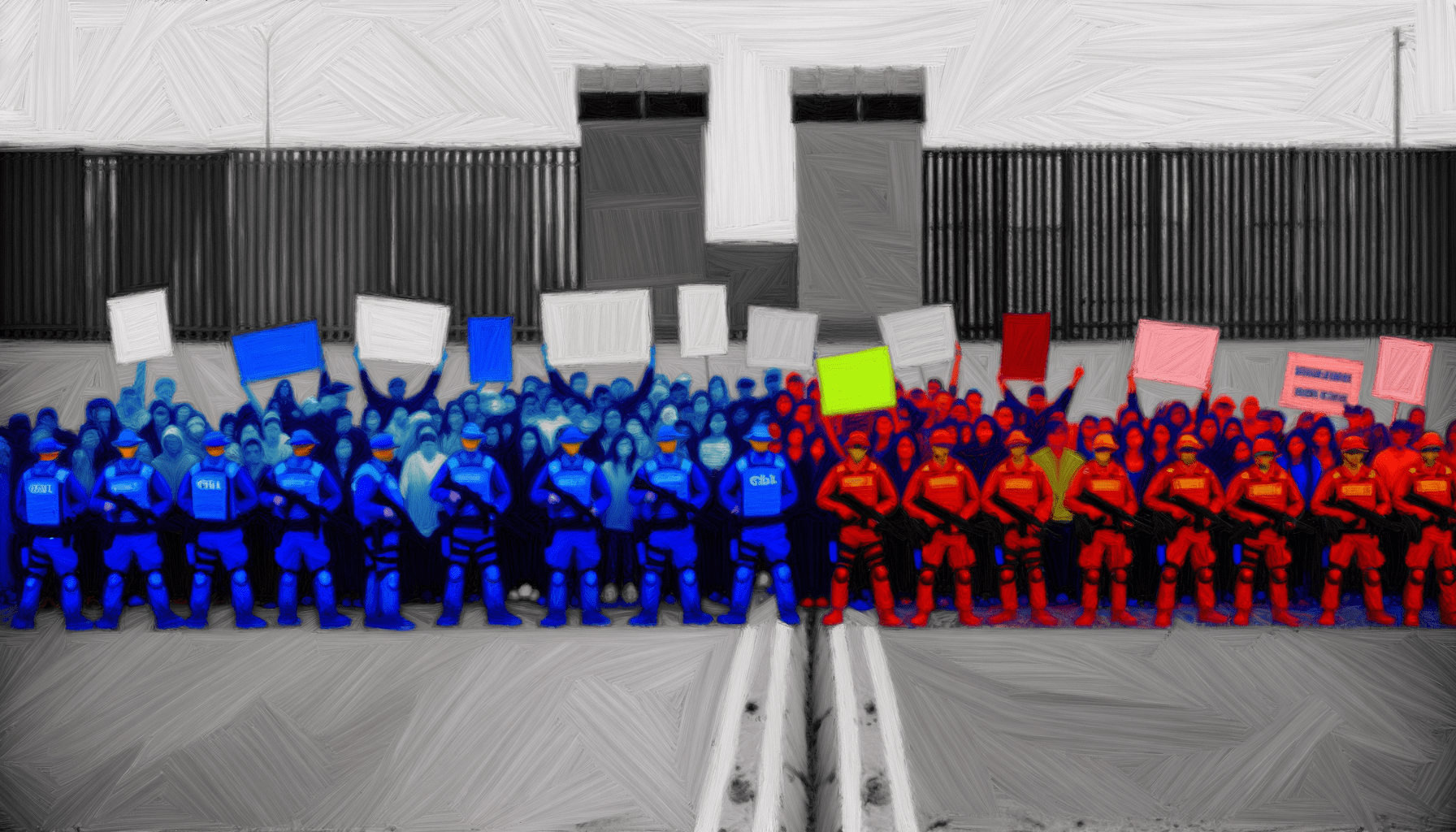
In an alarming demonstration of conservative policies intersecting academic freedom, the recent targeting of pro-Palestinian student activists at Columbia University is raising troubling questions about the state of free speech, immigration rights, and ideological persecution in contemporary America. Two recent cases stand out, underscoring a disturbing trend where immigration enforcement appears cutting perilously close to political suppression.
The Cases at the Core
In March this year, the U.S. Homeland Security took into custody a second participant involved in pro-Palestinian activism at Columbia, Leqaa Kordia, for overstaying her student visa. Kordia, originally from the West Bank, first arrived in the U.S. on a tourist visa in 2016 and later secured a student visa. However, her visa was cancelled twice: first in 2021 due to claimed lack of attendance and then again irreversibly in 2022. This situation has become a lightning rod, illustrating how federal immigration policy can be leveraged against politically outspoken students.
This follows closely on the heels of another prominent case involving Ranjani Srinivasan, a doctoral student from India, who recently faced her visa cancellation. The justification? Homeland Security Secretary Kristi Noem shockingly labeled her as a “terrorist sympathizer,” a disturbing and oversimplified narrative indicative of the government’s current stance towards political speech associated with pro-Palestinian movements. Srinivasan—whose research on land-labor relations in India and involvement with environmental advocacy organizations points to a serious academic profession—chose self-deportation through the CBP Home App following the revocation of her visa, revealing frightening implications for international student advocacy and academic freedom.
Policy or Persecution?
Secretary Noem’s blunt assertion, “When you advocate for violence and terrorism that privilege should be revoked, and you should not be in this country,” not only unjustly accuses individuals without transparent proof but raises a broader specter of ideological targeting. The language and swift action suggest a troubling conflation between advocacy for humanitarian causes and direct support of terrorism, ignoring nuances critical in both immigration and foreign policy debates.
Moreover, the very adoption of technologies like the CBP Home App for self-deportation, originally meant to ease processes for asylum seekers, reveals a potentially punitive retooling. By making use of these platforms to indirectly pressure political dissidents to depart voluntarily, the federal government effectively circumvents due process and scrutiny.
A Chilling Effect and Academic Reaction
These high-profile cases have undeniably shaken the student community. More than 200 students gathered to protest outside Columbia’s campus, condemning university administration actions and expressing solidarity with those impacted. This collective mobilization spotlights mounting tensions between institutional neutrality and responsibility towards protecting students’ rights and safety.
While Columbia University remains a focal point for national debates on free speech, antisemitism, and the Israeli-Palestinian conflict, these enforcement actions send an intimidating and clear message. They starkly demonstrate how conservative immigration policies can quickly turn from law enforcement procedures into political cudgels.
Looking Forward: The Importance of Inclusion and Equity
Ensuring that campuses remain spaces for robust dialogue must become a rallying cause, strengthened by progressive values of inclusion, diversity, and collective well-being. As liberal audiences, we must scrutinize policies selectively wielded against voices of dissent, acknowledging our academic institutions as sanctuaries for exchange of ideas rather than policing grounds for ideological conformity.
Immigrant students, in particular, face multiple vulnerabilities abroad. Coupling this precariousness with targeted surveillance and ideological profiling creates a chilling forecast for the diversity of thought. Progressive advocates rightly emphasize alternatives: inclusive dialogues fostering mutual understanding and addressing the root causes of international conflicts without stifling student voices.
The Moral Urgency of Action
To ensure a genuinely equitable society, immigration policies must move away from broad-brush accusations linked solely with activism. The unjustified labels of “terrorists” or “sympathizers” dangerously blur lines between activism and criminality, costing individuals their academic careers, personal reputations, and immediate livelihoods.
Thus, the Columbia cases signal not merely isolated incidents but part of a troubling conservative push broadly designed to stifle pro-Palestinian sentiment and leverage immigration legislation to punish outspoken activism. Liberals must amplify calls for transparency, accountability, and fairness in these procedures, framing immigration enforcement within the humane, inclusive ethos needed for a healthy democracy. Moreover, attention and advocacy must persist, shaping an immigration system capable of discerning between genuine threats and legitimate political discourse, ensuring no one’s civil liberties become collateral damage in ideological conflicts.
