
When Wardrobe Meets World Affairs: Cynthia Nixon at the Center
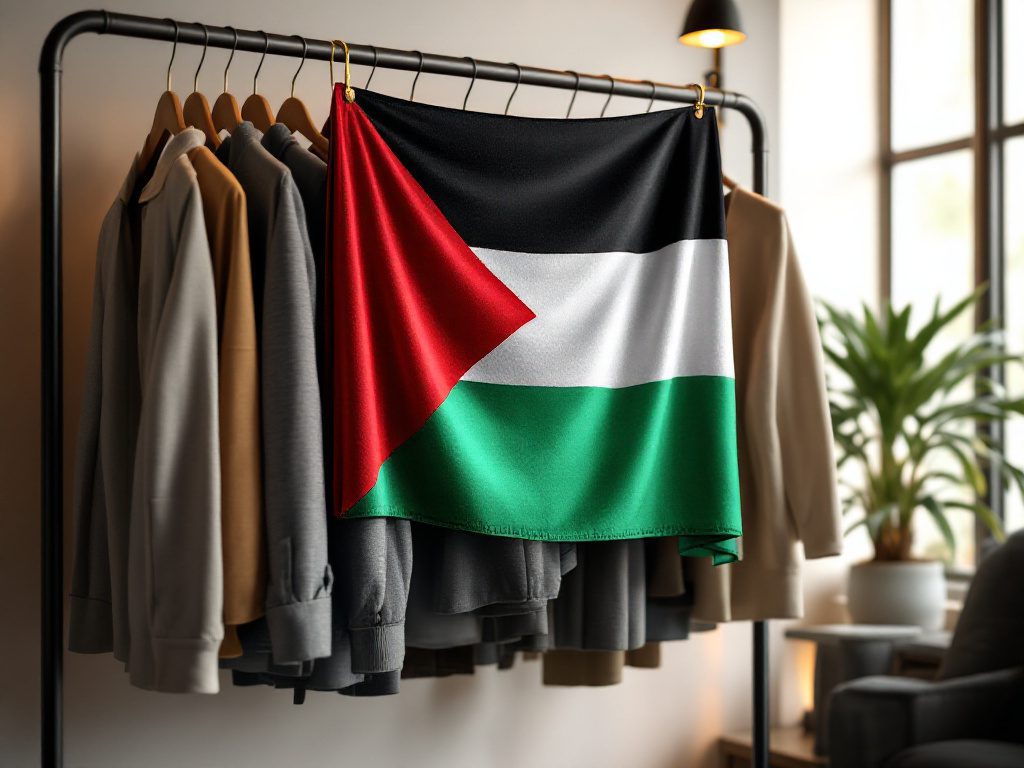
In an age when a shirt can flash across screens and ignite fierce arguments, the line between fashion and activism grows impossibly thin. Cynthia Nixon, a familiar face from “Sex and the City” and a dedicated activist, catapulted into the cultural crosshairs this week after wearing a color-blocked, red-green-black-and-white Calvin Klein top—strikingly similar to the Palestinian flag—in the trailer for the third season of HBO’s “And Just Like That…” Almost instantly, social media became a crucible of accusation, praise, and heated debate. Nixon’s outfit spurred headlines questioning her motives, dissecting her personal history, and reigniting longstanding arguments over the place of political messaging in pop culture.
Her reps told Newsweek there was no intentional statement—”pure coincidence,” they insisted, a byproduct of a wardrobe choice rather than a carefully curated symbol. Yet, for many viewers, symbolism cannot be so easily brushed aside in our hypersensitive media ecosystem. Was it just an eye-catching shirt, or had Nixon deliberately crossed the invisible boundary separating art from advocacy?
Beyond that, Nixon is no stranger to activism. Her runs for public office and unmistakable record of championing issues from LGBTQ+ rights to education reform have proven time and again she is not afraid to challenge power. According to The New York Times, Nixon joined pro-ceasefire protests and has regularly amplified calls for justice in Gaza. Her consistent willingness to take risks in public life sets her apart from Hollywood’s quieter crowd. Still, even for the most outspoken, what gets worn onscreen—or off—can become political lightning in a bottle.
Controversy Erupts: Social Media, Identity, and Double Standards
The wardrobe uproar arrived at a time when the Israel-Gaza conflict saturates headlines and Hollywood is increasingly expected to pick sides, or at least, not appear indifferent. Critics on platforms like X (formerly Twitter) lambasted Nixon, accusing her of hypocrisy: as a queer woman married to Christine Marinoni, why, they demanded, would she align herself with Palestinian symbolism when Hamas, the militant group governing Gaza, is widely condemned for persecuting LGBTQ+ people?
Others echoed a familiar refrain that progressive celebrities pick and choose which injustices to spotlight, sometimes, in their detractors’ eyes, at the risk of inconsistency or, worse, selective blindness. Nixon’s past comments on civilian casualties in Gaza and her open letters backing international investigations into alleged war crimes fed these claims of partisanship. She faced accusations—often unfounded, sometimes grotesquely exaggerated—of minimizing the suffering of Israeli victims and glossing over Hamas’s brutality toward its own citizens and queer Palestinians. As Harvard political scientist Yascha Mounk told NPR, “Public figures who engage the issues of the Middle East inevitably become lightning rods; any perceived contradiction in their advocacy is amplified by both sides of the conflict.”
“In today’s hyperpartisan climate, even a shirt becomes a battleground for narratives—often more about our own anxieties than the fabric itself.”
Across progressive circles, though, Nixon’s gesture—intentional or not—sparked applause for refusing to shy away from divisive issues. Social media threads overflowed with thanks, gif tributes, and much-needed reminders that celebrity silence on injustice can become complicity. “For too long, entertainment figures have been all too comfortable staying silent on Gaza. Nixon is at least trying,” argued longtime activist Linda Sarsour on Instagram, while writers in The Nation praised her for spotlighting the cost of the conflict for civilians.
The controversy also lays bare the unforgiving paradox facing LGBTQ+ activists who express solidarity with Palestinian people: support one marginalized group, and you’re accused of betraying another. Yet, as ACLU staff attorney Chase Strangio noted during the uproar over the 2022 World Cup in Qatar, “Demanding ‘purity’ from activists ignores intersectional realities.” Nixon’s actions fall squarely in that contested zone.
The Broader Stakes: When Entertainment Walks the Tightrope
What makes this episode so revealing isn’t just one shirt on one celebrity, but how the incident crystallizes the broader tension in American life: whose pain is visible, whose stories are amplified, and who gets to define the terms of solidarity? The “And Just Like That…” trailer—already a patchwork of identity-driven plotlines, including a nod to the #MeToo movement and LGBTQ+ story arcs—highlights an industry under pressure to both entertain and engage. The very presence of Miranda’s journey as a woman attracted to women and open references to gender non-binarism paints a picture of mainstream TV forever altered by politics and representation, whether networks admit it or not.
Hollywood has rarely, if ever, been a neutral space. During the McCarthy era, actors lost careers for alleged leftist sympathies. When Jane Fonda raised a fist against the Vietnam War, she became a symbol of defiance—and of right-wing ire. Even now, starlets and showrunners know that a bumper sticker, a cameo at a charity gala, or even a brightly colored shirt can topple the line between performance and partisanship.
Is there any way around this? Critics argue that Nixon’s apparent endorsement of Palestinian causes—and liberal Hollywood’s embrace of social justice messaging in general—only fuels division. Yet, supporters retort that to refuse to take a stand is itself a political act—an abdication of responsibility from the people held up as role models, especially to those marginalized in the stories rarely told. As the late writer Toni Morrison insisted, “All good art is political; there’s none that isn’t.” The question then isn’t whether figures like Nixon should make statements, but how—and for whom—they do so.
A closer look reveals how the repercussions stretch beyond wardrobe drama: they touch on who controls the mainstream narrative. Conservative media outlets, quick to condemn what they cast as performative “virtue signaling,” often ignore or minimize the very real injustices celebrities attempt to spotlight. In the process, meaningful debate is lost to culture war theatrics, with little room for honest reckoning over America’s role in global conflicts, or the limits of “acceptable” protest in public life.
If the last week proves anything, it’s that pop culture’s symbols—accidental or otherwise—remain contested territory. As we look to the next controversy, perhaps we’d do well to remember: it’s not just about a shirt. It’s about the kind of world we want to wear out into the open.
