
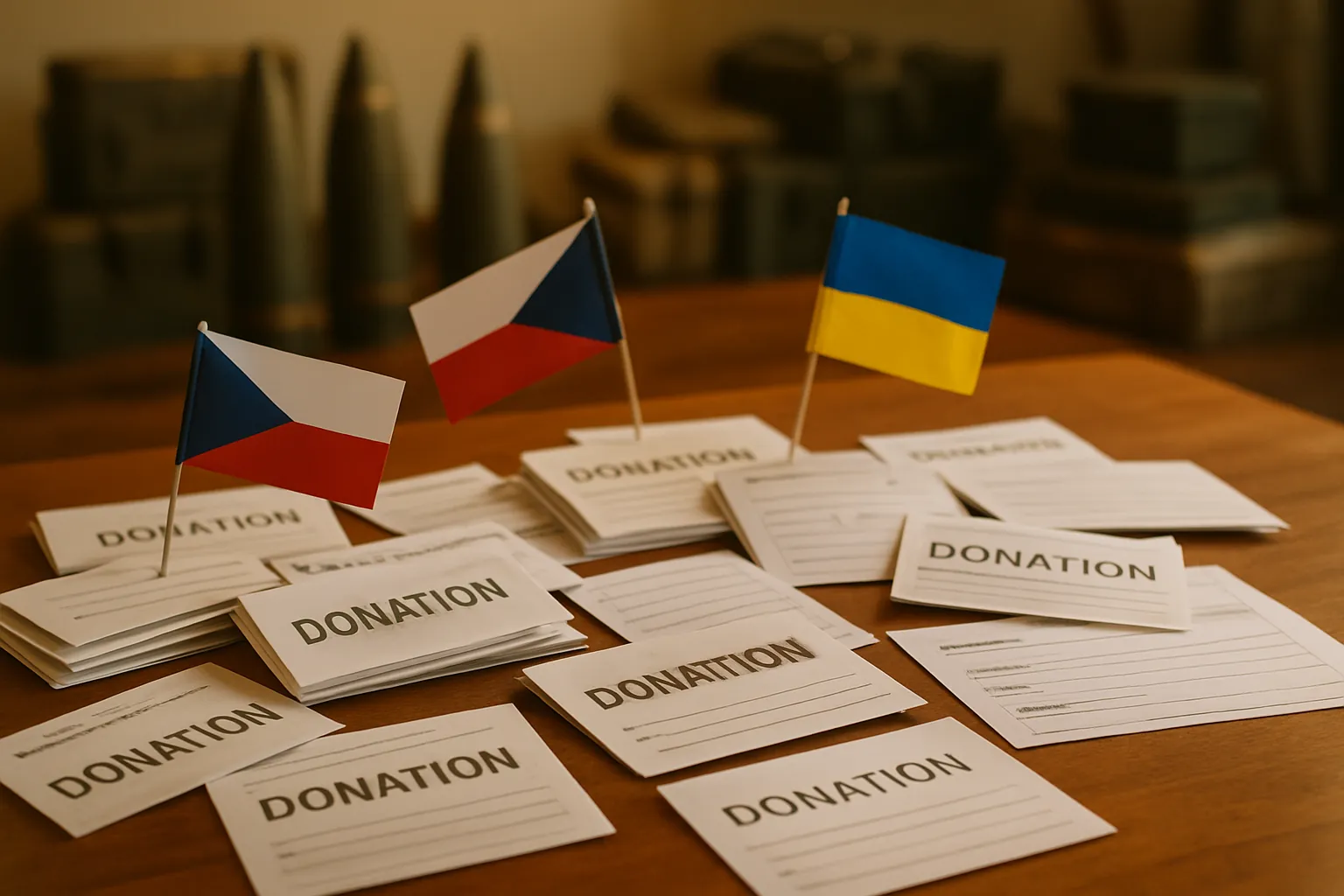
Grassroots Resolve: How Czech Volunteers Outpaced Governments
Every so often, a grassroots campaign emerges that redefines the boundaries of civic participation. The Czech initiative Dárek pro Putina (“A Gift for Putin”)—which swiftly raised €2.4 million to equip Ukraine with six D-30 howitzers—stands as a powerful testament to collective action and moral clarity in the face of authoritarian aggression. While international headlines focus on the geopolitical wrangling between NATO and Moscow, ordinary citizens in Prague, Brno, and beyond have voted with their wallets and their conscience, enabling the rapid procurement of arms that might have lingered for months in bureaucratic limbo.
Contrast this to the inertia seen in larger Western nations, where debates over military aid often devolve into partisan gridlock. In the United States, for instance, each new package for Kyiv faces an uphill slog through Congress marked by conservative complaints about “blank checks” and misplaced worries over American priorities. Yet in the Czech Republic—a Central European nation with vivid memories of both Nazi and Soviet occupation—ordinary people have demonstrated a clarity of purpose some policymakers lack. There is no “war fatigue” here, but rather a steely determination to resist tyranny, past and present.
From WWII Resistance to Modern-Day Solidarity
Each of the six howitzers purchased through the initiative will bear the name of a Czech World War II resistance hero: Josef Mašín of the legendary “Three Kings,” Jan Kubiš and Jozef Gabčík who struck down Reinhard Heydrich, and Karel Kuttelwascher, the celebrated RAF pilot. With these dedications, Czech activists have set out to connect contemporary defense of Ukraine not only to current events, but to the broader historical tapestry of European anti-fascism.
This link is far from symbolic. In an era when revisionist narratives about World War II abound—often propagated by Russian state media—the deliberate act of naming these artillery pieces serves as a rebuke to whitewashed histories and a reminder of the ordinary people who have fought, and continue to fight, for freedom. “The past is prologue,” wrote Shakespeare, but Czechs understand that the past is also a rallying cry.
Military experts, such as Dr. Gustav Gressel from the European Council on Foreign Relations, point out that the D-30’s reliability and 360-degree mobility are well-suited for the rapid, shifting front lines in Ukraine’s eastern territories. Each howitzer boasts a firing range of 15.4 km—a reach that can leap almost 22 km with modern, rocket-assisted projectiles—and can deliver an impressive 10–12 rounds per minute. Quick acquisition and delivery, as demonstrated here, can tip the balance at critical junctures.
“In an age of performative politics and empty promises, the Czech people have chosen action. Their readiness to match democratic values with tangible support for those under attack shames the slow deliberations of far larger—and wealthier—powers.”
Beyond symbolic gestures, this fundraising drive continues a trend of direct, people-powered intervention. The “Gift for Putin” campaign has previously raised millions for RPG-75M anti-tank launchers, FPV drones, and even a UH-60 Black Hawk helicopter, providing vital hardware that reflects both ingenuity and a deep sense of shared purpose. Supporting these efforts, Martin Ondracek of the Ukraine Charitable Foundation stressed that donations surged after President Zelensky’s recent White House press conference—clear evidence that, despite endless pundit talk of “donor fatigue,” public resolve remains strong when stakes are made clear. According to a recent Pew Research Center study, support for Ukraine remains robust in many Central and Eastern European countries, partly due to collective memories of past aggression.
Partisanship, Power, and the Moral Compass of Europe
A closer look reveals serious contrasts in how governments and their electorates respond to war. Where the Czechs act decisively, some Western officials have moved with a timidity tinged by domestic political calculations. Conservative opposition to Ukraine aid—exemplified by figures like Hungary’s Viktor Orbán or segments of the U.S. GOP—often cloaks itself in the rhetoric of fiscal responsibility or “America First” populism, but the real impact is a slower, more fragile defense of democracy itself.
Progressive observers emphasize that democracy’s survival hinges on more than just words; it requires investment, solidarity, and shared sacrifice. Harvard historian Timothy Snyder argues that post-World War II peace in Europe was built not by appeasing aggressors, but by challenging them. The Czech fundraising campaign taps directly into this tradition—a bottom-up demonstration that the people, not the politicians, are often the truest custodians of European values.
Today, several governments—including the U.S. and Germany—have encountered domestic hurdles in providing consistent, rapid aid to Ukraine, from legislative gridlock to wavering public sentiment. Yet, in Prague, the public response has proven both resilient and adaptive, launching parallel campaigns to purchase hundreds of combat-ready drones alongside artillery, such as the November 2024 effort that netted over €500,000 for unmanned aerial vehicles. This agility is in stark contrast to the often laborious processes of state procurement.
Lessons for the West: Rediscovering Civic Power
What should Western democracies learn from their Czech cousins? For one, grassroots fundraising efforts can outpace both government and corporate initiatives in impact and speed when driven by moral urgency and clear communication. The “Gift for Putin” campaign’s success challenges anyone content to watch from the sidelines or remain mired in fatalism. It demonstrates how ordinary citizens can bypass red tape and the talking points that paralyze national legislatures.
War fatigue is not inevitable—it is a choice shaped by leadership, messaging, and public engagement. When donor engagement is paired with reminders of lived experience and genuine threats, as in the Czech Republic, generosity endures. As the world witnesses the continued suffering of Ukraine’s civilians—and the heroic resistance of its defenders—solidarity is more than a hashtag or a flag on a digital avatar. It is the outstretched hand, the open wallet, and the unswerving conviction that tyranny must never be met with indifference.
The story of Dárek pro Putina resonates far beyond Central Europe. For every beleaguered parliamentarian clutching their pearls at the prospect of new foreign aid, there are thousands of citizens in Prague, Kyiv, and Warsaw who remember what it means for communities to rise together in defense of justice. They remind us that democracy is not a spectator sport—and when called upon, ordinary people can show extraordinary resolve.
