
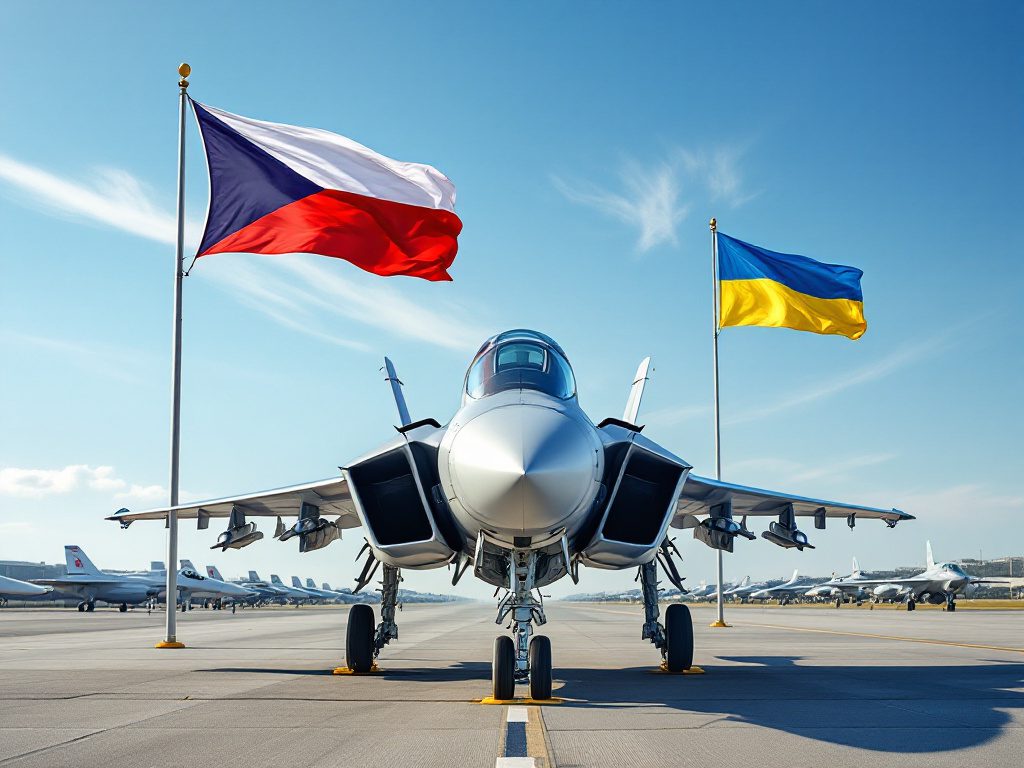
The Aviation Coalition’s Bold Next Step
If you think of the world’s most precarious geopolitical flashpoints, Ukraine is impossible to ignore. In the shadow of relentless Russian aggression, Ukraine has become both a battlefield and a barometer for the strength of Western unity. This week, a significant new chapter opened when President Volodymyr Zelensky, alongside Czech President Petr Pavel, announced the creation of a joint Ukrainian-Czech F-16 pilot training school. The decision, born out of necessity due to daily Russian missile and drone strikes, will see the facility established safely outside Ukrainian territory, an explicit nod to the ceaseless threat facing the country’s infrastructure.
Beyond that, the symbolism of the partnership stands on its own. President Zelensky, during a rare joint press conference in Prague, outlined not just the plan for the F-16 school, but also the scope of Western support: up to three million artillery shells expected from the United States and Europe this year alone. Such numbers are not thrown around lightly—they reflect both the desperation of a country under siege and the remarkable depth of the NATO alliance’s commitment to Ukraine’s survival. As Harvard security analyst Rose Gottemoeller noted recently, “Capacity-building and consistent training are as vital as weapons deliveries in any modern conflict.” Establishing this school sends a strong message to Vladimir Putin—Western resolve is not just in word, but in persistent, coordinated action.
Security Imperatives in a New Cold War
A closer look reveals that the logistics of this partnership are themselves a lesson in 21st century warfare. Opening a training center for F-16 pilots in Ukraine, as President Zelensky emphasized, would be a grave risk. Russian strikes, calculated to sow fear and deny Ukraine a modern military edge, have targeted infrastructure from power grids to airfields. Experience from Syria to Chechnya shows that when autocrats sense their opponents gaining strength, they strike preemptively.
Relocating the F-16 training program abroad isn’t just prudent—it’s survival strategy. Collaboration with Czechia, a NATO member well-versed in both Russian intimidation and the rigors of Western defense protocols, ensures Ukrainian pilots gain crucial skills in relative safety. European governments, often derided for slow decision-making, are proving nimble in the face of clear and present danger. According to the European Council on Foreign Relations, multinational training initiatives have become key to “synchronizing the capacities of frontline states and integrating post-Soviet militaries into the Western security architecture.” Ukraine’s transformation, then, is about much more than new jets—it’s about irreversible integration into the Euro-Atlantic defense ecosystem.
What does this mean for the war’s frontlines? Weaponry alone does not guarantee success. Properly trained pilots are essential for both strategic deterrence and the safe, lawful use of advanced technology. Anyone doubting the urgency need look no farther than the attacks on Ukrainian energy infrastructure in Kharkiv and the slow, determined effort by Russian forces to grind down Ukrainian morale. A pilot in a modern air force must not only fly; they must understand cross-alliance tactics, rules of engagement, and complex maintenance procedures—skills impossible to learn in an active warzone. The school, then, is an insurance policy for Ukraine’s independence.
“This school isn’t just about fighter jets or training hours. It’s a coalition in action—a durable answer to violence with unyielding cooperation.”
– NATO military official at the Prague announcement
Here, you see the difference between progress and platitudes. While some on the American right call for a freeze on military assistance, invoking the false promise of isolating autocracy into submission, Ukraine and Czechia remind us that history punishes appeasement. Recall the Munich Pact of 1938, when the West’s hesitance only emboldened tyranny. The current coalition, by contrast, is crafting real deterrence through unity and skill-building.
Why Allied Solidarity Still Matters
This F-16 school is one prong of a broader, stepped-up pledge to Ukraine’s sovereignty. In 2025, Zelensky revealed, Ukraine could receive another 1.8 million artillery shells under a Czech-led initiative, signifying allied support isn’t just about today’s battles, but tomorrow’s readiness. There’s no mistaking the message to Moscow: the transatlantic alliance, battered and tested, is not blinking first.
How does this shape the political debate at home and abroad? President Zelensky’s public diplomacy, involving not just military leaders but also First Lady Olena Zelenska, reflects a new, more inclusive form of leadership—one that recognizes the power of visible, human solidarity amid trauma. Contrast this with the rhetoric from hard-right figures in Western capitals who bemoan “blank checks” and “foreign entanglements”. Their arguments ignore the reality that Ukraine’s frontline is a crucible for democratic values, collective resilience, and a defense of the principle that might does not make right.
Expert opinion overwhelmingly sides with the coalition approach. Military historian Sir Lawrence Freedman argues that “training and integrating Ukrainian pilots into a Western doctrine will limit Moscow’s escalation advantages, leveling the playing field for foreseeable years.” A point too often missed in domestic squabbles over aid packages is the return on investment offered by a stable, sovereign, Western-oriented Ukraine: fewer refugees, less global economic disruption, and the upholding of rules-based order from Prague to Kyiv and beyond.
As these joint initiatives move from blueprint to reality, you can sense the stakes. Each new pilot who completes training becomes a living testament to strategic patience, international cooperation, and the enduring value of democratic alliances. History will not judge us well if, at this hour, we stand idle—especially when so much is at stake not just for Ukraine, but for the moral arc of the century itself.
