
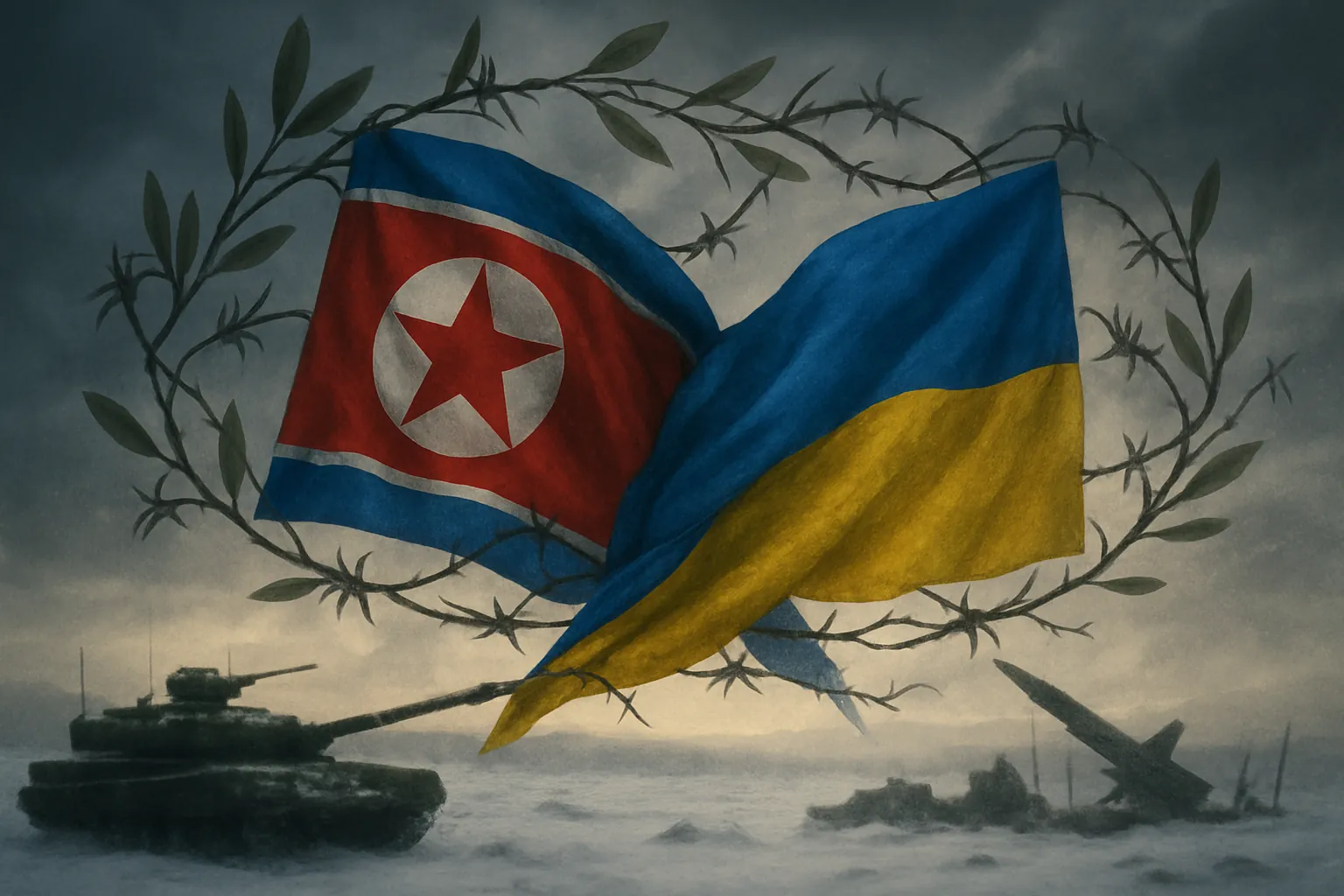
The Rare Mortar and a Troubling Alliance
In a remote corner of Ukraine’s Sumy region, Ukrainian drone operators recently achieved an unlikely victory with global implications. Video footage released by Ukraine’s 225th Separate Assault Regiment shows a rare North Korean 140-mm mortar—once a staple of Pyongyang’s parades, seldom seen outside Asia—destroyed in an explosive strike. This moment was not just another tick in Russia’s mounting losses. It revealed a troubling new chapter in the war, as Russia leans into alliances of last resort and draws munitions from autocratic partners like North Korea to prop up its faltering campaign.
The roots of this story stretch back to 1992, when the 140-mm mortar was introduced to the world at the 60th anniversary military parade for the Korean People’s Army. Developed in the shadowy defense ateliers of North Korea during the late Cold War, the artillery piece boasts a rate of fire approaching 12 rounds per minute, a muscular maximum range of eight kilometers, and calls for a five-person crew to operate at full capacity (as detailed by military historian Dmitry Baev, 2021). The system, while impressive in isolation, is a relic—a quirky oddity of North Korean design with unique logistical needs that complicate deployment and resupply.
Yet this is precisely what now litters the Ukrainian battlefield. Russian forces, starved of Western components and isolated by international sanctions, have increasingly turned to desperate procurement strategies. As chronicled by the International Institute for Strategic Studies, Moscow has sought to replenish its losses and sustain offensive actions by quietly expanding military partnerships with countries like the DPRK, and even tapping into Chinese-origin rocket supplies through murky secondary markets. This rare artillery’s appearance serves as a canary in the coal mine for escalating authoritarian collaboration in defiance of established norms and embargos.
Combat Innovation Meets International Lawlessness
How does this partnership affect the calculus on the ground? Ukrainian drone pilots—steeped in innovation and supplied by a coalition of Western backers—have rewritten the rules of modern warfare. Their ability to identify, track, and surgically eliminate a rare foreign mortar is emblematic of the conflict’s high-tech cat-and-mouse dynamic. Weapons systems once thought too rare or complex to risk on a foreign battlefield are now being chewed up and spat out as “scrap metal”—a phrase repeated by both Ukrainian and Russian officials, with conflicting undertones of bravado and resignation.
According to the General Staff of the Armed Forces of Ukraine, Russian combat losses exceed a staggering one million personnel since the invasion began, with nearly a thousand soldiers killed in just the past day. The Pentagon has reported that Russian formations are strained, their equipment increasingly mismatched and antiquated, while Ukraine’s use of Western-supplied drones and precision armaments is yielding outsized effects. The destruction of the North Korean mortar isn’t an isolated event. In the past weeks, Ukrainian strikes have also annihilated a Russian S-300 air defense system in Zaporizhia, signaling a momentum shift in strategic targeting—where each high-value hit ripples across the enemy’s logistics and morale.
Yet this is not merely a contest of technology. Behind each destroyed artillery piece lies a deeper battle: of alliances, legitimacy, and international law. South Korean intelligence confirms North Korea’s role as a material supporter of Russia’s war, with over 12 million 152-mm shells reportedly shipped since hostilities intensified. These shipments flagrantly violate UN sanctions, shattering any notion of Pyongyang’s isolation and highlighting the global stakes of the war. As the United Nations Security Council stares into gridlock—hampered, not least, by Russian veto power—autocracies are quietly redrawing the boundaries of conflict and arms proliferation.
“Each obliterated mortar or missile system is so much more than a battlefield statistic—it is a warning siren. As Moscow and Pyongyang trade in deadly hardware, they expose the international community’s inability to contain authoritarian adventurism.”
The Real Stakes: Escalation, Resistance, and the Road Ahead
What does this mean for the future of the war—and global security? The destruction of North Korean and Chinese-supplied arms in Ukraine is a potent symbol. It exposes the inherent weakness of authoritarian-backed militaries, but it also signals the dangerous ways in which embattled regimes will circumvent sanctions and international oversight. According to Harvard security studies scholar Linda Chen, “Persistent loopholes in global arms control leave doors wide open for rogue states to reshape conflict zones far beyond their borders.”
The ferocity in the Pokrovsk direction—where Ukrainian sources record 45 separate enemy attacks within just one day and 163 combat clashes along the front—suggests that Moscow is not yet ready to abandon its maximalist ambitions. Air and missile strikes continue to pummel Ukrainian cities, even as Russia’s own losses mount and its tactics grow more desperate. An underreported element of this contest is the resilience of Ukraine’s civil society, which has, time and again, transformed adversity into improvisation and resolve.
Should Western democracies view these battlefield developments as distant regional quirks, or heed them as the opening salvo of a global struggle against authoritarian aggression? The evidence speaks for itself. If unchecked, the growing nexus of autocratic regimes could undermine decades of progress on arms nonproliferation and democracy-building. The battle for Ukraine’s sovereignty today may well set the tone for security on the European continent—and far beyond—well into the next decade.
Now is the moment for liberal democracies to double down—not just in providing advanced weaponry, but in mounting a unified diplomatic and economic front to close the loopholes exploited by Moscow and Pyongyang. Otherwise, the world may wake up to find that the rare mortars of yesterday have been replaced by a new, deadlier breed of authoritarian collaboration.
