
The Curtain Rises on Istanbul: Promise or Potemkin Diplomacy?
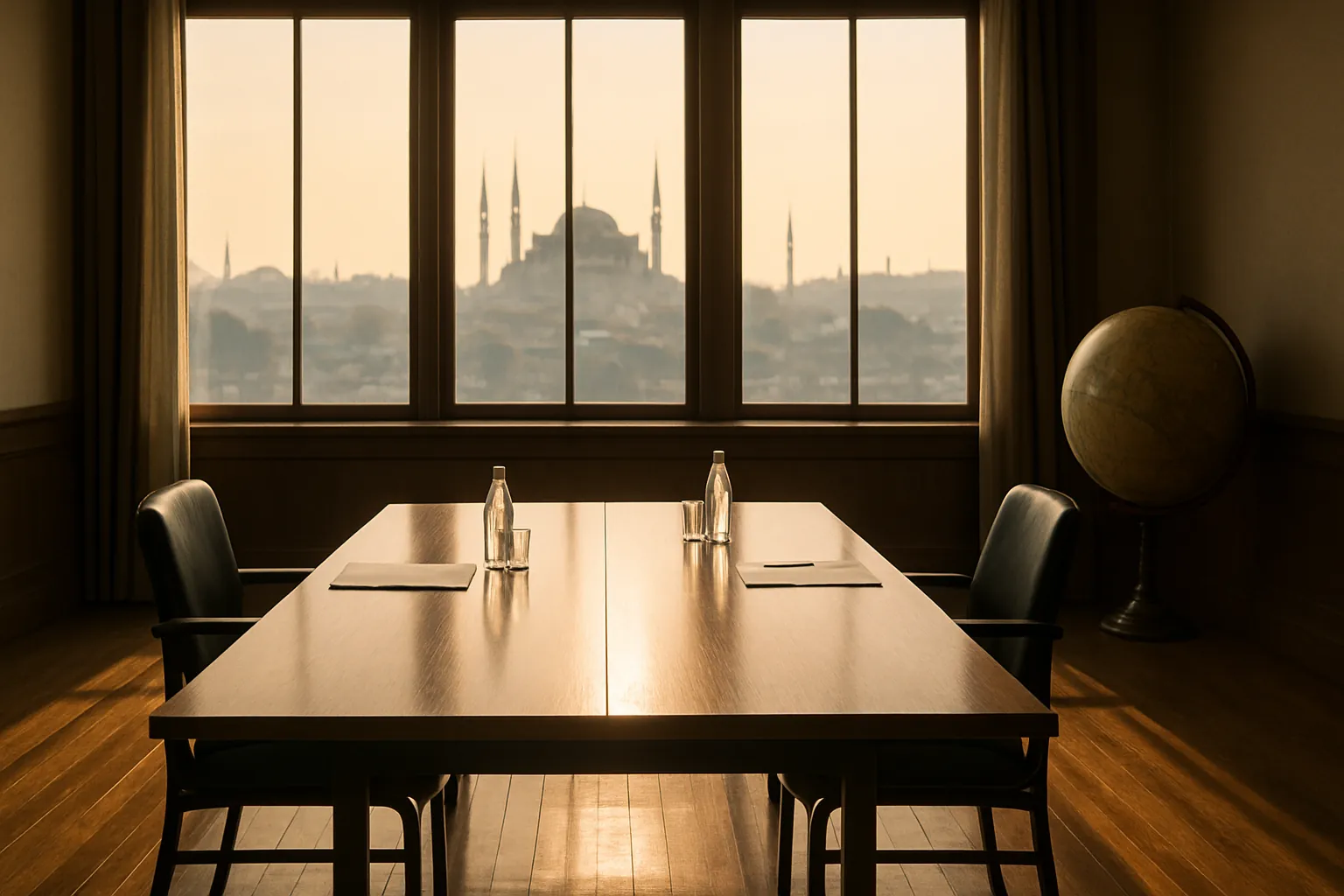
When the stately Çırağan Palace in Istanbul prepares to host Ukrainian and Russian negotiators on June 2, the world’s eyes will be firmly fixed on gilded halls far removed from the battered streets of Kharkiv or Belgorod. The stage is set for what many hope could be a turning point in a war that has already claimed tens of thousands of lives, forced millions from their homes, and strained a fragile world order. But as Ukrainian President Volodymyr Zelenskyy recently revealed, there is a shadow hanging over these talks—a lack of clarity, a worrying sense that Moscow’s agenda remains deliberately murky.
The president’s frustration is palpable. In a recent night address, Zelenskyy shared with Ukrainians—and a weary international audience—that “neither Ukraine nor its partners, nor countries like Türkiye or the United States, have any clear information as to what Russia intends to propose in Istanbul.” After months of devastating escalations, such as the largest Russian drone strike of the war just a day before talks—472 drones and seven missiles raining down, killing twelve Ukrainian soldiers—the idea that the Kremlin remains vague is more than just troubling. It smacks of strategy.
Diplomacy cannot be an empty theater; real progress demands good-faith engagement. Yet the signals out of Moscow reinforce a pattern. Is Russia genuinely interested in peace, or buying time, hoping for Western unity to falter? This skepticism isn’t unfounded. According to experts like Steven Pifer, former U.S. ambassador to Ukraine, the Kremlin has frequently used negotiations in previous conflicts to mask military regrouping or international image management, rather than to secure concrete agreements (Pifer, Brookings, 2022).
Peace Talks Amid Missiles: The Paradox of War and Diplomacy
The Istanbul meeting comes at a grim juncture. In the days leading up, violence has not abated. While Defense Minister Rustem Umerov prepares to lead Ukraine’s delegation—standing firm on Kyiv’s demands for a total ceasefire, prisoner exchanges, and the return of abducted children—Russians under Vladimir Medinsky assemble their own team, shrouded in ambiguity. Meanwhile, the physical toll mounts on both sides: Ukraine reports lethal missile strikes on its rear military units, Russian regions witness bridge collapses labeled “terrorism” by Moscow, and sabotage deep in Russia disrupts military logistics.
International patience is wearing thin. Faith in diplomacy is hardest to sustain when bombs fall as envoys board planes. Beyond that, the memory of previous failed negotiations—Minsk, Sochi, Paris—tempers expectations. “A settlement in Istanbul would be ideal,” reflects Harvard historian Serhii Plokhy, “but history tells us that when one side seeks clarity and the other abstains, breakthroughs are rare and mistrust breeds compromise’s undoing.”
“Diplomacy cannot succeed if one party comes with fog and another with facts. The world yearns for progress, not performances.” — President Volodymyr Zelenskyy
Russian Foreign Minister Sergei Lavrov, whose delegation heads to Istanbul, has insisted Russia will present new ceasefire conditions. But the Kremlin’s track record—offering broad demands while dismissing Ukraine’s calls as “unconstructive”—fuels suspicion. The fact that Moscow unleashed unprecedented drone and missile strikes on Ukraine literally the night before the meeting only compounds the sense of negotiating under duress.
Sanctions—which the United States and European partners have wielded diligently—remain a linchpin. There is little mystery in Zelenskyy’s hopes: strong, unified action from the West, particularly when it comes to economic and energy sanctions, is critical to keep Moscow at the table for genuine talks. Yet as each new wave of violence rocks Ukraine, one must ask: How resistant are global partners to so-called “Ukraine fatigue?” Recent polling from Pew Research Center shows solid but incrementally waning public support for indefinite aid to Ukraine, especially in Western Europe (Pew, 2024). The challenge is as psychological and political as it is military.
Lessons from Past Negotiations: Can Istanbul Deliver What Others Couldn’t?
What’s painfully clear is that real progress requires transparency and serious intent. The world has lost patience with pageantry without purpose. Each round of previous talks, from Minsk to the macabre theatrics in Sochi, has been haunted by Russian intransigence—imposing “facts on the ground” before returning to negotiation tables, hoping to use bombed-out cities as bargaining chips.
Even now, Ukrainian officials coordinate closely with European and American counterparts, justifiably stressing the need not only for firmer sanctions but for sustained attention. The ravages of this war extend beyond the front lines. Food prices across continents, energy stability, and the credibility of international law all depend on the outcomes of Istanbul and what may follow. “The stakes are not only Ukrainian,” observes former NATO Supreme Commander James Stavridis, “but fundamentally global: can rules, rights, and democratic sovereignty prevail over brute force?”
History offers inspiration—and caution. The 1953 Korean Armistice, rooted in exhaustion after years of stalemate, produced an uneasy truce but not true peace. In Bosnia, the Dayton Accords emerged only after immense international pressure and unmistakable consequences for non-compliance. Zelenskyy, whose popularity and international standing have soared as a wartime leader, is clear: empty diplomatic gestures will not suffice. Without transparency and pressure, any paper signed in Istanbul risks becoming another casualty.
So, as the world tunes in to this momentous meeting, we ought to ask ourselves not just what will be said inside those palace walls, but what the silence outside them will mean for the millions still yearning for safety, justice, and an end to senseless suffering. The collective responsibility of the international community—from Washington to Paris to Ankara—is to insist that any negotiated peace reflects not just the absence of war, but the presence of justice. We owe Ukraine, and ourselves, nothing less.
