
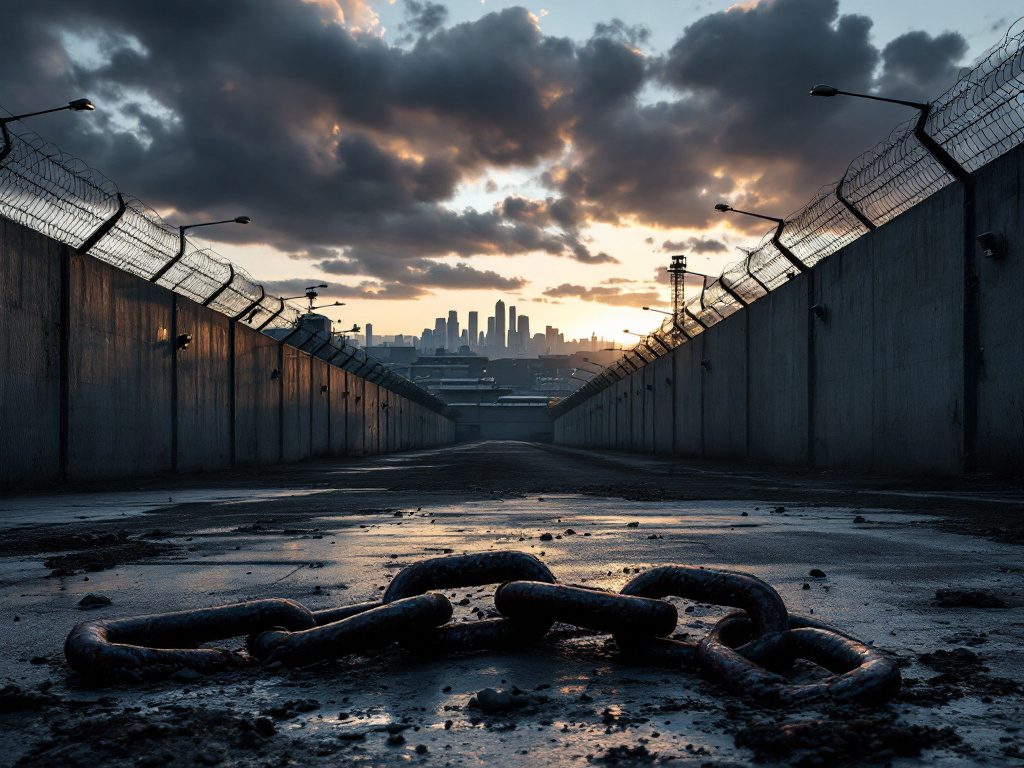
The World’s Biggest Prison—and America’s Outsourcing of Justice
On the arid outskirts of Tecoluca, El Salvador, a surreal scene is unfolding that reads more like dystopian fiction than current affairs. The largest maximum-security prison on Earth—CECOT—stands as an imposing testament to President Nayib Bukele’s iron-fisted tactics against gangs and crime. This mega-complex, opened in 2023 to international alarm, already holds over 15,000 alleged gang members, many rounded up in mass sweeps that have made headlines worldwide.
Yet new ambitions cast a broader shadow: the plan to double prison capacity to a staggering 80,000 inmates—with a disturbing twist. The U.S. is sending deportees, many alleged criminals, to fill the cells. Not only is El Salvador volunteering to detain people the Trump administration seeks to expel, but U.S. officials are also rewarding the arrangement—paying the Salvadoran government $6 million a year for the privilege, according to Department of Homeland Security disclosures. Former President Trump himself has dangled the idea of sending not just foreign nationals, but so-called “homegrown criminals” from American streets into these walls, sidestepping domestic criminal justice entirely.
What does it say about American values when the White House partners with a government famous for mass incarceration and human rights violations? For supporters, it’s a bold crackdown. For critics, it’s a wholesale exportation of American incarceration dilemmas—and a dangerous new chapter in immigration policy.
Human Rights at a Crossroads: A “Tropical Gulag” in the Global Spotlight
Thousands incarcerated at CECOT endure conditions that have drawn fiery condemnation from international observers. Human Rights Watch and Amnesty International have both labeled the facility a vast experiment in authoritarian control, with allegations of collective punishment, routine beatings, and near-total deprivation. Food, medical access, and even daylight are sharply limited. According to a March 2024 report by The Washington Post, U.N. rapporteurs have likened CECOT to a “tropical gulag”—a phrase that sticks, conjuring Cold War-era abuses and authoritarian excess.
Yet, in a surreal twist, U.S. Secretary of Homeland Security Kristi Noem, after a recent tour, quipped that American deportees “receive better treatment than local prisoners,” as if that faint praise absolves any shared responsibility. When you peer beyond official gloss, what you find are stark policy contradictions. The U.S. purports to uphold human rights globally, yet here it directly bankrolls a carceral regime widely accused of abuses.
“Shipping American problems overseas doesn’t erase our values—it exposes them. Are we outsourcing punishment, or abdicating the very essence of justice?”
El Salvador today boasts—or laments—the highest incarceration rate on the planet, locking up nearly one in every 57 citizens. Bukele’s dragnet has swept up not only hardened criminals but thousands of young men and even bystanders, many of whom never see a fair hearing. This approach, painted as a triumph over gangs, too often doubles as a war on the poor and marginalized. According to Harvard sociologist Jorge Cuéllar, “Mass incarceration destabilizes communities, fuels cycles of violence, and creates long-term societal fractures that are far harder to heal than momentary crime waves.”
Legal Troubles and Unanswered Questions: The Case of Kilmar Abrego Garcia
The human consequences of this transnational crackdown come vividly to life in the case of Kilmar Abrego Garcia, a Maryland resident and father wrongfully deported as an alleged gang member—not for any crime committed, but due to bureaucratic error. After he was precipitously sent to CECOT, U.S. federal courts, backed by a Supreme Court order, demanded his return. Both Bukele and Trump have defied those orders, underscoring how their alliance subverts not just ethics, but the rule of law itself. The New York Times reports that Garcia’s wife and children have been left in limbo, victims of a system that values expedient punishment over due process.
The precedent this sets should alarm anyone who cares about constitutional protections. How did the U.S.—a nation founded on procedural fairness and individual rights—end up applauding a partner who shrugs off such principles?
Beyond that, the very notion of “outsourcing” our carceral crisis exposes deeper rot. The United States is already infamous for its prison population, outpacing most developed nations. Now, faced with the political challenge of crime and migration, conservative leaders seek to offload the messy consequences onto partners willing to play jailer at a global scale.
Look back just three decades for a grimly familiar pattern. During the Miami Mariel boatlift in 1980, U.S. rhetoric demonized Cuban refugees, resulting in mass detentions and family separations—a tragedy with haunting echoes in today’s border debates. The difference now? Washington is paying to export its moral and legal liabilities far from public sight.
Critics argue there is no evidence that massive prisons—at home or abroad—make communities safer in the long run. A study released by the Vera Institute of Justice found that oversize detention facilities create “breeding grounds for abuse and recidivism,” not peace. Reform, they insist, requires investing in rehabilitation, mental health, and opportunity—not building ever-larger cages.
Whose Security? Whose Values?
A closer look at El Salvador’s prison expansion tugs at fundamental questions: What do Americans want from our justice system, and at what cost? Is it truly safer—a word so often invoked—if our pursuit of order means collaborating with regimes known for torture, indefinite detention, and democratic erosion? Progressive values demand better than exporting our crisis and cashing the check.
From the failed “war on drugs” to disastrous anti-gang policies across Latin America, history teaches that swift, sweeping crackdowns rarely yield real security. What they do deliver—almost invariably—is trauma, resentment, and new cycles of violence. Collaboration between the U.S. and a leader like Bukele, who has openly mocked international critics and centralized authoritarian power, sends a chilling message about where American priorities lie.
To defend democracy, both at home and abroad, means holding our own government to higher standards. The fixation on building higher walls—literal and figurative—reflects a failure of imagination and empathy. Are we willing to invest in root-cause solutions—education, jobs, humane justice—or are we content exporting despair behind 20-foot fences in someone else’s backyard?
History will judge us as much by whom we lock away as by whom we set free. The choice, as always, belongs to us.
