
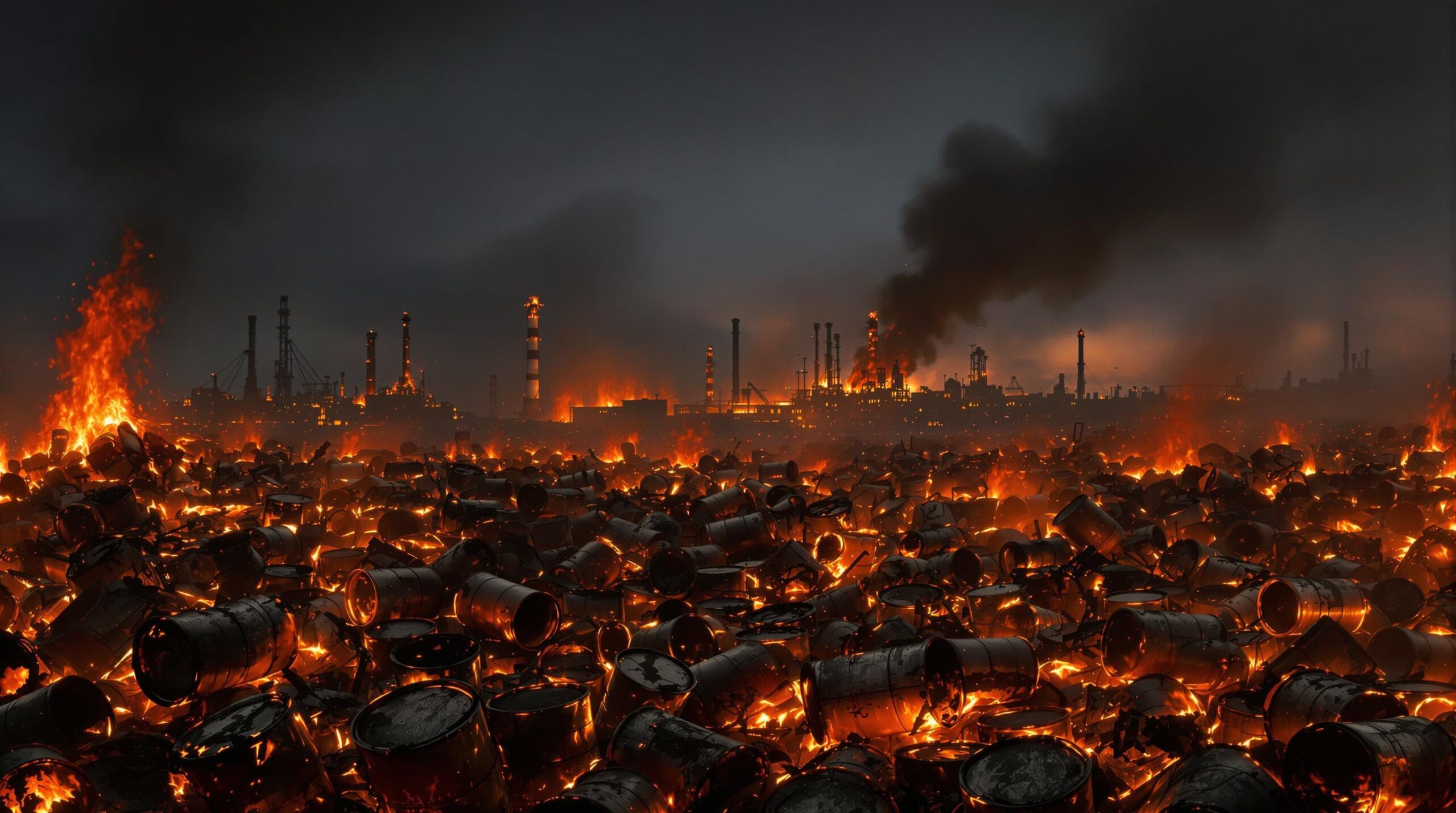
What began as another unsettling night near Russia’s southern Krasnodar region swiftly escalated into a fiery ordeal when a drone—allegedly Ukrainian—struck a key oil depot near Kropotkin. A secondary explosion rattled the community just two days after the initial drone attack, shedding harsh light on the escalating conflict and raising significant concerns about both environmental and geopolitical fallout.
A Rising Inferno Reveals Broader Struggles
When firefighting crews began tackling the aftermath of the initial drone strike, authorities might have hoped they had contained the worst. Unfortunately, a burning storage tank suffered depressurization, unleashing a second, devastating blast spilling flaming oil into adjoining areas. This event not only expanded the crisis exponentially, but also highlighted the vulnerability of energy infrastructure amidst ongoing hostilities. The expanding blaze soon stretched over 10,000 square meters, a stunning sight for onlookers that also posed extreme logistical challenges for the 456 personnel and 181 equipment units involved in containment efforts. Tragically, the fire injured two brave firefighters, underscoring the dangerous stakes for frontline responders.
Environmental Risks Loom Over Immediate Crisis
While the vivid flames captured international attention, local concerns also spiked due to hazardous chemical levels detected in nearby air quality tests. Health officials identified troubling levels of benzene—a notoriously harmful chemical—raising alarms over the potential long-term health effects on residents and wildlife. Benzene exposure has numerous serious implications, from respiratory issues to heightened cancer risks, positioning environmental well-being as a critical victim of this expanding conflict. Crucially, contaminants from such disasters create lasting environmental damage, frequently degrading ecosystems and affecting community health for generations.
Beyond the immediate Krasnodar region, the spill-over effects emphasize vulnerabilities across Russia’s extensive energy network. The Kavkazskaya facility plays an instrumental role as a terminal that connects Russian oil fields to key pipeline networks funneling resources toward the Black Sea and beyond. Its compromised status may not only result in immediate economic consequences but could also ripple broadly, affecting international oil markets and exacerbating commodity price instability.
“The risks to global stability are clearly illustrated by each new target, and this Russian depot’s fiery crisis illuminates a dangerous and escalating pattern.”
Geopolitical Tensions Mount Amid Accusations and Strikes
Yet, reframing this event solely as an economic or environmental catastrophe misses broader geopolitical undercurrents. Ukraine’s alleged drone strike is part of a wider pattern of reciprocal attacks on critical infrastructure between the two adversaries. Ukrainian president Volodymyr Zelensky adamantly asserts that effective ceasefire conditions rely on Russia abiding by proven commitments—a position seemingly validated by Moscow’s continuing offensive actions.
The previous night’s assault on a major gas metering station at Suzha, a critical juncture along Russia’s gas transportation routes, adds credence to Ukraine’s pointed critiques. Ukrainian officials claim that Russia repeatedly violates mutually-agreed ceasefire conditions, with each juxtaposed accusation escalating tensions further. Debris reportedly found at the Krasnodar site suggested extensive initial damage from the drone strike—pointing to increasingly precise drone warfare tactics used against strategic targets.
Moreover, the scale of the explosive consequences at Kavkazskaya highlights the emerging tactical focus on disrupting energy infrastructure as it powers national economies and military capabilities. Such strategic attacks reveal vulnerabilities in Russia’s claims of preparedness and resilience, potentially reshaping military and political calculations for Moscow and regional allies alike.
Amid these growing tensions, calls from diplomatic observers highlight the urgent need for meaningful engagement rooted in mutual respect and adherence to international commitments. Progressive advocates suggest investing in broader diplomatic dialogues explicitly aimed at infrastructure neutrality. Such proactively cooperative frameworks could avoid at least some future catastrophes—saving untold economic and ecological harm.
Ultimately, the smoldering fallout from Krasnodar’s blazing depot isn’t merely a tragic episode in the ongoing Ukrainian-Russian conflict; it is also symptomatic of deeper unmet diplomacy needs and failing international safeguards that could prove costly—to both fiscal and human resources—if left unaddressed. Responding to these dangerous episodes with viable diplomatic solutions remains paramount in not only quelling immediate threats but in safeguarding global environmental and economic interests from becoming continued casualties of war.
