
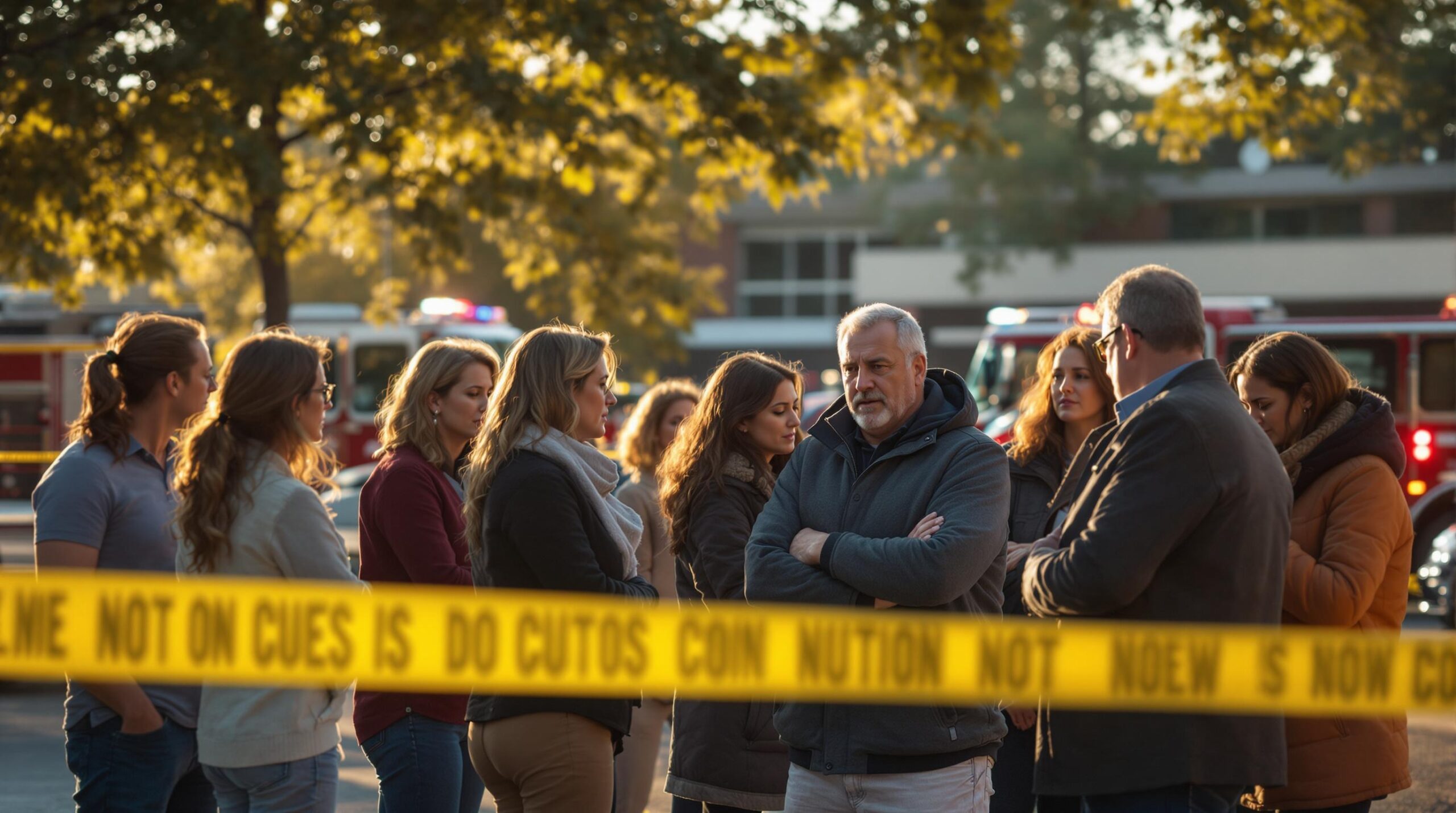
Federal immigration enforcement once again loomed over a vulnerable community on a seemingly routine school morning, sparking fear and outrage in Northwest D.C. On an otherwise typical day at H.D. Cooke Elementary School, agents from Homeland Security Investigations (HSI)—a branch of U.S. Immigration and Customs Enforcement (ICE)—attempted to detain a healthcare contractor as students arrived for class. The targeted individual was a healthcare provider assigned to the school by D.C. Health, not directly employed by the educational institution.
The intrusion, reported to have taken place in a fenced parking lot adjacent to the school, immediately drew fierce resistance from school administrators, who responded swiftly and decisively by asking the federal agents to provide identification and a warrant. When agents failed to produce this paperwork, they left the grounds without making an arrest—a small victory, but one highlighting alarming gaps in existing school protocols concerning immigration enforcement actions.
Efforts for Community Safety Turned Upside Down by Federal Intervention
What should have been a safe, welcoming morning rapidly turned tense and distressing for staff, parents, and children alike. According to witnesses, the palpable anxiety did not easily dissipate, as some reported seeing federal HSI officers lingering in the Adams Morgan neighborhood for hours after leaving the school grounds. Their continued presence only deepened concerns that federal immigration officials were looking to establish a more aggressive foothold in areas with vibrant immigrant communities.
Bill Mefford, a community activist involved in addressing immigration concerns, captured the collective outrage sharply:
“I think it’s horrific that we have agencies of the state going after folks that are working to serve their community.”
Indeed, Mefford’s statement hits home. At the heart of this issue is the troubling intersection between educational sanctuaries and immigration enforcement—a clash that challenges long-held beliefs that schools should serve as inviolate zones, protected from harsh governmental interventions.
Uncertain Protocols Lead to Fear and Confusion in Educational Spaces
One disturbing revelation highlighted by this incident is the pressing absence of comprehensive, district-wide policies addressing federal immigration enforcement at schools. The swift intervention by H.D. Cooke administrators proves the value—and urgency—of having clear guidelines to address situations fraught with complexities and dangers. It appears statute-bound assurances that schools are safe spaces are not sufficient when faced with agents who assert their authority without providing clear, lawful justification.
Many parents, overwhelmed by fears for both their families’ safety and their children’s educational environment, are actively voicing their demand for explicit guidance. They rightfully insist that schools must establish unambiguous protocols that administrators, faculty, staff, and security personnel can confidently rely on when intercepted by immigration enforcement efforts like this one.
Further complicating the situation, HSI’s stated purpose on-site remains unclear. A spokesperson for Homeland Security publicly denied that agents sought to detain the healthcare contractor or conduct any law enforcement actions at the school, a puzzling denial contradicted by the real-time actions and reports from those present.
Implications for Marginalized Communities Demand Proactive Leadership
The attempted action against a healthcare contractor—someone directly aiding students’ wellbeing—shines a harsh spotlight on the personal toll immigration enforcement can exact, even upon those serving their communities with essential services. These enforcement efforts do not merely introduce fleeting fear but resonate through whole neighborhoods, threatening hard-earned trust between residents and vital community institutions like public schools.
Community reactions in Adams Morgan underscored a coherent and thoughtful demand: that D.C. Health and the public-school system must collaborate more transparently and assertively in protecting contracted workers. Each gap in policy not only exposes vulnerable individuals to risk but also shakes foundational feelings of community trust and security.
As schools represent essential social spaces where diversity, inclusion, and equity flourish, it’s imperative they actively rebuff actions that jeopardize these sanctuary-like characteristics. History provides reminders that immigration crackdowns targeting schools and other sensitive locations have often produced only harm and discord, further alienating marginalized communities and damaging educational trust.
The urban tapestry of D.C., especially around neighborhoods like Adams Morgan, is beautifully diverse and vibrantly interconnected. Protecting such communities demands rigorous oversight and proactive, compassionate leadership—precisely the opposite stance taken with aggressive enforcement actions inside or near schools.
The line drawn by H.D. Cooke administrators showed commendable courage, illuminating the power institutions hold, even in the face of uncertain policy structures. Stepping forward, advocates and school officials must double down on their commitments to protect students, families, and anyone dedicated to their education and safety. Boundaries must be set and clearly communicated: Schools are spaces to educate and empower—not terrify or detain.
The troubling scenario witnessed at H.D. Cooke Elementary School is not merely a local story—it’s a cautionary tale that highlights what is at stake nationally. Advocates must use this incident to fight boldly against encroachments that seem all too reminiscent of policy directions adopted by conservative administrations in the recent past.
Moving forward, the response demanded by this event supersedes procedural clarifications alone; it calls for solidarity among educators, families, community health partners, activists, and local leadership. Together, they can reassert that the values of unity, safety, and communal care will not be compromised by intimidation or unjust immigration enforcement.
