
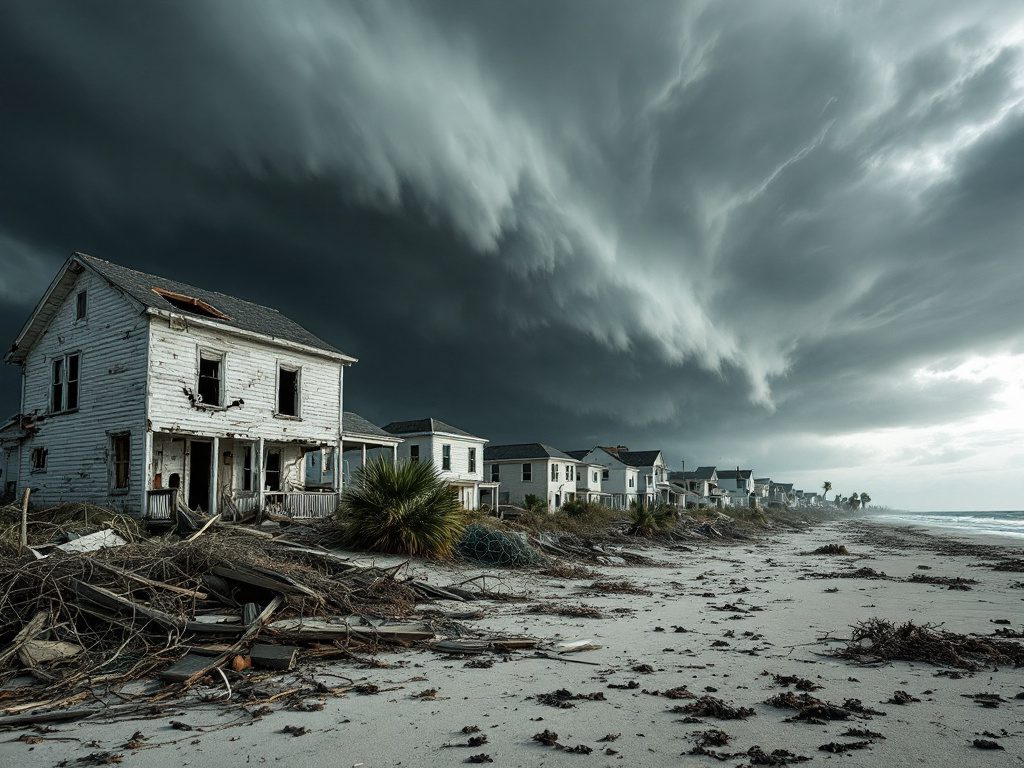
In a decision met with swift backlash and profound disappointment, the Federal Emergency Management Agency (FEMA) has declined to extend full financial reimbursement for North Carolina’s post-Hurricane Helene recovery efforts. This rejection arrives just as thousands of North Carolinians, still reeling from the devastating impacts of Helene, face mounting obstacles in their quest for normalcy.
FEMA Retreats from Crucial Aid
When Hurricane Helene battered North Carolina nearly half a year ago, it unleashed a torrent of devastation, dismantling infrastructure, flooding homes, and leaving entire communities in disarray. Initially, FEMA stepped in, providing 100% reimbursement for emergency protective measures and debris removal. This full federal assistance was invaluable not only in streamlining the immediate aftermath efforts but in offering a semblance of stability to shaken residents.
Yet, as recovery proves more prolonged and costly than anticipated, FEMA has abruptly declared it will no longer shoulder complete responsibility. According to a statement sent to Governor Josh Stein by Acting FEMA Administrator Cameron Hamilton, the agency judged the continued cost-share as “not warranted.” This move means North Carolina stands to lose substantial federal backing, jeopardizing its lengthy and enormously expensive recovery journey.
Governor Stein sharply rebuked FEMA’s decision, emphasizing the stark reality on the ground: “The need in western North Carolina remains immense—people need debris removed, homes rebuilt, and roads restored.” He characterized the agency’s retreat as not merely bureaucratic negligence but as a direct threat to the livelihood and stability of thousands who remain displaced and vulnerable.
An Unprecedented Move with Real Human Consequences
The abrupt change by FEMA isn’t merely administrative; it carries tangible human stakes. Communities still struggle with homes partially reconstructed, roads impassable, and infrastructure dangerously fragile. FEMA’s refusal locks these communities into a harsh new chapter—one where state and local resources are stretched perilously thin.
Rep. Chuck Edwards, representing an area significantly impacted by Helene, described the state’s request to continue fully matching recovery funds as “unprecedented,” underscoring the severity of the damage. How, then, can FEMA justify retreating at a moment when collective efforts should intensify?
Critics argue that FEMA, under pressure from a conservative federal agenda that increasingly advocates for limiting government spending and promoting state-level self-reliance, fails to acknowledge realities confronting disaster-prone states. North Carolina’s situation mirrors a national dilemma, where disaster mitigation and recovery costs are climbing dramatically, while certain federal policymakers continue to advocate for smaller federal roles and reduced disaster relief spending.
“North Carolinians deserve better than bureaucratic indifference in their darkest hours. The President must reconsider and act immediately to support recovery efforts,” Governor Stein urged emphatically.
A Bigger Picture of Neglect and Misguided Conservatism
The denial of North Carolina’s FEMA request fits a troubling conservative pattern favoring fiscal austerity even in critical scenarios. It’s reflective of a broader ideological hostility aimed at federal agencies deemed expendable or overly generous by some on the right. From proposals to drastically cut funding to the National Oceanic and Atmospheric Administration (NOAA)—which provides essential weather forecasting—to skepticism towards scientific consensus on climate change, some conservative policymakers have repeatedly shown an unsettling willingness to sideline public well-being for fiscal hawkishness.
A closer look reveals a dangerous and shortsighted philosophy: protecting immediate budgets at the expense of long-term well-being. North Carolina’s residents now join others across the country, from wildfires in California to flooding in the Gulf states, navigating insufficient federal support. Indeed, the gradual dismantling of comprehensive federal help potentially forces states into financial precarity or hikes state taxes dramatically, ultimately undermining economic stability.
According to Dr. Maria Johnson, an economist specializing in public policy response to environmental disasters, “Federal responsibility in disaster response isn’t merely ethical; it’s economically pragmatic. Without strong federal commitment, vulnerable states quickly exhaust resources, hindering sustainable recovery.” The economic ripple effects of neglected recovery transcend immediate victims, affecting regional economies and, ultimately, the nation’s overall economic stability.
North Carolina stands at a crossroads. Governor Stein has 30 days to appeal FEMA’s decision, a recourse he intends to pursue vigorously. State officials emphasize that this moment confirms the essential nature of federal assistance—it is not a handout but an urgent lifeline extended toward communities repeatedly battered by increasingly intense weather events.
As climate-related disasters become more frequent and severe, cooperation between federal, state, and local governments becomes indispensable. Denying states like North Carolina comprehensive FEMA aid sets a dangerous precedent, signaling federal apathy in scenarios where robust assistance is desperately needed.
The question now facing every American, particularly residents of disaster-prone states, is clear: Who will stand up for communities in their moment of crisis if the federal government continues shrinking from its crucial commitments?
