
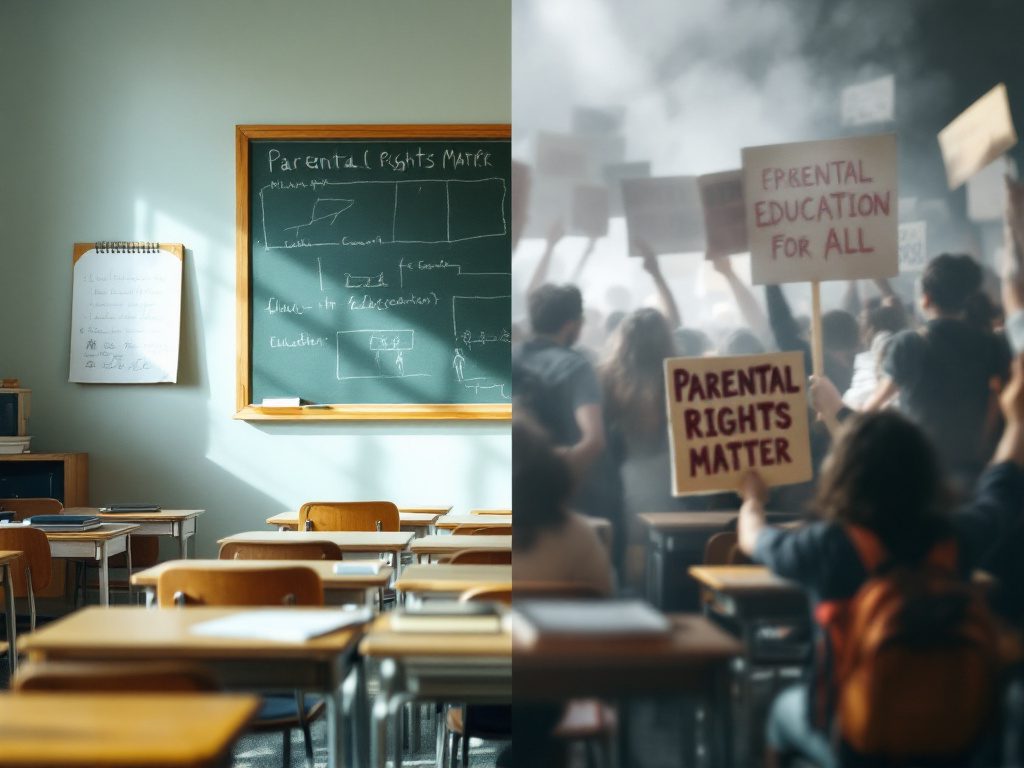
Culture Wars in the Classroom: Florida’s Bold New Office
On a humid morning in Jacksonville, Florida Attorney General James Uthmeier stepped up to a podium and announced the opening of the nation’s first Office of Parental Rights (OPR). Framed as a unique initiative to “empower parents and protect children,” the launch follows months of impassioned debates over how much control parents should exert in public education—and who decides what’s taught and shared within school walls.
The OPR isn’t just another bureaucratic acronym. It’s a newly minted office, run by litigators who are themselves parents, designed to serve as a legal backstop for families who feel shut out or ignored by the public school system or local governments. The Attorney General’s message: parents deserve a seat at the table, and when the system fails to listen, the state will provide legal muscle and a direct hotline through an online portal.
Governor Ron DeSantis, himself a figurehead of the Republican crusade against perceived classroom “indoctrination,” hailed the office as a shield for families. Such rhetoric lands as music to conservative ears—but many education experts, teachers, and a range of progressive voices warn that it sounds more like a dog whistle for ongoing culture war battles than a neutral effort to protect families.
Peering Behind the Curtain: What the OPR Actually Does
To supporters, OPR is overdue. Promotional material boasts that its lawyers are not distant state employees but parents with firsthand knowledge of school bureaucracy and family anxieties. According to the Attorney General, this peer-based approach will make it easier for ordinary people to navigate an intimidating, complex legal system when disputes arise. OPR’s mission is to fight for parents on issues ranging from access to student records and objections to data-collecting surveys, to challenges against “unauthorized” counseling, and even the presence of what some call “inappropriate” books on library shelves.
Criminal cases, according to Uthmeier, will be referred to the Office of Statewide Prosecution, carving out a clear boundary between civil parental rights conflicts and those that cross into lawbreaking. High-profile conservative advocacy organizations rushed to praise the move: Tiffany Justice, co-founder of Moms for Liberty—a group with sharp, divisive views on education—called the OPR a “model of courage,” and other red states have reportedly begun exploring similar initiatives.
But is Florida’s bold new office really a vanguard for accountability, or closer inspection reveals it as part of a broader, calculated campaign to police classrooms and stoke outrage? The OPR arrives after a series of orchestrated controversies in Florida, including allegations of “secret mental health surveys” conducted without parental consent, a narrative that conservative lawmakers have used to justify further restrictions on schools and teachers.
“This isn’t about empowering every parent equally—it’s about weaponizing parental rights as a means to silence teachers, chill honest classroom discussion, and cultivate suspicion of public education.”
Unions and progressive scholars note a sharp uptick in teacher resignations and retirements in Florida, citing what they call the “unrelenting pressure and scrutiny” from new state laws and public complaints funneled through portals like the one OPR is now touting. The Florida Education Association argues that such measures are less about transparency and more about intimidation—sending a message to teachers to avoid hard, sometimes uncomfortable truths about history, identity, and social issues. According to a 2023 survey by the RAND Corporation, school systems in states that adopted aggressive “parental rights” measures have seen higher rates of student absences and teacher churn than those that have not.
Empowering Parents or Silencing Educators?
For those who have felt sidelined by school bureaucracy, the notion of a state office to level the playing field offers clear appeal. It’s true: there are instances of poorly communicated policies or school leaders failing to respond to legitimate concerns. The problem isn’t the existence of parental rights laws—Florida already has some of the strongest in the country, as Uthmeier himself admits. The problem is how the OPR is being weaponized in the political arena, not as a neutral arbitrator but as a tool to further entrench culture wars.
National education policy expert Pedro Noguera, dean of the USC Rossier School of Education, points out: “Real parental engagement is built, not enforced. It requires schools and families learning to build trust and reciprocate respect.” Instead, Florida seems determined to cast schools as adversaries. The result? “Parents are pitted against educators. Students are caught in the middle. And everyone loses out on the authentic partnership that drives equitable public education,” Noguera told CNN this spring.
The timing of OPR matters. Florida’s recent moves dovetail with a concerted campaign to curb discussions about race, gender, LGBTQ+ identities, and even the nation’s painful history. Such actions come alongside efforts to erase books and penalize educators for failing to toe a moving, often politically-motivated line. While the OPR’s stated purview covers data privacy, consent, and access issues, public examples highlighted at news conferences have skewed hard toward disputes over what can be discussed or read in school—igniting new fires in an already fraught environment.
The Real Stakes: Whose Rights, Whose Voices?
Set aside the political theater and one sees parents—mostly well-organized conservative activists—using the OPR as a battering ram against inclusive education. For every family who feels protected, how many children wind up denied exposure to experiences, histories, or ideas that broaden their horizons and deepen empathy?
Beyond Florida’s borders, these “parental rights” battles are becoming a model exported to other conservative states, often leaving marginalized students more vulnerable. The push to frame these initiatives as “empowerment” misses who is actually empowered—and who is left voiceless. As Harvard law professor James Forman Jr. has warned, “Rights without meaningful dialogue quickly become ways to enforce the majority’s will on minorities—especially in schools.”
If the goal is true engagement, real investment in community-building is required: funding for parent-teacher liaisons, improved school communication, classroom transparency achieved through collaboration, not combat. Yet in the spotlight, aggressive legal offices like OPR risk amplifying a climate of mistrust at everyone’s expense.
Where does that leave you—the parent, the grandparent, the taxpayer, the community member? It’s time to demand more than staged announcements and political grandstanding. Public schools thrive when trust and respect flow both ways—when educators are not just accountable to parents, but are trusted to do their jobs. Until then, the Florida Office of Parental Rights stands not so much as a beacon, but as a reminder of the dangers of turning classrooms into battlegrounds in America’s endless culture wars.
