
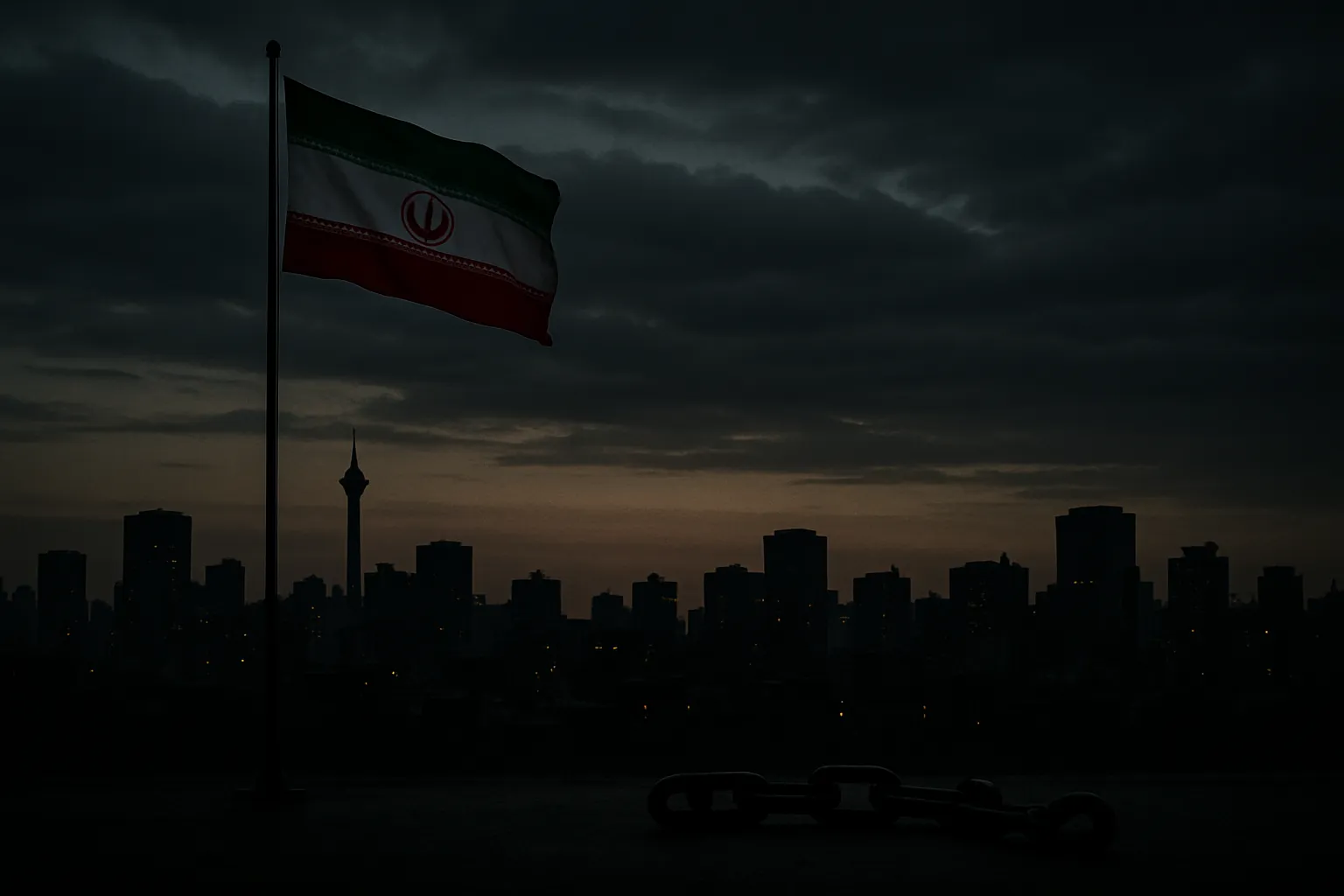
Shadow Wars: Iran’s Repression Crosses Borders
Imagine waking up to news that journalists in your own backyard—perhaps at a coffee shop down the street—have been targeted by a foreign government’s cyberattack. Not by a hostile regime halfway across the world, but by an operation reaching deep into Western democracies. This is no speculative television drama: it’s a chilling reality, as members of the G7 Rapid Response Mechanism (RRM) have dramatically condemned Iran’s tactics of transnational repression, painting a portrait of a country willing to breach borders and privacy to silence its critics.
Just last week, Global Affairs Canada confirmed that a hack-and-leak campaign attributed to the Iran-linked Handala Hack Team targeted five international journalists—including one based in Canada. The leaked trove reportedly included photos of government identifications, sensitive personal information, and so-called “intimate content,” all circulated online in a blatant attempt to intimidate those who dare question Tehran.
This campaign is not an isolated incident. Australia, in the aftermath of targeted attacks against the Jewish community, expelled Iran’s ambassador and three other diplomats. New Zealand openly joined the condemnation. The pattern is inescapable: as the G7’s official statement makes clear, Iran’s intelligence services are increasingly attempting to kill, kidnap, and harass political opponents and dissidents living abroad. It’s a strategy ripped straight from the autocrat’s playbook—and a stark affront to democratic sovereignty.
Why does this matter to people outside Iran? Because transnational repression doesn’t remain contained—it seeps into our legal systems, our communities, and, most disturbingly, our fundamental sense of safety. As Harvard legal scholar Tom Ginsburg warns, “When authoritarian states extend their coercive reach into liberal democracies, they undermine the very fabric of the international order that underpins freedom itself.”
The UN and the Persecution of Bahá’ís: A Crime in Plain Sight
The United Nations’ latest report, helmed by Secretary-General António Guterres, throws a harsh spotlight on one of the world’s most persistent cases of religious repression: the systematic and longstanding persecution of the Baháʼí community in Iran. Guterres’ condemnation carries enormous weight, not merely as a diplomatic signal, but as a moral reckoning with Tehran’s ongoing abuses.
Consider what is at stake for the Bahá’ís. Arbitrary detentions. Criminalization of peaceful gatherings under vague charges like “spreading propaganda against the regime.” A denial of basic rights—from education to employment—simply for holding an unapproved faith. Guterres’ report asserts that these tactics amount to a comprehensive policy, not the scattered work of overzealous provincial officials.
The implications extend beyond Iran’s borders. As international human rights organizations have observed for decades, emboldened impunity at home often presages more brazen assertion of power abroad. Today, this is glaringly evident in Iran’s escalating sectarian rhetoric and growing cyber operations targeting opposition voices worldwide.
“The persecution of Bahá’ís is not simply the story of a marginalized religious minority; it is a bellwether for human rights everywhere. When the international community turns a blind eye to such systematic repression, the road is paved for even greater violations of justice and decency.”
Despite mounting evidence, Iran continues to deny these charges at every UN forum. Yet with international outrage growing among progressive governments and civil society alike, the cost of ignoring such abuses is mounting. As Amnesty International’s Diana Eltahawy recently stated, “Failing to act now risks normalizing the marginalization of an entire community.”
Diplomacy Versus Defiance: The Global Stakes
Iran’s conduct can’t be separated from a broader context of defiant engagement with the West. Iranian Foreign Minister Seyed Abbas Araghchi pointedly criticized three European countries for their stance on the nuclear program, accusing them of willful blindness to American and Israeli actions. He even threatened to revive previously rescinded UN Security Council resolutions—an escalation that could plunge regional diplomacy into chaos.
Diplomatic engagement is vital, of course. History shows that even adversaries can find common ground—think of the painstakingly brokered Iran nuclear deal of 2015. However, the durability of such diplomacy demands a foundational respect for human rights, transparency, and the free flow of information. Without these, negotiations devolve into a farce, empowering the very actors who pose the greatest threat to international order.
The G7 isn’t acting alone. Associate members like Australia and New Zealand have already demonstrated readiness to back up condemnation with tangible actions, including diplomatic expulsions. The European Union, often caricatured by conservatives as reluctant to confront authoritarianism, now plays a central role in the G7’s coordinated response. These alliances are vital, a reminder that change comes not from isolation but through determined, collective effort.
A closer look reveals that outright repression—be it in the form of hacking, harassment, or religious persecution—is both a test and a catalyst. Will liberal democracies remain silent, afraid of complicating delicate negotiations? Or will they defend those universal values—equality, dignity, the right to dissent—that underpin the international order? Experience teaches that silence slowly morphs into complicity.
Choosing Justice Over Appeasement
Iran’s increasingly brazen repression—at home and abroad—presents a defining challenge to twenty-first-century diplomacy. Those who urge moderation or “pragmatism” in the face of mounting abuses risk abdicating the very responsibilities that give international law its meaning. The era when abuses could be conveniently ignored under the cover of national sovereignty has passed. Today, the international community faces a clear choice: defend vulnerable communities and safeguard democracy, or allow the logic of repression to dictate the rules of the game.
If you listen carefully, the voices of Iranian dissidents, journalists, and Baháʼí community leaders tell a story that should inspire outrage—and action. Their struggle is, at its heart, everyone’s struggle. The question for liberal societies isn’t whether to speak out, but how loudly.
