
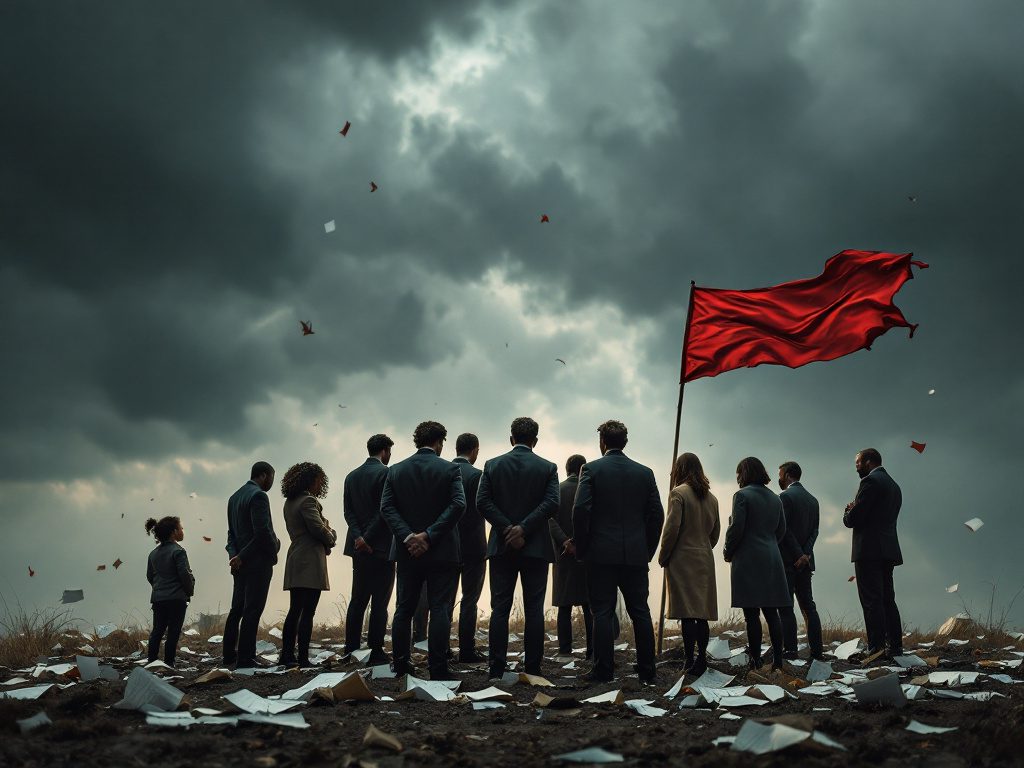
The Democratic Party at a Crossroads: Newsom’s Candid Critique
Few moments in contemporary American politics have felt as fraught—or as uncertain—as the aftermath of the 2024 election. Democrats, reeling from losing both the White House and control of the Senate, find themselves adrift without a coherent message or clear vision. Enter California Governor Gavin Newsom: direct, unflinching, and publicly bewildered by his own party’s inertia. In a hotly debated interview with The Hill, Newsom summed up what many progressives, strategists, and everyday voters whisper behind closed doors: “I don’t know what the party is.”
This unusual candor has sent shock waves through the Democratic ranks, igniting urgent conversations about the party’s future—and whether old habits and assumptions might be steering the country’s largest progressive movement toward irrelevance. As the dust settles, Newsom’s warning serves not only as a call to action, but as a pointed challenge to rethink the very core of Democratic identity.
A Call for Honest Introspection, Not Finger Pointing
Gavin Newsom’s frustration springs, in part, from his belief that the party is avoiding a necessary reckoning. “We have not done a forensic of what just went wrong, period, full stop,” he stated, criticizing Democratic leadership’s reluctance to conduct a thorough postmortem of their catastrophic losses. The consequences, according to Newsom and echoed by party insiders, are profound: without real introspection, Democrats risk making the same mistakes in 2028—or worse, cementing themselves as a perpetual minority.
A closer look reveals that Newsom’s arguments are more than just sour grapes. After Biden’s campaign faltered and Democrats watched key swing states tip back into Republican hands, many expected swift, visible self-examination from party leaders: panels, think tank studies, state-by-state listening sessions. Yet, by Newsom’s account and corroborated by reporting in The Hill, these have yet to materialize. This absence echoes similar warnings from other Democratic luminaries, such as Senator John Fetterman of Pennsylvania, who bluntly cautioned, “We need to get our s*** together soon.”
“We have not done a forensic of what just went wrong, period, full stop. I don’t know what the party is.” — Gavin Newsom
According to a recent Pew Research Center study, trust in the Democratic Party has eroded among key constituencies, including younger voters and working-class Americans—a finding with echoes in California’s own blue-red divide. Newsom’s insistence that California mirrors the economic and cultural diversity of “real America” is not hyperbole. As he points out, the Golden State’s vast stretches of agricultural, forestry, and hunting-related jobs rival or surpass many red states—complicating tired stereotypes of California as merely a coastal liberal enclave.
Crowded Voices, Missing Message: Who Speaks for Today’s Democrats?
The party’s identity crisis is exacerbated by its competing factions and a communication void that grows wider with every electoral setback. Newsom’s own willingness to engage with right-wing media on his podcast, in the face of liberal criticism, signals a belief that Democrats must listen—even to those they disagree with—rather than retreat into ideological bubbles. Critics saw this as courting the enemy; Newsom contends it is the only way Democrats might recover a sense of purpose and relevance among voters who feel left behind.
Political scientist Rachel Bitecofer observes that successful parties “confront hard truths and adapt. Those who don’t, lose—and keep losing.” Yet, the party’s upper echelons remain, in Newsom’s view, entrenched and defensive, slow to heed electoral warning bells. This problem, he argues, is wider than any one personality. While praising Representatives Alexandria Ocasio-Cortez and Senator Bernie Sanders for populist energy, Newsom cautions that swinging too far left risks alienating centrists. Is the answer a bold progressive platform or a tempered centrism that tries to unite fraying coalitions? For now, the answer is anything but clear.
Newsom’s remarks come as polls show Democratic favorability plummeting to record lows. Skeptics point to the party’s failure to build a message that resonates—from job growth to reproductive rights to small-town economic revitalization. Even high-profile Democrats like Minnesota’s Tim Walz and strategists such as Timo O’Neill have publicly aired doubts, with Walz lamenting, “We need a story people can believe in.”
The Road Ahead: Opportunity in Crisis?
Past Democratic resurgences—such as Bill Clinton’s “New Democrat” revolution after the Reagan/Bush years—were marked by soul-searching and bold rebranding. If today’s Democrats don’t seize this moment for similar reinvention, history threatens grim repetition. The stakes are high: issues ranging from climate change to voting rights, income inequality to reproductive freedoms, depend on a party willing and able to rally the nation’s broad center and agitate for justice-driven change.
Newsom, widely rumored to be eyeing a 2028 White House campaign, frames California’s diversity and local challenges as a test bed for national solutions—urging Democrats to see California not as an outlier, but a microcosm. It’s a distinction that matters, especially when voters—from rural farm towns to bustling urban centers—feel increasingly unheard by national leadership.
Can Democrats course-correct in time to save not just their party, but the promise of progressive governance? Or will introspection be, once again, postponed for the sake of short-term unity? If you’re looking for a reassuring answer, you won’t find it in Newsom’s candor—but perhaps in that candor lies the first honest step forward.
