
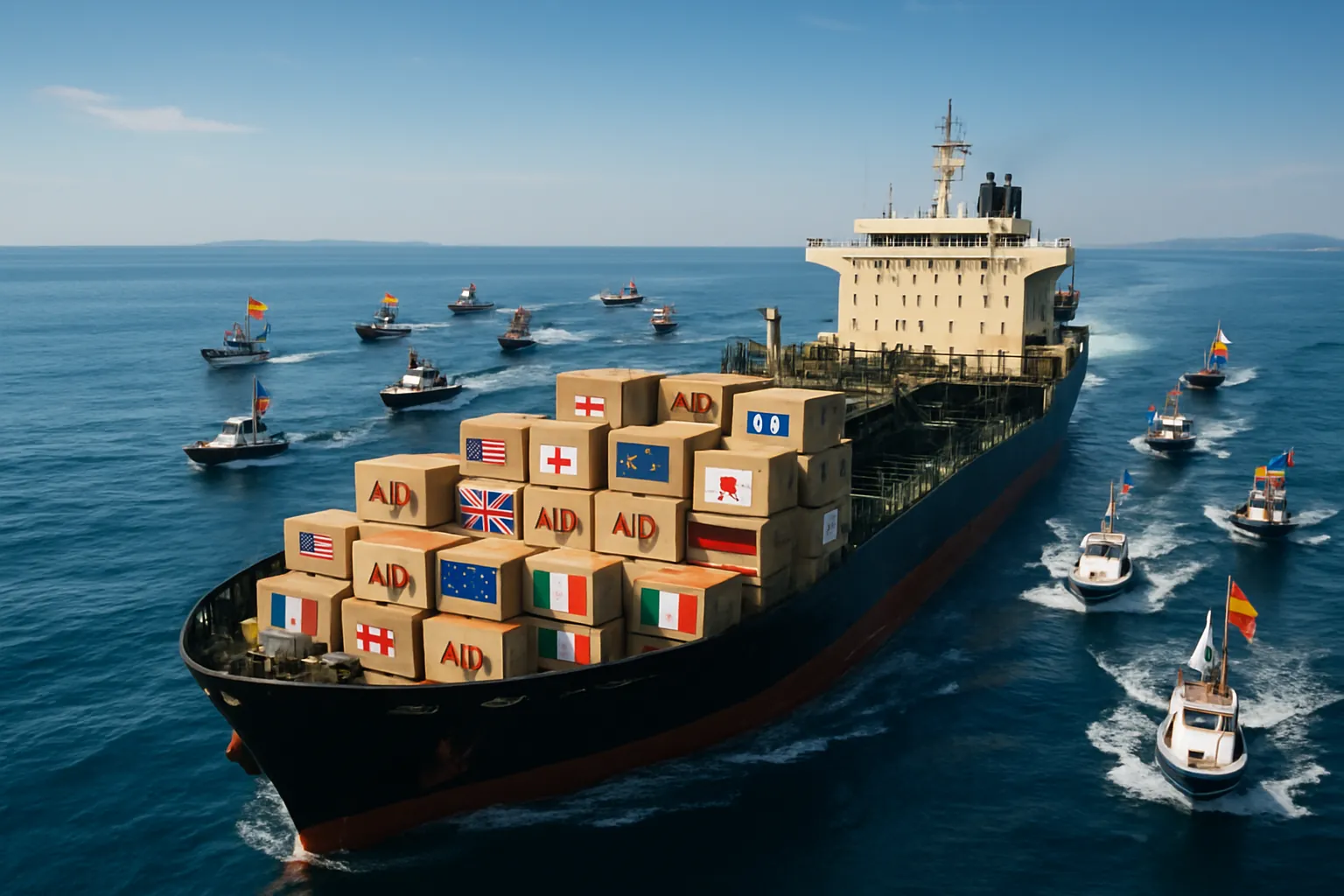
Setting Sail Against a Sea of Injustice
A swelling sense of global urgency is about to break the Mediterranean horizon. From Barcelona, the largest aid flotilla in recent memory prepares to challenge Israel’s fifteen-year blockade of the Gaza Strip. At the heart of the mission is the Global Sumud Flotilla, a coalition born out of solidarity and the Arabic word for “steadfast perseverance.” It brings together hundreds of activists, including climate champion Greta Thunberg, actor Susan Sarandon, and political figures like Portugual’s Mariana Mortágua—all determined, as one participant put it, to carry not just supplies, but hope.
Behind the headlines announcing this armada’s departure are decades of tightening restrictions, mired peace negotiations, and mounting humanitarian catastrophe. For Gaza’s 2.2 million residents, the blockade—imposed by Israel since Hamas’ ascent in 2007—continues to cripple critical supplies: food, medicine, and even baby formula. According to Human Rights Watch, over 80% of Gazans now depend on aid to survive, and the United Nations has routinely classified conditions there as dire, warning of famine and widespread displacement since the escalation of violence in October 2023.
Symbolism and Solidarity in the Face of Risk
This year, the mission’s scale and its roster of participants speak volumes beyond individual reputations. Fifty vessels, hundreds of crew and humanitarian workers, and representatives from forty-four nations—including South Africa’s Mandla Mandela, grandson of the late Nelson Mandela—will converge in the Mediterranean before charting a course for Gaza. For many, this voyage is more than a delivery mission; it’s a calculated, highly visible act of civil resistance.
Mandla Mandela’s impassioned call on South Africans to “join the mission,” as he described it at a Tunis conference, underscores the global resonance. “We cannot watch the walls of Gaza close in any further while the world hesitates,” Mandela declared, drawing a direct line between apartheid in South Africa and the conditions Palestinians face today. South Africa’s leadership in the ongoing genocide case against Israel at the International Court of Justice adds a weighty anchor to this undertaking. More than two dozen nations now formally or informally support that legal battle for Palestinian rights.
It’s impossible to ignore the danger inherent in peaceful defiance. The tragic precedent was set in 2010, when the Turkish-flagged Mavi Marmara, also part of a Gaza aid flotilla, was boarded in international waters by Israeli commandos—leading to the deaths of ten activists and triggering global outcry. More recently, in June, Israeli forces intercepted a British-flagged yacht carrying Greta Thunberg and accused the humanitarian effort of serving as propaganda for Hamas. Still, the flotilla’s organizers are not deterred. Instead, they point to history’s lessons: Nonviolent resistance, from the Salt March in colonial India to the American Freedom Rides, has always relied on spotlighting moral injustice and demanding accountability.
“Our boats carry more than aid. They carry a message—the siege must end. The greater danger lies not in confronting Israel at sea, but in allowing genocide to continue with impunity.”
Policy Failures, Human Costs, and the Progressive Imperative
Beyond that, the Israeli blockade—as currently practiced—has consistently come under fire for perpetuating a humanitarian disaster rather than ensuring long-term security. While Israel justifies the blockade on security grounds, citing the need to prevent weapons from reaching Hamas, numerous studies—including from the Israeli human rights group B’Tselem—demonstrate that the policy effectively punishes Gaza’s entire civilian population, not just militants. Harvard Law scholar Naz Modirzadeh notes, “International law is clear: collective punishment is illegal, and yet what we see in Gaza is the large-scale deprivation of basic rights for an entire population.”
The structural logic of the blockade has produced not just scarcity, but also desperation. Blocked medical imports mean dreams of chemo treatment for childhood cancers stall at Gaza’s sealed border. Unrepaired infrastructure after repeated bombings leaves residents without reliable water or electricity. A closer look reveals that restrictions on building materials have left entire neighborhoods permanently scarred—homes, schools, and hospitals no longer safe for human occupancy. Jehad Abusalim, a scholar at the Middle East Institute, observes, “When you speak with families in Gaza, they do not talk about politics; they talk about survival. That is the legacy of the blockade.”
Political responses—especially from conservative governments in the U.S. and Europe—have often defaulted to status-quo support for Israeli policy, even as conditions worsen. Republican lawmakers typically echo Israeli talking points around security, dismissing aid missions as naïve or dangerous. Yet the facts leave little moral ambiguity: The overwhelming majority of aid ships are vetted by international agencies, and numerous UN investigations show the most acute victims of the blockade are Gaza’s children. Joan Russow, former leader of Canada’s Green Party and a flotilla participant, told Democracy Now, “We are not going to let political cynicism be the final answer. This is about standing up for humanity.”
Grassroots pressure is making a difference. Spain, for example, has formally recognized a Palestinian state and joined the call for an arms embargo on Israel. Progressive coalitions worldwide are urging new discussions about how international law—and global conscience—must guide a response to both Israel and Hamas that puts civilians first. Even as obstacles multiply, the organizing behind the Global Sumud Flotilla signals the tide is turning. The message radiates far beyond the ships heading out to sea: No democracy can stand indifferent to suffering on this scale.
