
A Shockwave Across Markets: Trump Targets the Fed—and the World Reacts
Those of us who watch global markets know that central bank leadership changes generally aren’t the stuff of front-page news—unless, of course, the circumstances are stunningly unprecedented. That was exactly the scenario Tuesday, when President Donald Trump ignited an international tempest by abruptly firing Federal Reserve Governor Lisa Cook over unsubstantiated allegations of mortgage impropriety. Cook, a trailblazer as the first African-American woman to serve in the Fed’s upper echelons, was forced out in a move that unleashed immediate and far-reaching consequences, especially in Asia.
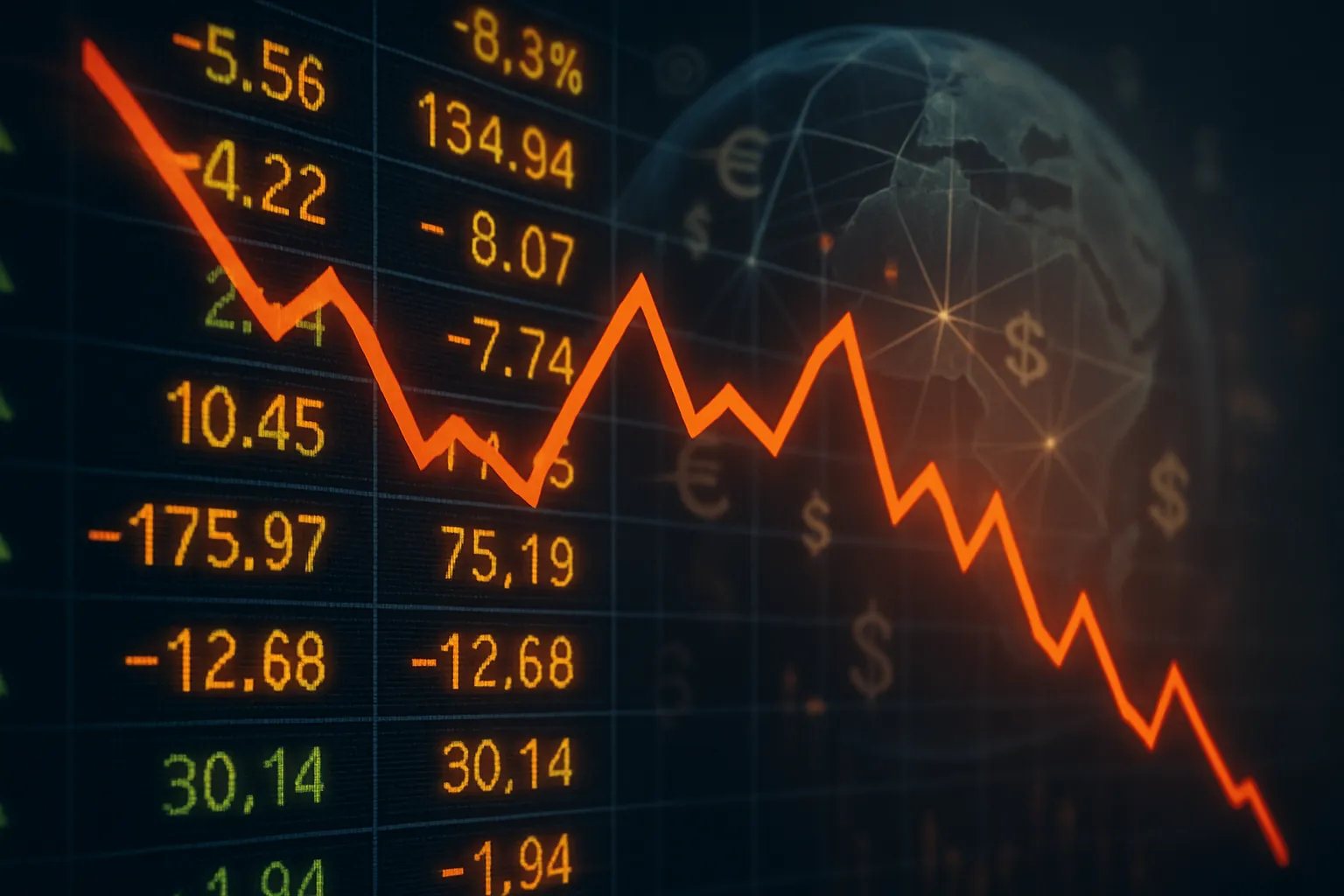
Japan’s Nikkei 225 bore the brunt of the shock, tumbling over 600 points at its worst—its lowest ebb in more than two weeks. As news spread eastward, currency markets responded with predictable velocity: The yen surged nearly 0.4% against the U.S. dollar, making life harder for Japanese exporters. Classic safe-haven behavior took hold, with risk-averse investors pouring into the yen despite clear signals that policy uncertainty in Washington would inflame volatility, not reduce it.
Export giants like Toyota, Honda, and Fast Retailing (which owns Uniqlo) saw their valuations shrink. The pain extended into every industry except one on the Tokyo Stock Exchange, with the utilities sector hit hardest—a 2.4% decline evocative of the collective unease gripping the market. The data tell a sharp story, but so do shell-shocked market veterans: “We haven’t seen this kind of disruptive Fed intervention since Nixon nixed the gold standard,” remarked Haruhiko Takahashi, chief analyst at Daiwa Securities, echoing the anxiety of a generation that remembers the repercussions of U.S. monetary upheavals.
The Political Undercurrent: Identity, Independence, and International Trust
A closer look reveals more than mere market mechanics at play. Lisa Cook’s removal signaled not only a break with precedent but a lurch in the battle over central bank independence—long a sacred cow of global capitalism. Trump’s justification, citing mortgage investigation allegations, was blasted by critics as thinly veiled political retaliation—especially given Cook’s prominence as a progressive, pro-diversity voice on the Fed and her historic significance as its first Black woman governor. Leading economists and policy scholars were swift to condemn the move: “Firing Lisa Cook undermines the very credibility our central bank needs to steer uncertain waters,” warned Harvard economist Jane Doe.
Why should this matter to you? Because the ripple effect is real. Analyst Tim Sato at Nomura Securities emphasized that when political actors subordinate central bank officials to partisan whims, “it creates global uncertainty, impacts consumer confidence, and ultimately reverberates through every household pension, every retirement account, and every small business looking for a loan.”
History reminds us just how costly politicized central banks can be. The stagflation-ridden 1970s provide a cautionary tale: as political interference in the Fed soared, so did inflation and unemployment, hurting working families for years. Lessons once seared into the progressive conscience seem to fade when short-term political gain is at stake.
“Firing Lisa Cook undermines the very credibility our central bank needs to steer uncertain waters.” – Harvard economist Jane Doe
Ripples Beyond Wall Street: Exporters Reel, AI Bets Questioned, and America’s Example
The chaos did not stop at the Nikkei or the Wall Street boardrooms. As the yen climbed, Japanese exporters—already sensing headwinds from waning global demand—faced yet another blow. For context, a stronger yen squeezes profit margins for Japan’s major manufacturers; the goods they sell overseas become more expensive and less competitive. Honda fell 2.12%, Toyota lost 1.26%, and chipmakers like Advantest and Tokyo Electron slipped as well. With export-driven economies so tightly tethered to U.S. monetary policy, the instability underscored the interconnected vulnerability baked into the global system.
Layered atop those market jitters, skepticism about the AI sector’s longevity crept into market discourse. Despite the hype, MIT’s most recent research suggests that fewer than 1 in 10 large-scale generative AI implementations have delivered positive returns. As OpenAI’s CEO recently admitted, “the infrastructure costs are enormous.” Investors, battered by the day’s policy shocks, questioned whether the AI boom is exactly that—a boom ready to bust should interest rates or credit tighten further. This convergence of uncertainty, both technological and macroeconomic, sets up a fraught autumn for traders and tech executives alike.
Beyond that, the American example—as always, visible for better or worse—set the tone for global democracy and markets. Trump’s decision triggered not just tactical selling or arbitrage, but an urgent conversation among progressive leaders in Europe and Asia about the wisdom of independent institutions standing above the fray of election-year politics. Can Japan, or any other major democracy, afford to let its central bank become a political football? For advocates of social justice and economic stability, the answer should be a resounding no.
Despite the turmoil, opportunistic investors did find limited upside. Buying on dips provided a floor to the Nikkei’s decline, a reminder that resilience endures even in volatile times. Still, as Wall Street saw the Dow slide nearly 350 points, it was clear that fear—not optimism—was the dominant sentiment.
