
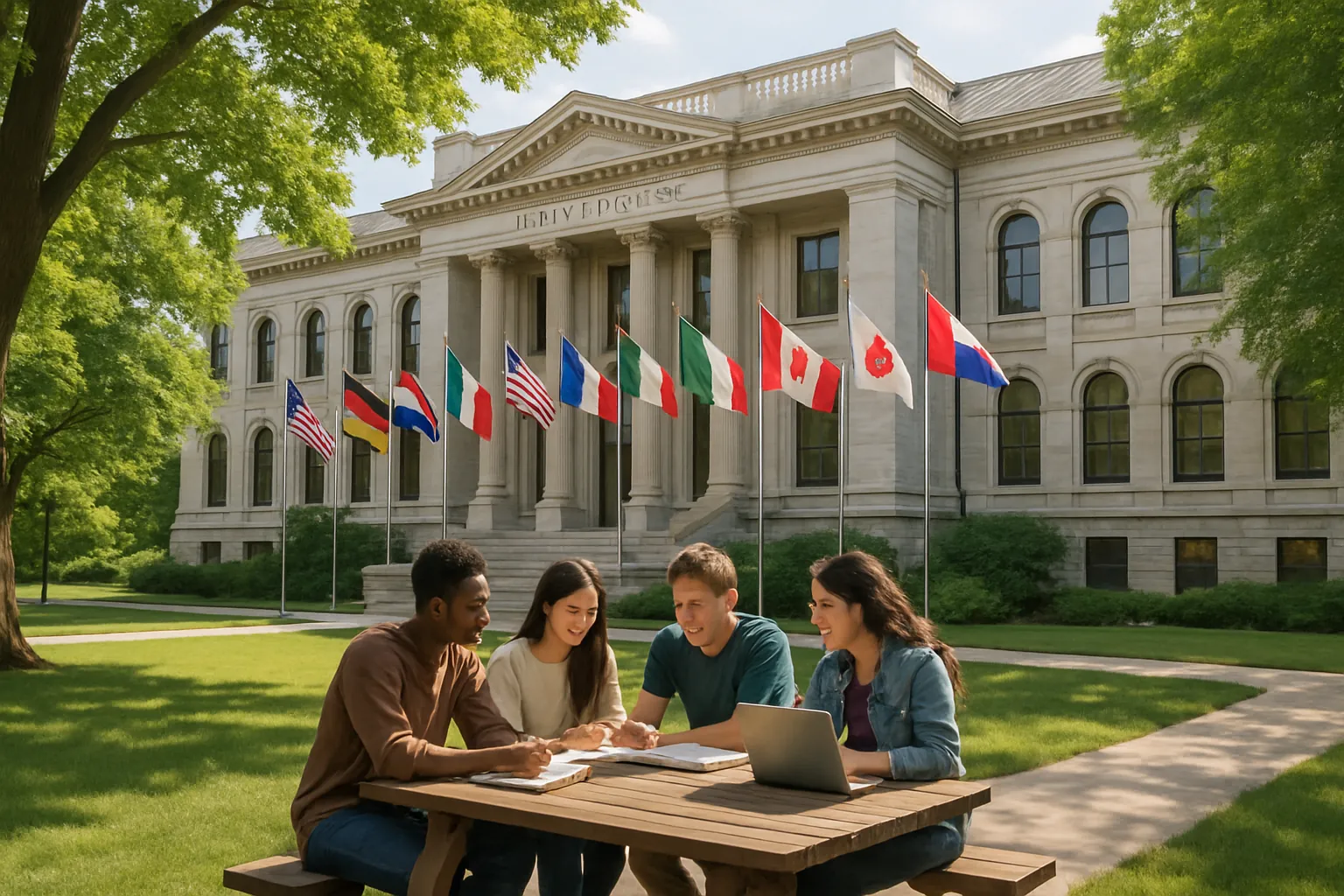
Confronting Uncertainty: Higher Education Under Siege
At the heart of today’s global academic networks sits a paradox: elite institutions like Harvard Kennedy School (HKS) are beacons for aspiring leaders worldwide, yet face mounting roadblocks from the very governments that should champion learning and innovation. In recent months, academic calendars and student dreams have been derailed not by pandemics or wars, but by calculated, restrictive immigration policies. As of this summer, HKS has taken its boldest step yet by announcing sweeping contingency plans to shield international students from the protracted legal crossfire between U.S. universities and the Trump administration’s Department of Homeland Security (DHS).
A federal judge’s preliminary injunction against the Trump administration offers only temporary respite for international students. While headlines tout Harvard’s courtroom victories, the reality is far more precarious. According to the HKS administration, approximately 52% of its student body—hundreds of scholars hailing from across the globe—face uncertainty over their visas, ability to attend in person, and in some cases, their very futures. Dean Jeremy Weinstein’s unmistakable message: “We will bring HKS to our students, wherever they are.” This is not merely an act of academic logistics, but a defense of the principle that global knowledge exchange remains a core American value, despite the cacophony of nativist rhetoric from Washington.
What does it mean when world-class institutions are forced into contingency planning because their government seeks to bar the doors of opportunity to the world’s brightest minds? The answer is as much about politics as it is about education. The Harvard Kennedy School’s adaptation—developing backup plans for remote learning through HKS Global and partnerships with Canada’s University of Toronto—reflects not only the stakes for students, but the broader fight for America’s position as a magnet for global talent.
Backup Plans: Teaching Without Borders
HKS’s contingency model encompasses two prongs. First, the HKS Global program allows international students—both incoming and returning—to pursue their degrees online, punctuated by up to three in-person intensive sessions in cities around the world. These aren’t mere webinars. The school has promised “best-in-class online instruction” and immersive, credit-bearing convenings led by Harvard faculty, aiming to maintain both educational rigor and the cross-cultural dynamism that sets the Kennedy School apart.
“We know that the challenges are significant, but we are committed to ensuring that no international student is forced to give up on a Harvard education because of political headwinds.” —Dean Jeremy Weinstein
The second pillar is a partnership with the Munk School of Global Affairs & Public Policy at the University of Toronto, open to returning students pending crucial regulatory approval and successful Canadian visa applications. It’s a creative workaround, bypassing U.S. entry barriers by collaborating with a respected ally—the very spirit of international cooperation that populist politics so often undermine.
Expert voices amplify the alarm over these developments. Harvard President Alan Garber has underscored that all of Harvard’s schools are developing contingency plans, a sign that the issues facing HKS are far from isolated. According to economist Raj Chetty, part of Harvard’s own faculty, international students play a vital role in the university’s research and economic contributions; restricting their access, he warns, “hurts American innovation and global standing.”
Visa uncertainty is not merely administrative; it sows financial and emotional anxiety. By late summer, U.S. consular officials had suspended or delayed hundreds of F and J visa applications, leaving students stranded outside the country despite federal guidance actually discouraging such denials. The ongoing DHS effort to revoke Harvard’s SEVP (Student and Exchange Visitor Program) certification could trigger a cascade of similar measures at other top-tier universities—a chilling effect on international enrollment at precisely the moment America can least afford it.
The Stakes: Policy, Precedent, and America’s Global Image
Curtailing international students’ entry has wide-reaching consequences beyond the individuals immediately affected. The damage to America’s reputation as a champion of open intellectual exchange is already apparent. In a striking parallel, during the McCarthy era, political witch-hunts drove foreign-born scholars out of U.S. universities, stymying progress in science, technology, and public policy. The pendulum swung back only when leaders recognized the national tragedy of wasted potential.
Now, two generations later, similar exclusionary impulses are given legal teeth. Immigration policy is used as a crude tool in culture wars, pitting “America First” slogans against the traditions of openness and excellence that underpin every top university. What is lost in these battles isn’t just Harvard’s prestige or an individual’s dream but the collective progress of science, diplomacy, and social justice. According to a 2023 Pew Research Center report, roughly 85% of Americans believe international students contribute positively to the U.S. educational system—underscoring just how disconnected the administration’s policies are from public sentiment and empirical evidence.
History will judge whether bold contingency planning like HKS’s sets a new precedent for adaptation or marks the beginning of a slow, self-inflicted decline. Those who value equity and collective well-being should see these creative solutions not as ideal, but as necessary resistance to a reactionary tide.
As you read this, ask yourself: does shutting out international students make us safer, smarter, or better? Or does it merely stifle ambition, diversity, and the possibility of a more peaceful, just world?
