
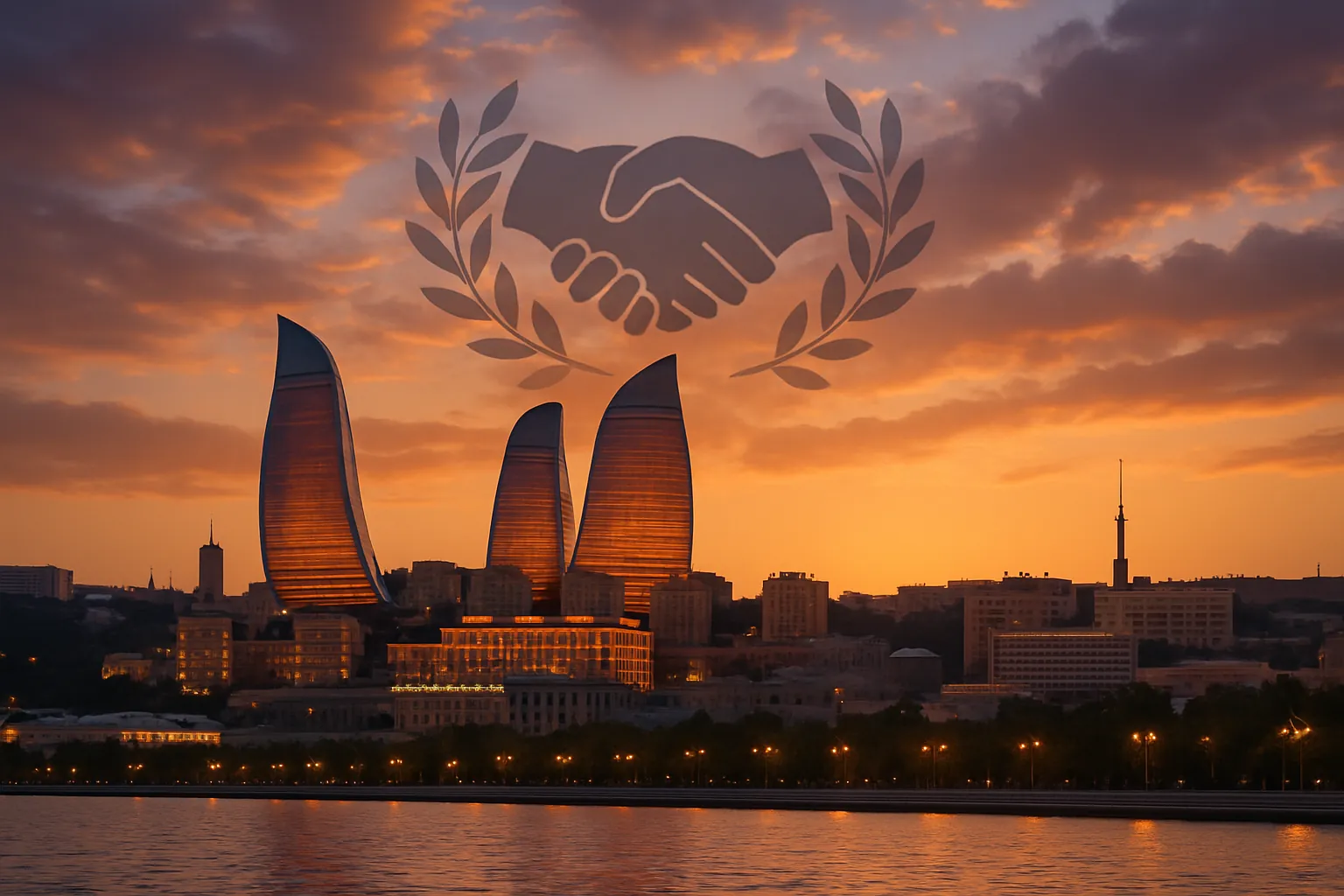
The Curtain Rises in Baku: A Diplomatic Crossroads
Few would have predicted a year ago that Israeli and Syrian envoys would sit at the same table—let alone engage in direct security talks on neutral soil. Yet in Baku, Azerbaijan’s cosmopolitan capital, these historic discussions unfolded quietly on the sidelines of Syrian President Ahmed al-Sharaa’s official visit. News of the rare summit has ignited international speculation: is this the start of a new chapter for two nations long at odds, or simply another twist in the Middle East’s unending saga?
The context is remarkable. President al-Sharaa, newly installed after the collapse of decades-long Baathist rule in Syria, faces daunting challenges at home and abroad. According to diplomatic insiders, the meetings—though shrouded in ambiguity—were no mere photo opportunity. Instead, they brought together Israel’s special envoy (direct from Prime Minister Netanyahu’s office), senior military commanders, and Syrian Foreign Minister Asaad al-Shaibani with security liaison Ahmed Al-Dalati. Their agenda: the volatile new balance atop the Golan Heights, the shadow of Iranian influence, regional proxy militias, and the humanitarian crisis now affecting Palestinian refugees.
Nestled between Russia, Iran, and Turkey, Azerbaijan is neither naïve host nor accidental intermediary. Its alliance with Israel and pragmatic energy partnerships make Baku a pointed venue, signaling intent to Tehran and Moscow alike. As Middle East analyst Rami Khouri observed in his column for The Guardian, “Azerbaijan is playing chess, not checkers—offering a neutral yet symbolic space for rivals to trade more than just handshakes.”
Behind Closed Doors: Israel’s Mount Hermon Gambit and Regional Fears
Events leading up to this diplomatic dance are as dramatic as the meeting itself. On December 8, 2024, Israeli forces asserted control over the demilitarized zone atop Mount Hermon—an act reminiscent of the bold operations that have long defined Israel’s military posture in the region. This seizure was no minor border adjustment. It followed years of spillover violence from Syria’s civil conflict and carried a message aimed squarely at Hezbollah and Iran-backed militias working in the region.
The Syrian delegation’s presence in Baku was partly a negotiation born of necessity. With Israel’s military presence now looming over traditional buffer zones, and with Iran’s ambitions persistent in both Syria and neighboring Lebanon, even hardliners in Damascus concede the old status quo is broken. The talks reportedly revolved around the security implications of Israel’s operations, limiting Hezbollah’s weapons transfers, managing Palestinian armed groups, and—most controversially—addressing the plight of tens of thousands of Palestinian refugees from Gaza stranded in Lebanon and Syria.
What motivates these former adversaries to even entertain discussion? Harvard historian and Middle East expert Leila Fakhouri notes, “Both governments are facing domestic and regional dilemmas that make dialogue, however indirect, not just pragmatic but urgent.” The specter of a broader Iran-Israel confrontation, coupled with waning Russian leverage in the region, creates what Fakhouri describes as a “narrow window for reimagining security arrangements.” For Israeli hardliners and Assad-regime loyalists alike, that notion was unthinkable just months ago.
“Diplomacy in the Middle East rarely rewards risk-takers—but in this case, neither Israel nor Syria can afford the status quo,” says Georgetown analyst Ali Maalouf, underscoring just how uniquely precarious—and transformative—this moment might be.
Opening the prospect of an Israeli coordination office in Damascus (albeit without full diplomatic status) signals small yet significant steps toward normalization. Of course, not all in Syria embrace such moves, given longstanding anger at Israeli military actions and support for Palestinian resistance groups. Still, as Foreign Minister Asaad al-Shaibani told Reuters, “We have no illusions, but circumstances require us to be realistic.”
Between Normalization and Realpolitik: The Road Ahead
Nothing is guaranteed in Middle East peacemaking, and past attempts at Israel-Syria rapprochement are fraught with failure. The 1974 Disengagement Agreement, hammered out in Geneva under immense U.S. and Soviet pressure, remains the closest precedent. Yet that pact was more about freezing conflict than forging reconciliation. This time, American involvement continues—reports suggest U.S. President Trump will act as patron for a future security agreement in September, mirroring his administration’s push for normalization between Israel and several Arab countries in recent years.
Progressives recognize that a mere “normalization announcement” can mask unresolved injustices—not least the displacement of Palestinians, the crackdown on Syrian dissent, and Israel’s ongoing occupation of Syrian territory. These headlines too often airbrush the human stakes behind the statecraft. As the international community weighs the implications, courageous diplomacy must be coupled with a commitment to justice, transparency, and accountability. Mere backroom deals between powerbrokers, however necessary, will not deliver a sustainable peace.
Some within Israel’s own security establishment also voice caution. Former Mossad chief Tamir Pardo has warned that “rushing into alignments with unstable new regimes can invite disaster,” pointing to the Arab Spring’s many unintended consequences. On the Syrian side, trust remains scarce, with remnants of the old guard quick to frame dialogue as betrayal. Balancing hope and skepticism is an act of political tightrope walking.
Observers from the International Crisis Group stress the value of these contacts nonetheless. “Dialogue, no matter how incomplete, is a vital antidote to outright conflict,” its latest report states. Yet, moving beyond mere crisis management to a durable settlement will require more than mutually signed memorandums and cautious handshakes. It will demand a reckoning with the structural forces that have kept Israelis and Syrians locked in enmity: occupation, authoritarianism, exclusion, and the marginalization of civilians who bear the brunt of war.
The current talks in Baku are not a breakthrough—yet they are a reminder that intractable conflicts are sometimes moved by quiet, imperfect gestures as much as by grand summits. The challenge now is whether leaders can translate diplomatic calculation into genuine progress for citizens who have known too much loss and too little voice. For those invested in equality, justice, and shared security, watching what comes next will be as urgent as any news from the negotiating room.
