
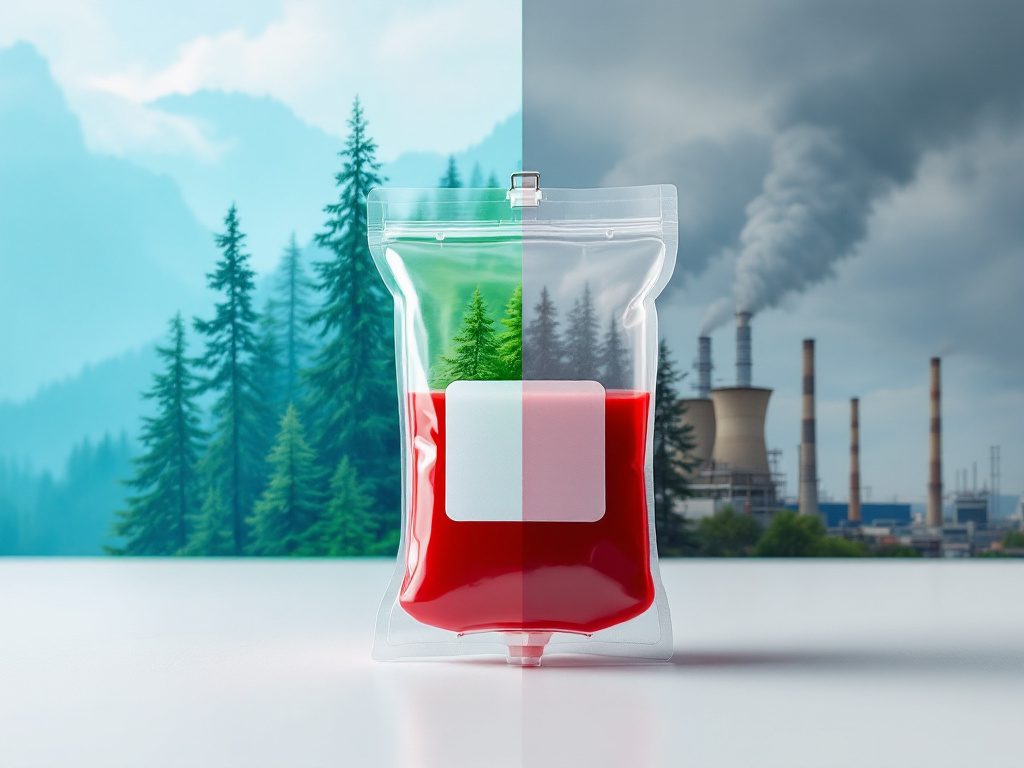
Climate’s Newest Casualty: The Lifesaving Blood Supply
Amid headlines about wildfires, hurricanes, and heatwaves, the quiet crisis unfolding indoors—across blood banks and hospitals—rarely makes the evening news. Yet a new global review published in The Lancet Planetary Health signals just how vulnerable our lifeline is: climate change is already undermining the safety and stability of the world’s blood supply.
A closer look reveals how the compound effect of climate extremes strikes at every stage. Researchers from Australia’s University of the Sunshine Coast and Red Cross Lifeblood, led by Dr. Elvina Viennet and Associate Professor Helen Faddy, document sweeping evidence. Disruptions range from donor shortages to fraught logistics, underscored by the short shelf life of donated blood—an unforgiving fact when disasters hit.
Imagine a region struck by wildfires or a relentless cyclone, roads impassable, power grids down. Just as doctors prepare to handle trauma after such events, they find blood banks depleted. The study recounts how ex-Tropical Cyclone Alfred in Australia led to closure of donation centers and over 3,500 canceled appointments in New South Wales and Queensland—a mere glimpse of what’s to come as extreme weather intensifies with a warming planet.
Real-world consequences are not theoretical. According to the World Health Organization, millions of transfusions are performed globally every year, saving lives in surgery, childbirth, trauma, and for patients with chronic diseases. When the blood system fails, it’s not an inconvenience—it’s a catastrophe.
Double Trouble: Disease and Disruption in the Donation Chain
Beyond that, the review highlights how infectious diseases are evolving alongside climate change. Warming temperatures and shifting rainfall patterns fuel outbreaks of mosquito-borne illnesses—Dengue Fever, Malaria, West Nile Virus—putting once-secure regions at fresh risk. These diseases make swathes of potential donors ineligible and can jeopardize the safety of the blood supply by raising the threat of transfusion-transmitted infections.
Dr. Viennet’s team demonstrates that the risks aren’t isolated to donor health. The entire blood supply chain hangs in the balance: collection sites may become inaccessible; storage is threatened by outages and flooding; and distribution grinds to a halt when disaster strikes. Notably, the review is the first global assessment to scrutinize every link in the donation-to-transfusion pipeline through the lens of climate risk—filling a major blind spot in public health and disaster planning.
Harvard epidemiologist Dr. Julia Marcus remarks, “Preparedness for climate-related hazards cannot be limited to sandbags and shelters. If we ignore critical medical infrastructure like blood banks, lives will be lost not only in disasters themselves, but in their aftermath.”
“When the blood system fails, it’s not an inconvenience—it’s a catastrophe. Our window to adapt is narrowing.” —UniSC Associate Professor Helen Faddy
The chain reaction doesn’t end with physical health. The review identifies mental health stressors—what they call ‘climate anxiety’—as a fresh factor. The fear and uncertainty sparked by relentless disasters can dampen civic participation, eroding the volunteer spirit that underpins blood donation around the world. Communities gripped by acute stress are less likely to turn out in force for blood drives, compounding shortages exactly when supplies are most critical.
Building a Resilient Blood System: Urgent Policy and Collective Action
No country—rich or poor—is immune from these converging threats. The United States, for example, saw blood shortages spike during the Texas power crisis and Hurricane Maria in Puerto Rico. According to Dr. Claudia Cohn of the University of Minnesota, “Events that damage infrastructure or discourage public movement have ripple effects on donation and delivery for weeks or months.” That vulnerability is magnified in lower-income settings, where backup generators and robust transport systems are rare luxuries.
The review’s authors call for a sweeping reimagining of how we safeguard our blood supply. They propose climate-adaptive reforms that go far beyond business-as-usual: early warning systems that link to weather forecasts, mobile and flexible collection programs that can rapidly relocate to safer sites, digital networks to coordinate emergency deliveries, and more agile donor-eligibility criteria during outbreaks and disasters. Policy innovation, they stress, is as urgent here as in energy or water. “We must put the same effort into protecting our blood supply as we do our power grid,” as Dr. Faddy warns.
Political will remains the missing ingredient. Progressive voices in public health argue that only decisive, government-led action can guarantee sustained investment in resilient systems. Piecemeal approaches—relying on goodwill or temporary grants—leave millions exposed. In this arena, conservative resistance to robust government spending becomes more than a budget issue; it becomes a matter of life and death.
A glance at the history of public health progress teaches a lesson: collective infrastructure, from clean water to vaccination programs, succeeds when society recognizes the moral imperative of caring for the vulnerable. The blood supply is no different. “Public goods demand public stewardship,” observes Johns Hopkins bioethicist Dr. Ruth Faden. Refusing this responsibility leaves our communities at the mercy of forces no individual or local charity can withstand.
The pathway forward is clear: governments must heed the warnings, fund reforms, and prioritize resilience. You can demand action—by writing lawmakers, supporting science-based advocacy, or organizing community blood drives that build awareness not just around donation, but around climate justice itself. As temperatures climb and disasters multiply, our response must be as united and as relentless as the threat itself.
