
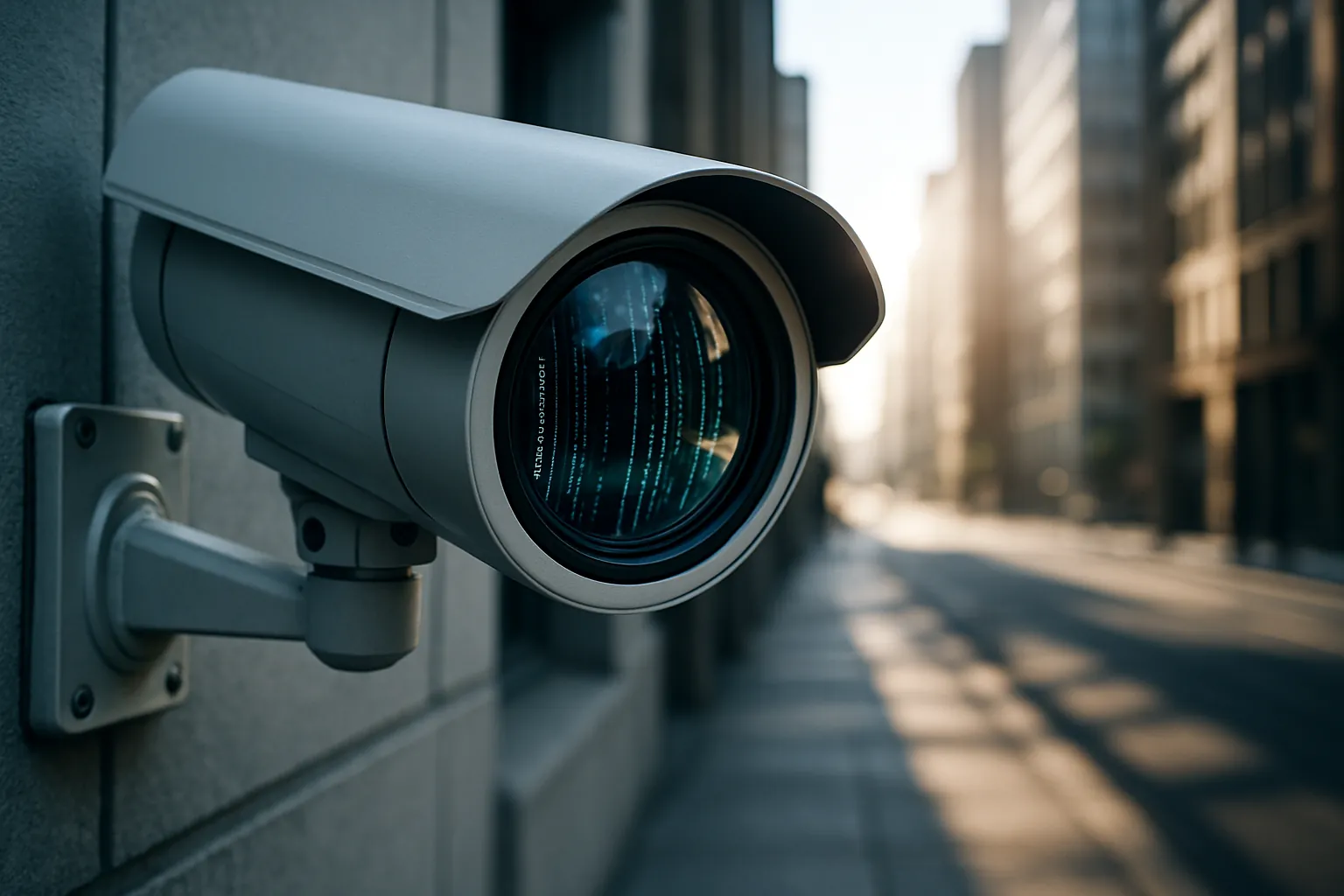
America’s Digital Dilemma: How Palantir and Trump Forge a Surveillance State
Think back to the outset of the digital revolution, when the promise was one of freedom—access to information, boundless connection, and an empowered citizenry. Now, a new reality emerges, one where the very tools that were supposed to liberate us threaten to imprison us. Under President Trump, the White House has opted to marry government power with private-sector surveillance, building what many experts see as the architecture for a digital dictatorship. The partnership between the Trump administration and Palantir Technologies—co-founded by billionaire Peter Thiel—ushers in a new era of surveillance that puts the privacy and civil liberties of Americans at unprecedented risk.
Here’s what’s at stake: This collaboration aims to weave together facial recognition, license plate databases, social media activity, cellphone metadata, and more into a single, AI-driven system. The intent isn’t just monitoring; it’s assessment—assigning risk scores to individuals, echoing China’s infamous social credit regime. Palantir’s software played a key role in ICE’s controversial tactics of locating and deporting undocumented immigrants. Now, its scope threatens to expand to every American.
Concerns are more than theoretical. In a landmark 2018 report, the ACLU warned, “Giving law enforcement agencies unchecked access to powerful surveillance platforms invites abuse, mission creep, and the targeting of marginalized communities.” As Palantir grows its presence from Silicon Valley startup to government surveillance juggernaut, the threat of America morphing into a digital prison looms larger.
Surveillance Capitalism and the False Allure of Smart Tech
Beyond executive overreach, Americans find themselves enticed into surveillance willingly. Take the much-hyped smart glasses, pushed by tech giants like Meta and Snap—touted as the next leap in wearable tech. Yet, with fewer than 3.5 million units sold globally in 2024 (ABI Research), adoption simply hasn’t matched marketing rhetoric.
The reason isn’t just cost or clunky designs. Smart glasses are still tethered to smartphones, demanding compatible devices and constant data connectivity. Ray-Ban Metas, for instance, require users to have the latest OS versions and remain reliant on Bluetooth and cloud synchronization just to function. Harvard privacy scholar Shoshana Zuboff, who coined the term “surveillance capitalism,” explained to NPR, “Companies are normalizing the idea that surveillance is the price of technological progress.”
The subtle seduction here is voluntary surveillance. Americans strap devices to their faces, enabling the constant recording and uploading of personal data in exchange for marginal convenience. The consequence is erosion of privacy not by force, but by design—resigned to a culture where every moment is potentially for sale to advertisers or, worse, to government watchlists. A closer look reveals that this isn’t just technological advancement; it’s a commercial and political arms race over who owns your life’s data trail.
“When power and technology unite unchecked, the result is not greater safety, but greater danger—for our freedom, autonomy, and democracy.”
How did we arrive here? The marriage between big government and tech monopolies, facilitated with little transparency or oversight, renders citizens exposed from every angle. The ideal of privacy—once sacrosanct in the American psyche—faces a slow, systematic erosion, replaced by a resigned shrug and a tap of the accept button.
Vulnerabilities Everywhere: From National Security to Corporate Espionage
The challenge doesn’t stop at personal gadgetry. Government agencies themselves are woefully ill-equipped for the digital age. According to cybersecurity expert Ramesh Indika, developing countries, “run critical government systems with outdated infrastructure and weak passwords, making them sitting ducks for cyberattacks.” That reality hit home as the U.S. and other nations witnessed a wave of cyber incursions—disrupting pension payment portals, water supply agencies, and vital databases, often targeting society’s most vulnerable citizens.
At the center of global espionage risks stands the Bourget Aeronautics Fair in France—a place where defense firms face attacks not just from cybercriminals, but also rival nations. General Philippe Susnjara, head of the DRSD, notes a shocking 25% increase in such incidents between 2021 and 2023, a statistic that underscores the rising stakes in digital arms races. While large firms fortify their defenses, smaller suppliers—who make up 80% of the industrial base—remain exposed, often with devastating consequences for national security and innovation.
Meanwhile, the frontlines of espionage have shifted from Cold War-era smoke-and-dagger tactics to encrypted messaging apps and cryptocurrency payments. A scandal in Silicon Valley revealed how an Irish payroll manager, O’Brien, was allegedly paid by a rival using Telegram and crypto, leaking confidential data for profit. Peel back the curtain, and you see that digital infiltration is now a fixture, not an aberration, in the competitive landscape.
Are these isolated stories, or harbingers of a systematic decline in trust and security? “This is not the America we want to become,” insists former NSA official William Binney. “We need oversight, transparency, and a reaffirmation of our fundamental rights—or the digital prison becomes the new normal.”
Where Do We Go From Here? Restoring Trust, Rights, and Democratic Oversight
There’s no denying the urgency. Left unchecked, these trends threaten to undermine the foundational American promise: that government serves and protects its people, rather than invades and profiles them. As public-private surveillance alliances harden, the challenge for progressives—and all who value democracy—is clear: mobilize for robust privacy laws, demand algorithmic transparency, and support whistleblowers and watchdogs keeping power in check.
The stakes could not be higher. History is replete with lessons. The post-9/11 expansion of state surveillance under the Patriot Act—sold as a temporary solution—became a permanent loss of rights. Yet, public pressure brought reforms like the USA Freedom Act. Change is possible—but only through vigilance and engagement. Every American has a stake in resisting the normalization of surveillance. Will we have the courage to reclaim our right to a private life, or accept a digital panopticon in the name of safety?
