
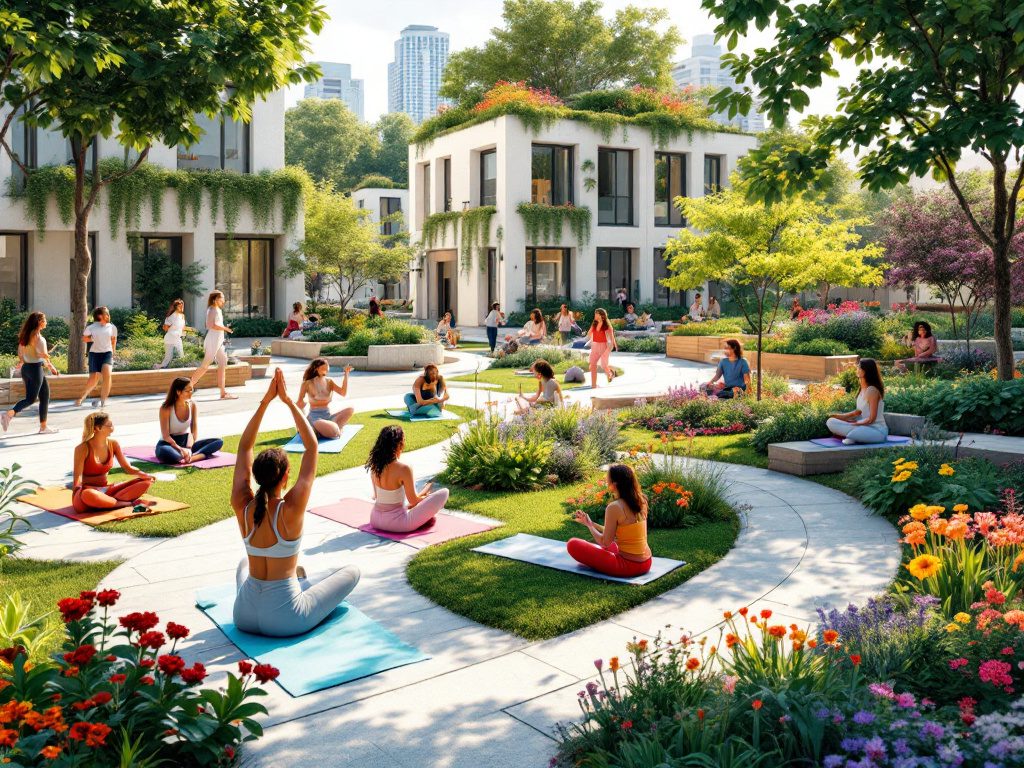
Rethinking Spaces: Architecture as a Catalyst for Social Good
Step onto the newly redesigned floors of the Leichhardt Women’s Community Health Centre in Sydney and you’ll experience more than walls, hallways, and consultation rooms. You’ll find an architectural commitment to security, privacy, and dignity—qualities essential to the well-being of the thousands of women who seek care within its walls. Architect Richard Francis-Jones, leading the redesign through fjcstudio and sustained by the enduring generosity of the Lisa Macdonald Fund, has harnessed the power of thoughtful built environments to make healing safer and more inclusive.
The drive to rethink conventional notions of health-centered architecture is not new, but rarely is it so intentionally executed. The Leichhardt Women’s Community Health Centre serves as a beacon of trauma-informed design: community rooms integrate natural light while remaining discreet and private, accessible entrances prioritize clients with disabilities, and culturally sensitive décor signals that diversity isn’t an afterthought. As Francis-Jones notes, the process means “putting women’s specific needs—especially those of survivors of violence—at the very core of design principles.” Such intentionality is a far cry from the sterile, impersonal health facilities that still dominate urban landscapes globally.
Decades ago, public health leaders fixated on minimizing communicable disease through infrastructure. These days, a growing movement recognizes that dignity, equality, and safety are just as critical as hand sanitizer. According to the World Health Organization, “trauma-informed spaces have measurable effects on health outcomes for marginalized groups, decreasing anxiety and increasing participation in preventive care.” Design is destiny when it comes to community health.
Grassroots Action: Communities Co-Creating Healthier Futures
Travel across continents to Quito, Ecuador, and you’ll witness a radical experiment in participatory public health that upends the traditional top-down model. Here, researchers such as Morales-Garzón and their team dedicated months to listening tours, walking audits, and story-sharing circles. What emerged was a nuanced portrait of local barriers: unsafe routes to schools, limited access to fresh foods, and profound neighborhood pride interwoven with apprehension over change.
This is public health as practiced by and for the people themselves. Instead of experts parachuting in with prescriptions, initiatives were co-designed by residents. Community leaders mapped resources and deficits, unearthing not only geographic food deserts but the subtle ways culture and daily rhythm shape lifestyle choices. The partnership yielded safety-focused street redesigns, interactive nutrition workshops, and mobile phone-based monitoring tools that resonate with younger generations.
Why does this matter? Top-down solutions often falter when they fail to honor local realities. By deploying participatory action research, this project bypassed the one-size-fits-all playbook. Harvard urban health specialist Dr. Lisa Berkman observes, “Lasting improvements in nutrition and activity come when solutions emerge from lived experience, not generic advice.” The Quito model challenges policymakers everywhere to do better—centering community voices to build sustainable health infrastructure.
“Lasting improvements in nutrition and activity come when solutions emerge from lived experience, not generic advice.”
— Dr. Lisa Berkman, Harvard urban health specialist
Beyond that, the initiative embodies a form of activism rooted in hope and collaboration—two ingredients often neglected in traditional discussions of public health.
From Blueprints to Behavior: Resilient Design, Social Wellness, and the Next Generation
While Sydney and Quito offer powerful lessons in place-based innovation, change is equally dynamic in U.S. classrooms, toolkits, and neighborhood organizations. The USC Sonny Astani Department of Civil & Environmental Engineering, for example, graduates students not just in technical prowess but in the art of resilience and well-being. Courses led by Professor David Gerber emphasize the integration of computer science and robotics into building science—preparing a new generation to visualize, simulate, and build spaces that are both energy-efficient and people-centered. As alumna Brittany Moffett’s story illustrates, meaningful projects like mobile apps for seismic hazard communication are no longer outliers, but central to what students expect from their engineering education.
As communities face climate instability, mass migration, and rising inequality, evidence-driven models are essential. The Urban Land Institute’s Building Healthy Places Toolkit provides exactly that: 21 strategies refined over a decade, spanning transit-oriented development to inclusive social spaces. Every guideline is grounded in research, and the broad coalition behind the toolkit—spanning public housing authorities to private developers—proves that market pragmatism and progressive health policy need not be at odds. As highlighted in ULI’s own evaluation, “Healthy, walkable, socially-connected communities routinely outperform traditional subdivisions in both resident satisfaction and long-term institutional value.”
What about the habits and aspirations shaping younger generations? According to a sweeping Eventbrite analytics report, wellness is on the rise as a social activity, not just a solitary goal. Over the past year, there’s been a 146% increase in fitness event attendance and a 92% jump in alcohol-free events among young adults. No longer is wellness reserved for the gym or therapy session; it’s found in running clubs, supper groups, and “Fourth Spaces”—hybrid environments where purpose, belonging, and personal health intersect. For progressive policymakers and urban planners, such data is gold: it points to a future where investments in community infrastructure can deliver exponential returns in social cohesion, mental health, and civic engagement.
What’s Next: From Inspiration to Implementation
Each city, neighborhood, and classroom profiled here points to a larger truth: healthy communities don’t arise by accident. They are built when professionals refuse to settle for outdated, inequitable models and when everyday people demand a say in shaping their environments. Conservative policies, too often, double down on austerity, privatization, and neglect of “soft” infrastructure—the parks, clinics, and pathways that knit society together. Real progress arrives when justice and inclusion become architectural imperatives, backed by data and democratized by community input.
What stands between a just, inclusive, and healthy urban future is not a lack of ideas. It’s a shortfall of political will fanned by tired dogma and short-term cost-cutting. As more leaders heed the lessons of Leichhardt, Quito, and the cities embracing solutions rooted in science and solidarity, a new standard emerges: spaces crafted for the wholeness of every individual, not just the comfort of the few.
