
From Withdrawal to Weapon Bazaar: Unintended Consequences
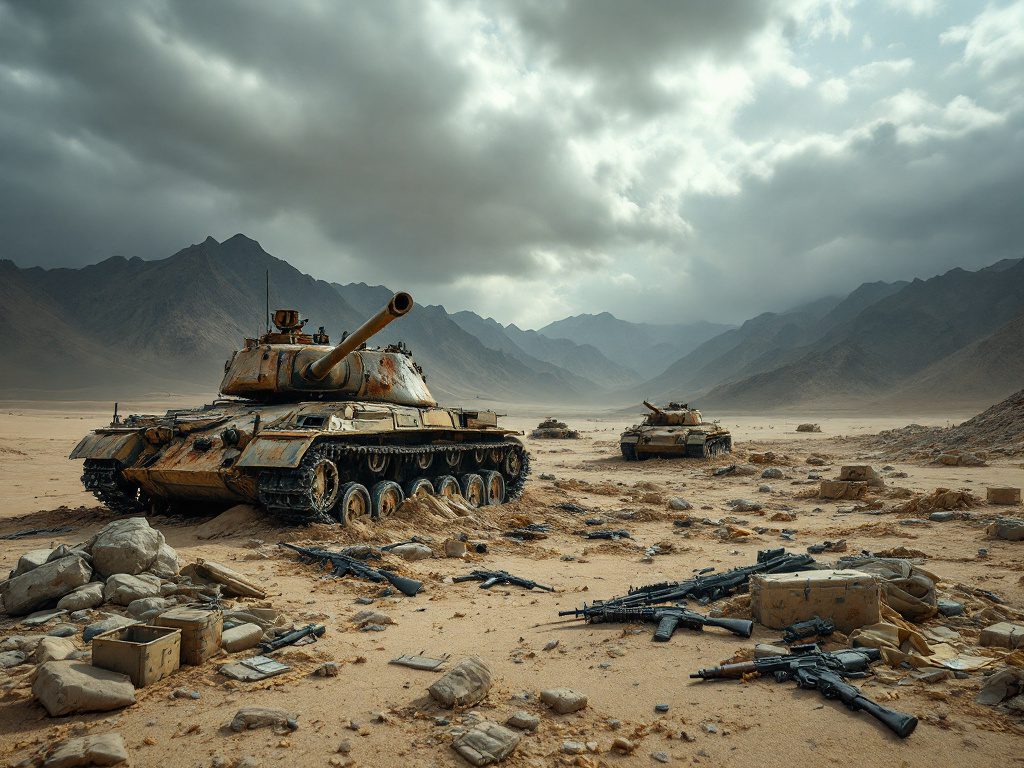
As U.S. troops raced to depart Afghanistan in August 2021, the world bore witness to chaotic scenes at Kabul airport—a powerful, unforgettable image etched into the collective memory. Yet, a less visible but equally consequential fallout unfolded across Afghanistan’s military compounds and warehouses. Amid the rush, staggering volumes of weaponry and equipment—funded by more than two decades of U.S. taxpayers’ investment—were left behind unlocked and unguarded, falling squarely into the Taliban’s hands.
UN assessments and independent reporting revealed the scale of this loss: the Taliban captured roughly one million weapons and equipment pieces as U.S.-backed Afghan forces collapsed. According to recent United Nations briefings and BBC investigations, as many as half a million of these weapons have since vanished from official tallies—lost, smuggled, or sold on vibrant black markets. A devastating scenario has emerged: groups previously stifled by resource scarcity are now flush with advanced arms, courtesy of hasty withdrawal and systemic oversight failures.
Weapon stockpiles included coveted American M4 and M16 rifles, night-vision kits, armored vehicles, and communications gear—equipment designed to provide Afghan forces a crucial edge over insurgents, now paradoxically empowering the very actors they were meant to contain. The results are rippling across conflict zones, spurring regional instability and emboldening organizations like Tehreek-e-Taliban Pakistan, the Islamic Movement of Uzbekistan, and Al-Qaeda affiliates.
“Gifting” Guns—and Escalating a Black Market
What became of those weapons is a study in unintended consequences and the darker logic of local power. As detailed in BBC reports and United Nations Security Council briefings, Taliban field commanders adopted a tradition with disastrous global ramifications: “gifting” advanced American weapons to local fighters and loyalists, an incentive for recruitment and a means of cementing relationships. In the eyes of these commanders, ownership of a U.S.-supplied rifle wasn’t merely a strategic asset—it was a hard currency and a status symbol.
Professor Ahmed Rashid of Johns Hopkins cautions that such practices have “restructured loyalty networks and fueled a shadow economy around arms trading.” Accounts collected by Human Rights Watch and the Special Inspector General for Afghanistan Reconstruction (SIGAR) reveal that more than “20% of seized US weapons were deliberately retained by local Taliban leaders, outside even the minimal record-keeping the group attempted.” The rest filtered, sometimes within days, into an exploding illicit market. According to the UN, sophisticated rifles and night-vision devices can now be purchased via WhatsApp or Telegram, with wealthy buyers—both militant and mercenary—outbidding each other and exporting weaponry across borders.
“It’s almost as if America’s arsenal was put up for global auction, with consequences far beyond Afghanistan’s borders,” warns Harvard national security analyst Dr. Lisa Andrews. “This is one of the most stunning examples of blowback we’ve ever documented.”
One might ask: Could this have been prevented? SIGAR’s stark warnings predate the Taliban takeover. Years of inadequate record-keeping and tracking plagued U.S. military operations in Afghanistan. The Department of Defense’s supply chain and accountability practices drew criticism in dozens of oversight reports. A 2021 SIGAR analysis concluded, “the State Department provided limited, inaccurate, and untimely information about weapons and equipment, contributing to the current accountability crisis.”
For conservatives who once touted the security dividends of American military investment in Afghanistan, this episode stands as a painful contradiction. Washington’s claims that all weapons were either destroyed or securely locked away ring hollow against mounting evidence and on-the-ground accounts. The fact remains: armaments have ended up in the hands of groups posing a direct threat to stability—and the mechanisms for reclamation are practically, financially, and logistically impossible.
Political Spin, Accountability, and Afghans Left Vulnerable
With blame ricocheting across the political spectrum, it’s essential to separate myth from reality. Following withdrawal, former President Donald Trump controversially pledged to “reclaim” up to $85 billion worth of advanced weapons—an inflated figure, as fact-checks swiftly clarified the sum included more than training, salaries, and infrastructure, not just materiel. The Biden administration, meanwhile, acknowledged the vacuum, but insisted most of the high-tech equipment was rendered inoperable before departure. That claim—the centerpiece of the official defense—doesn’t align with what BBC and UN monitors are recording inside Afghanistan and beyond its borders.
A closer look reveals layers of systemic failure, bipartisan miscalculation, and a lack of foresight. Where were the rigorous exit plans? Why had decades of oversight flagged yet never resolved glaring accountability gaps? The answers are uncomfortable: short-term thinking and national security theater often triumphed over sustainable planning. Afghan civilians now suffer the collateral damage of these missteps. Weapons intended to protect their fragile democracy now imperil them, with each black market transaction raising the risk of violence and repression.
“The tragedy isn’t just about hardware—it’s about the millions left at the mercy of better-armed militants,” says security studies scholar Fatima Shahzad at the London School of Economics. “America owed these people more honesty, transparency, and responsibility. Instead, what followed withdrawal was denial, deflection, and a dangerous lack of follow-through.”
Echoes of Iraq’s weapons diversion debacle in the mid-2000s reverberate here, underscoring how militarized foreign policy without concrete accountability measures courts disaster. The endgame for Afghans and the wider region now includes an ascendant arms trafficking economy, heightened terrorist risk, and a shadow cast over future humanitarian and development efforts.
Progressives recognize that securing peace goes far beyond military might. It means investing in robust institutions, honest policy debates, and sincere partnerships—not just dramatic gestures or blame games. History’s lesson, once again, is that what America leaves behind matters as much as what it brings. A new commitment to global accountability must be more than a talking point—it’s a necessity if we hope to avoid repeating these mistakes.
