
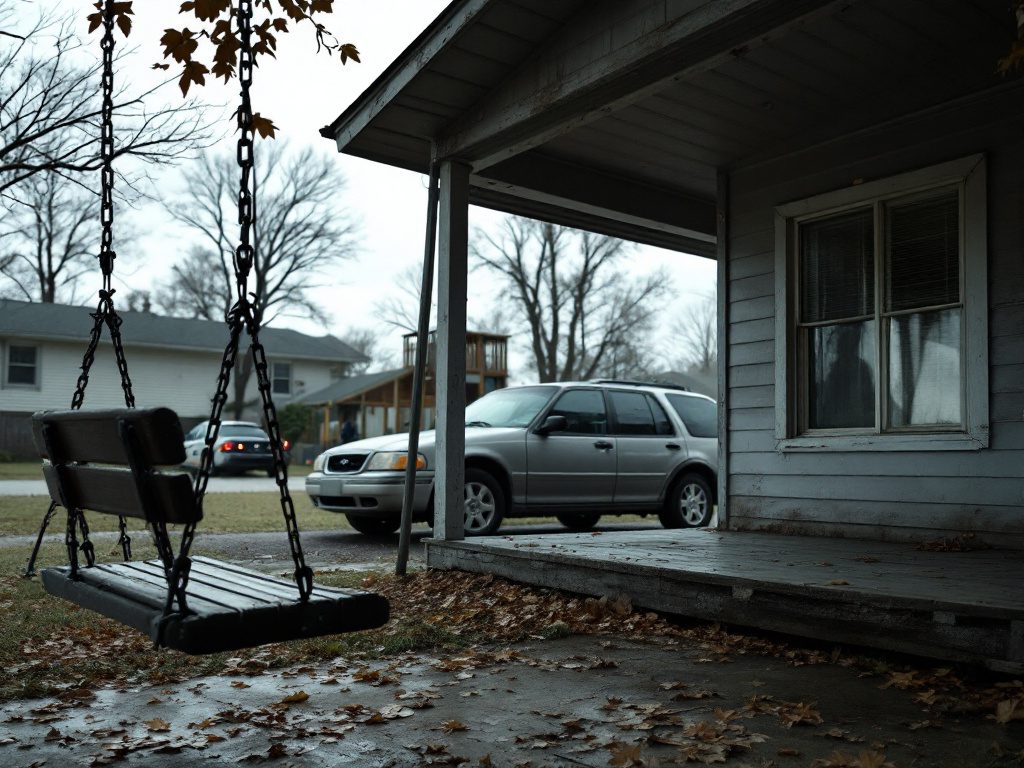
A Nightmare for an American Family
Imagine awakening before dawn to chaos and confusion—your children startled from sleep, flashlights piercing the darkness, and armed men flooding your home. It sounds like the stuff of dystopian fiction, but for Marisa and her daughters, this was reality. Having only recently settled in Oklahoma City for a slower pace of life, their hopes for a gentle new beginning were shattered when a team of roughly 20 federal agents, armed and armored, burst into their house with a search warrant in hand. Their target? Not Marisa, nor her children, but names belonging to former residents still receiving mail at their address.
The raid was executed with military precision—and utter disregard for the actual inhabitants. As rain poured down outside, officers identifying as ICE, FBI, and U.S. Marshals ordered Marisa and her three daughters outdoors, some still in their undergarments. In a moment recounted with palpable anguish, Marisa said she feared not just for her dignity but her family’s very safety, even as she yelled, “We’re citizens!” Her husband, still in Maryland, could only listen in horror by phone as events unfolded hundreds of miles away.
Beyond the physical intrusion lay the emotional devastation. The family watched, helpless, as agents seized their cell phones, laptops, and every dollar of their painstakingly saved emergency funds, allegedly as “evidence” tied to suspects they had never met. The youngest daughter sobbed, asking if she was about to be taken. “I genuinely thought they were going to kidnap my daughters,” Marisa told local news.
Questionable Procedures, Absent Accountability
Law enforcement’s power carries an implicit promise: to protect, not persecute, the innocent. What happens when that contract is broken? The Oklahoma City raid exposes troubling cracks in federal procedures that should alarm anyone who values civil liberties—regardless of political leanings.
Agents refused to provide business cards or meaningful explanations, leaving Marisa in the dark about how or when her family’s property would be returned. Official records quickly blurred the truth: though agents identified themselves as ICE, FBI, and U.S. Marshals, a spokesperson for the U.S. Marshals Service later denied any of their agents participated at all. Simple questions—who led the operation, who will help restore the family’s property, and who is accountable—have gone unanswered.
This kind of bureaucratic finger-pointing is not rare when law enforcement oversteps, but it leaves ordinary citizens caught in a Kafkaesque nightmare. As Harvard law professor Martha Minow has argued, “when the machinery of security is turned on the innocent, its legitimacy is lost.” Without real transparency, trust evaporates—for families like Marisa’s, for neighbors hearing the story, and for anyone who may find unfamiliar names on their mailbox.
“Can you just reprogram yourself and see us as humans, as women? A little bit of mercy. Care a little bit about your fellow citizens.” — Marisa, Oklahoma City
Property remains confiscated—sometimes for weeks or months, as legal wrangling drags on and families struggle to prove their innocence. Even when rights are eventually restored, the damage cannot be undone. According to a 2023 report by the Migration Policy Institute, mistaken-identity raids not only decimate trust in authorities but also produce long-term anxiety and trauma, especially among children.
The Human Cost of a Politics of Fear
A closer look reveals this was not an isolated case, but a symptom of an immigration enforcement system supercharged by a politics that sees “toughness” as virtue—even when it tramples the lives of the blameless. Oklahoma’s increased cooperation with federal deportation agencies, part of a broader crackdown championed by conservative policymakers over recent years, has been justified as necessary for security. What it has produced instead, in cases like Marisa’s, is terror inflicted on U.S. citizens. Families who look or sound like immigrants are presumed suspect first—a phenomenon repeatedly documented by civil rights groups like the ACLU.
Across the nation, incidents of law-abiding citizens—often of color, often with immigrant backgrounds—being caught up in aggressive federal sweeps have become disturbingly common. The human toll is undeniable: children left terrified, mothers left desperately pleading for recognition of their citizenship and dignity. The responsibilities of government are never meant to endanger its own.”
Pew Research Center polling shows that majorities of Americans oppose indiscriminate raids and support due process safeguards. Yet, without local resistance and meaningful governmental reform, those values remain paper promises. Community leaders urge policies that stress verification and clear protocols before executing such forceful, high-stakes actions. As immigration attorney and former DOJ official Prerna Lal notes, “Every time ICE gets it wrong, it’s not just a matter of paperwork. It’s a family, a life, a sense of home shattered.”
Marisa’s story should be a clarion call. When the state casts too wide a net, it risks destroying the very communities it vows to defend. True patriotism is measured not by the ability to instill fear, but by the refusal to let anyone—especially a child—endure such fear in their own country. Are we the kind of nation that protects families seeking peace, or one that turns innocent dreams into waking nightmares?
