
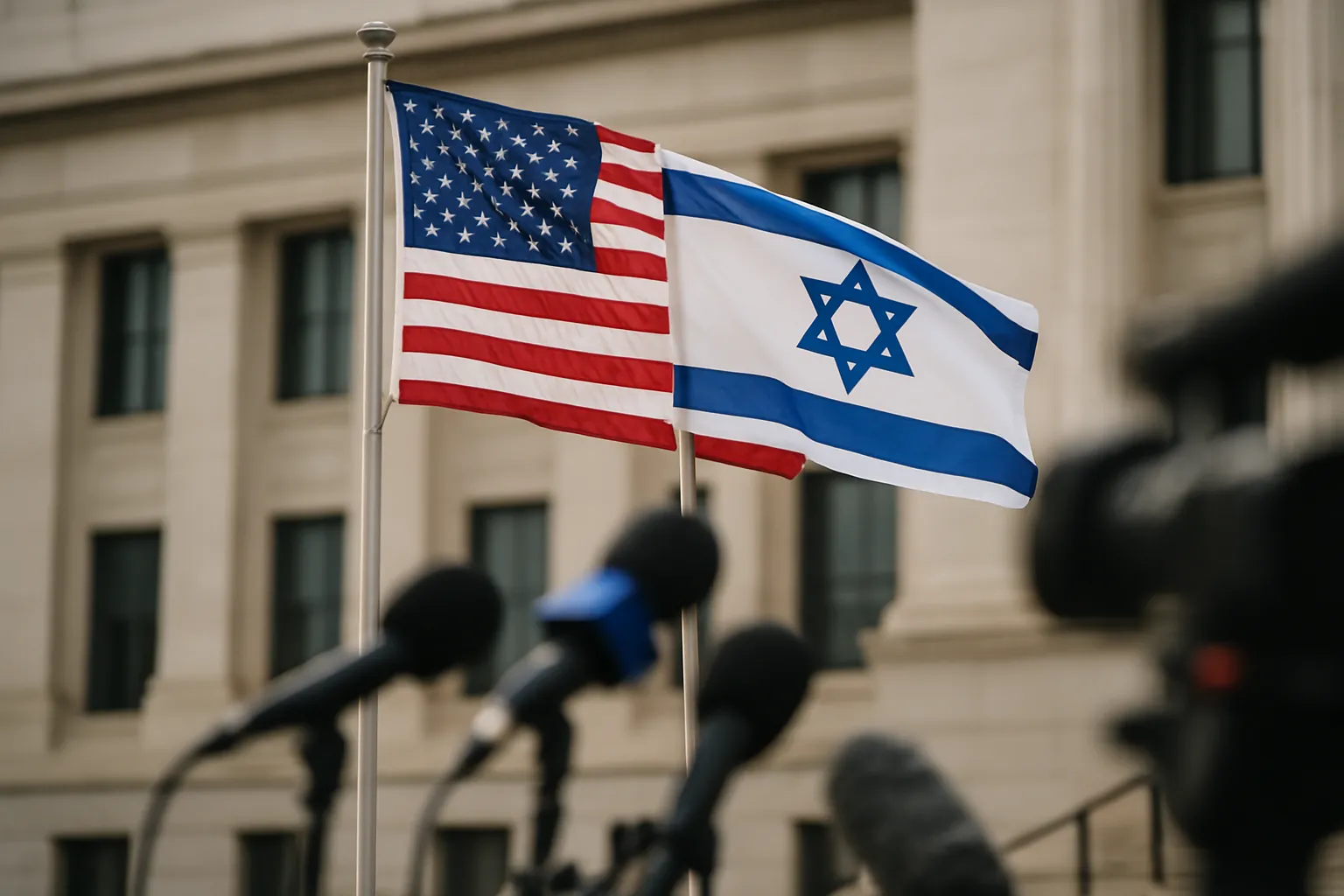
A Nation Shaken and a Politician Under the Microscope
At dusk on an otherwise ordinary Washington evening, two Israeli Embassy staffers—Yaron Lischinsky and Sarah Milgrim—were gunned down outside the Capital Jewish Museum. The suspected shooter, Elias Rodriguez, reportedly declared, “I did this for Gaza” as he was taken into custody, instantly reframing this terrible act as yet another chapter in the fractious saga of the Israeli-Palestinian conflict. The violence reverberated through political circles and cable news as a painful reminder of deep-seated divisions. Conservatives swiftly sought a villain, zeroing in on Rep. Ilhan Omar, a Somali refugee and one of Congress’s loudest voices for Palestinian rights, after she initially declined to condemn the killings when questioned by reporters.
Within hours of the shooting, social media and right-leaning outlets became battlegrounds for narratives casting Omar as complicit—if not directly responsible—because of her past criticisms of Israeli policy, lumping her in with the assailant’s motives. A chorus of conservative talk show hosts, led by Mark Levin and echoed by former President Donald Trump, brandished Omar’s silence as “un-American” and accused mainstream media of coddling what they called the “enemy within.” Calls for her expulsion from Congress trended, as if omitting a sound bite deserved the same penalty as an act of violence.
But what really happened in those moments outside the Capitol? And why does Omar’s measured response—delayed but condemning of the violence—generate so much vitriol, while deeper questions about political violence and antisemitism in America struggle for space in the national conversation?
The Perils of Binary Outrage and the Weaponization of Silence
Any mature observer knows Rep. Omar is no stranger to controversy. As the first Somali American and one of the first Muslim women in Congress, she’s repeatedly found herself targeted in the crosshairs of America’s culture wars. Her relentless scrutiny is no accident: critics have long seized on Omar’s outspoken advocacy for Palestinian rights—from questioning U.S. aid to Israel to expressing outrage at civilian casualties in Gaza—to suggest disloyalty toward American or allied interests. Fox News hosts and Republican leaders resurrected this characterization the moment reports emerged of her walking briskly past persistent reporters’ questions.
But is declining to comment seconds after a traumatic international incident a sign of tacit approval? Or is it a shortcut to demonize those who scrutinize American foreign policy? Harvard political scientist Yascha Mounk has warned, “In these moments, pressures to make immediate moral pronouncements often create more heat than light. Demanding instant commentary from public figures may serve outrage, but it seldom advances truth or justice.”
“Responsibility for violence rests squarely on the shoulders of those who commit it—not on politicians who dare to complicate easy narratives.”
Political opportunism is hardly new in America’s moral panics. From the anti-communist witch hunts of the McCarthy era to post-9/11 suspicion of Muslim Americans, we’ve seen how guilt by association—often amplified by innuendo and incomplete information—turns tragedy into a cudgel for old grievances. With anti-Muslim hate crimes and antisemitism both on the rise in the U.S., according to reliable sources like the FBI and the Anti-Defamation League, this pattern now risks endangering not just dialogue, but lives.
A closer look reveals just how consistently progressives, minorities, and especially women of color pay a steeper price for perceived missteps. When Rep. Omar’s daughter, Isra Hirsi, was arrested for protesting Israeli actions at Columbia University earlier this year, right-wing outlets wasted no opportunity to entwine Omar’s political reputation with her child’s activism—ignoring the rich tradition of nonviolent protest that animates American democracy.
Double Standards and the Real Toll of Political Violence
Americans deserve a robust, honest debate about the Israeli-Palestinian conflict—and the policies that underpin it. But what too often passes for debate is a spectacle of selective outrage. Consider that Republican lawmakers and pundits regularly demand immediate denunciations from progressive women of color, while rarely holding their own leaders to the same standard when violence flows from the far right. Where was this urgency when a white supremacist massacred worshippers in Pittsburgh? What about after the Tree of Life synagogue shooting, or the rise in anti-Asian hate fueled by pandemic demagoguery?
Responsibility for deranged violence lies squarely with the perpetrators themselves. Yet in cases like this—as with the 2021 censure attempt over Omar’s critique of U.S.-Israel policy, or her removal from the House Foreign Affairs Committee in 2023—political disagreement is all too easily framed as extremism. Rather than fostering a climate where tough conversations can occur, this tactic locks us into a zero-sum game where legitimate criticism is silenced, and political dissent becomes risky for anyone outside the Beltway mainstream.
Recent data from the Pew Research Center affirms public support for both Israel’s right to defend itself and for peaceful Palestinian self-determination. But policies that shut down nuance—demanding allegiance to one narrative or the other—serve neither justice nor American interests. As gun violence, hate crimes, and international tensions persist, scapegoating rivals over tragic events offers neither comfort to grieving families nor solutions to the problems at hand.
What makes America exceptional is its willingness, at our best moments, to wrestle with complexity and demand accountability from all who wield power—without resorting to dehumanization or reflexive blame. The path forward is not less debate, but more—grounded in empathy, fact, and the conviction that safety and dignity must belong to every community, no matter their faith or homeland.
