
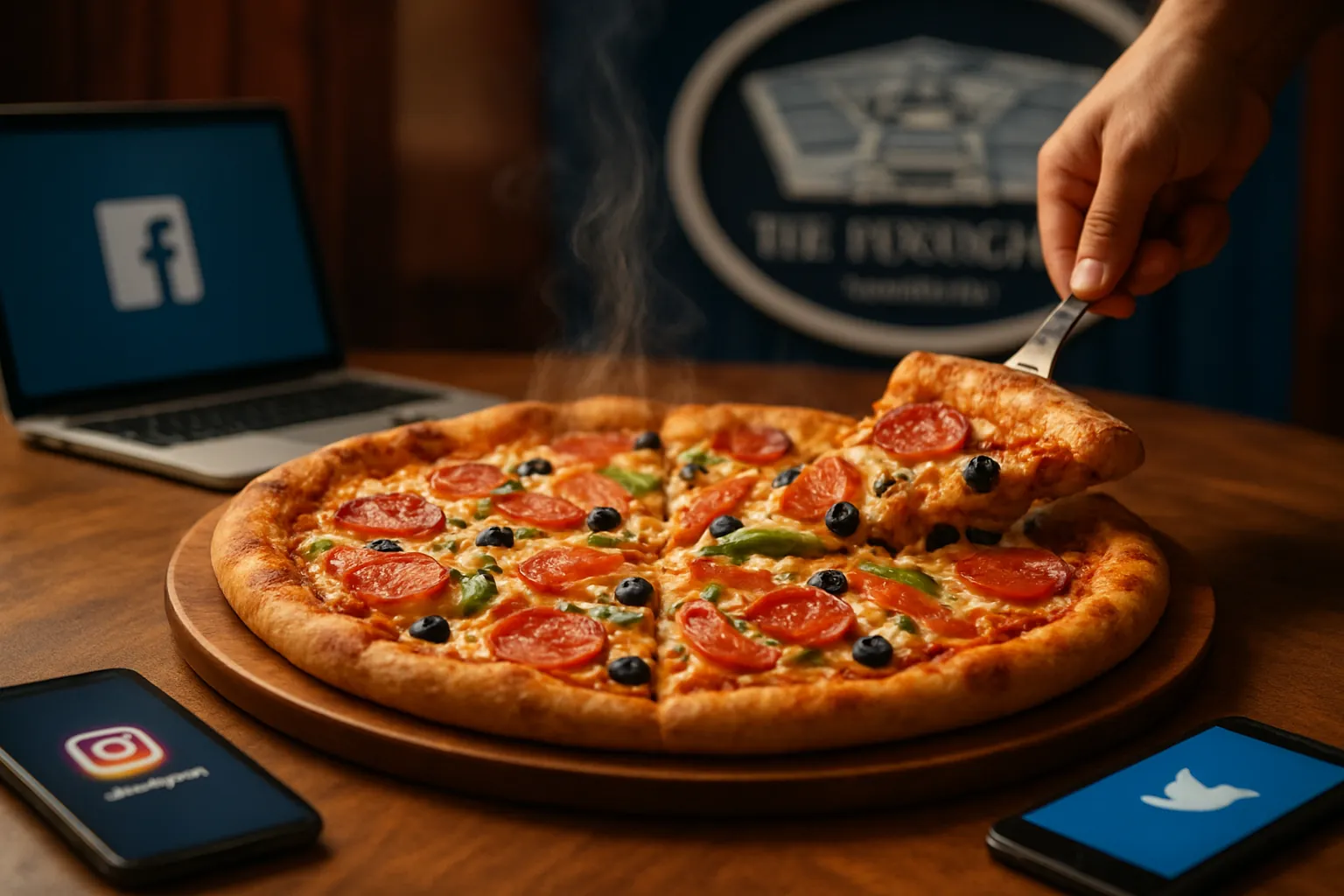
When Slices Spark Conspiracies: The Pentagon’s Pizza Surge
The air was thick with speculation and Twitter hashtags late last Friday as an unexpected “pizza index” hit DEFCON 1—a tongue-in-cheek internet shorthand signifying a surge in late-night pizza deliveries around the Pentagon. For many online sleuths, this was more than just a late dinner rush. It was an omen, a feverish data point in the middle of swirling and unconfirmed rumors that former President Donald Trump had died. Triggered by viral posts from accounts such as @BuzzingPop and the so-called “Pentagon Pizza Report,” the incident grabbed over 800,000 eyeballs and transformed an uptick in pepperoni pies into the latest online Rorschach test for political paranoia.
Why did a few pizza shops doing hot business send shockwaves through social media? The answer lies with an old internet parlor game: trying to read the hidden signs of government activity by watching something as mundane as pizza deliveries. According to historical internet legend, a sudden uptick in food orders near government buildings—especially the Pentagon—signals urgent meetings, sometimes even impending military actions. As the Pentagon’s neighbors Freddie’s Beach Bar, Domino’s, District Pizza Palace, and Crystal City Sports Pub reported abnormally busy hours, one pizzeria, Pizzato Pizza, claimed a staggering 303% increase in orders traced to accounts affiliated with Pentagon employees. All of this played out mere hours after the hashtag #TrumpIsDead trended on X (formerly Twitter).
But as with many viral phenomena, the chasm between speculation and reality remains wide. No credible news source, neither the White House nor reputable media, confirmed any link between these pizza boxes and urgent political events. CNN’s media critic Brian Stelter observed, “Social media fills silence with noise—especially when it comes to Washington mystery.” And indeed, there was plenty of both in the latest pizza-flavored episode of digital intrigue.
Hunger for Truth: The Pentagon Pizza Index and Its Curious History
One wonders: just how did we get here, where cheese and crust now serve as supposed indicators of national security crises? The Pentagon Pizza Index has deep roots in 21st-century conspiracy culture. For years, Reddit users and Twitter personalities tracked late-night snack spikes around the corridors of power, especially when talk turned to military action or government secrets. As noted by The New York Times in a 2016 exposé examining food delivery patterns near government agencies, the tradition of reading the “pizza tea leaves” often suggests an anxious longing from people outside the halls of power, desperate for insight into the secretive workings within.
The allure of the Pizza Index lies in its mix of whimsy and plausible logic: if staff are working overtime, shouldn’t the local eateries notice? According to Harvard sociologist Nancy D. Lewis, “It’s a parlor game and a people’s intelligence network all rolled into one. It doesn’t carry operational truth, but it does reveal what the public yearns to know—and distrusts in what they’re told.” Such online speculation was turbocharged by the most recent surge. People referenced not only Friday’s spike but similar patterns observed on August 27 and 28, fueling the idea of a trend worth watching—even if only for entertainment.
Past spikes in Pentagon-area pizza orders spawned quick leaps to dramatic conclusions. Some referenced the 2020 U.S. airstrikes in Iran—claims abounded online that a similar flurry of late-night takeout preceded the announcement. Yet, reality remains more complicated. Food trends may sometimes reflect busy days, but more often than not, they reflect little more than a love of greasy comfort food amidst a culture obsessed with secrecy.
“This ritual of watching for pizza trucks says less about national security and more about public anxiety and the yawning communication gap between government and citizens.”
Disinformation by the Slice: Online Hoaxes, Media Gaps, and the Perils of Secrecy
Why does something as random as a pizza rush inspire national intrigue—and, unsettlingly, become entangled with persistent political hoaxes? This week, speculation over Pentagon pizza merged with the viral #TrumpIsDead rumors, despite a clear lack of official confirmation or even credible reporting. At one point, streamer Adin Ross relayed a message from Trump’s son Barron, who insisted his father was alive and well. Still, many on X remained convinced that the spike in pizza orders must mean something big—anything—was afoot.
What’s at stake, though, extends beyond the pizza boxes and half-baked memes. In an era awash with government secrecy and eroding public trust, people seek patterns in chaos. According to a 2022 Pew Research Center report, trust in the U.S. federal government continues to hover near historic lows, with fewer than 20% of Americans feeling that the government is transparent or responsive. This credibility vacuum fuels a cycle where ordinary details—like food deliveries or staff overtime—become loaded signals for citizens hungry for answers they feel they won’t get from official channels.
Such dynamics breed a dangerous vulnerability to hoaxes and misinformation. #TrumpIsDead blossomed into a wildfire trend based almost entirely on hearsay, absence, and vague online signals. The pizza surge quickly became misinterpreted as corroborating evidence, despite countervailing, credible voices. Experienced journalists and fact-checkers, such as The Washington Post’s Philip Bump, observe that these moments are less about the facts than about “narrative hunger”—the deep urge for a story when official silence reigns.
Beyond that, it’s worth asking: who benefits when chaos and rumor rule the day? Certainly not the public. The right’s attacks on the so-called “deep state” and open undermining of media institutions have created an informational environment where viral pizza speculation is mistaken for journalism. Progressive values demand better: open communication, accountability, and transparency, not a reliance on internet scavenger hunts for clues. If democracy is to thrive, Americans must insist on institutions that inform and engage, not those that default to secrecy and leave the public to hungrily devour rumor and suspicion.
