
Measles Returns: The Alarming Reality in Western Iowa
Picture this: a small-town hardware store, the whir of cash registers, kids in shorts darting past the display cases. In the blink of an eye, a virus that once nearly vanished from the American landscape floats unseen in the air—waiting for its next unsuspecting host. Iowa’s eighth confirmed measles case of 2025 is not just a medical statistic; it’s a vivid reminder that the battle against vaccine-preventable diseases—a fight many believed we’d already won—demands our renewed attention.
Traditional wisdom held that the United States was largely safe from measles after widespread vaccine adoption, but public health officials now warn that old assumptions no longer apply. This most recent Iowa case, confirmed by the Iowa Department of Health and Human Services, involves a fully vaccinated adult in a rural northwestern community—someone with no travel history or known ties to previous outbreaks. The virus, lurking in the community’s everyday spaces like SuperHiTech in Sheldon and Casey’s General Store in Hull, has cast a spotlight on vulnerabilities that complacency and misinformation have helped to widen.
How does a disease once declared eliminated in the U.S. in 2000 manage a comeback? According to Dr. Fiona Ellis of the University of Iowa College of Public Health, “Every time vaccination rates dip even slightly, we see an opening for highly contagious diseases to roar back.” Measles, which can remain airborne for two hours after an infected individual has left, preys on cracks in community immunity. Nationwide, the consequences are already visible: as of July 2025, there have been 1,309 confirmed cases, with a staggering 92% occurring in unvaccinated individuals—a clear warning shot across the bow of American public health.
Disinformation, Hesitancy, and the Cost of Complacency
Peel back the numbers, and a deeper concern emerges: why, in an era of miraculous medical advancement, do these old threats persist? Much of the blame falls on the explosion of vaccine disinformation fueled by conservative media and fringe political actors, who have questioned the safety and necessity of childhood immunizations for years. According to a recent Pew Research Center survey, vaccine skepticism has doubled in conservative-leaning communities since 2020, driven by social media echo chambers and high-profile anti-vaccine voices on talk radio and the internet.
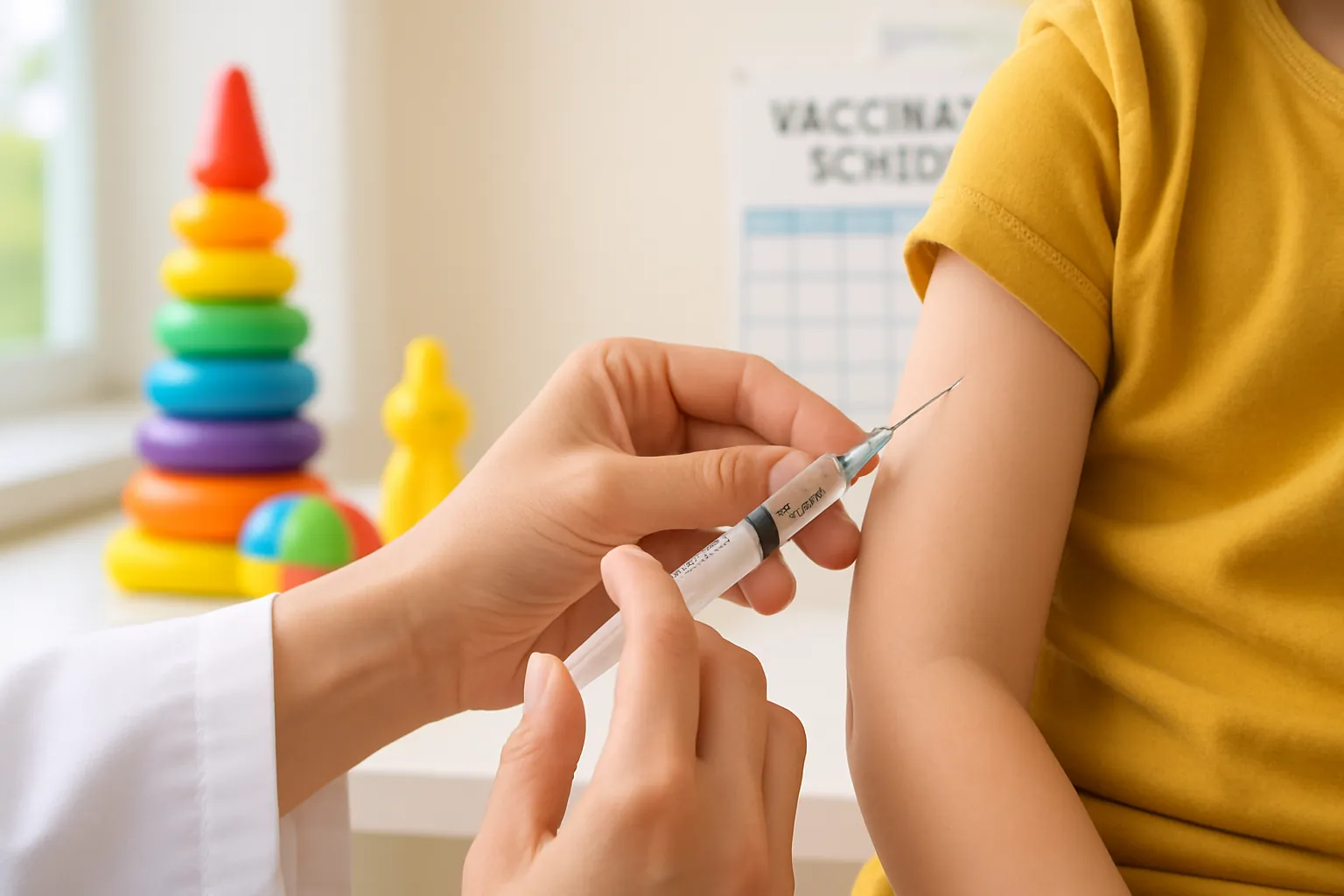
This manufactured doubt isn’t just abstract—it carries an immediate, human cost. Take, for instance, the case reported out of Sheldon, Iowa. Health officials warn that anyone visiting the named locations during the specified windows could have inhaled the virus unknowingly. For parents of infants too young to be fully vaccinated, each cough in the checkout line or shared waiting room becomes a moment of dread. To combat this, Iowa’s Department of Health and Human Services now recommends an accelerated MMR (measles-mumps-rubella) vaccination schedule, giving infants between 6 and 11 months an additional, early dose to help shield the most vulnerable.
“A single measles case sets off alarm bells—not because the disease is mysterious, but because it’s entirely preventable.”
Breakthrough infections—cases in people who are fully vaccinated—are indeed rare and, according to Dr. Tariq Biswas, infectious disease expert at MercyOne Des Moines, “almost always much milder and less contagious.” The real threat, Biswas emphasizes, is the steady eroding of herd immunity. When vaccination rates decline, not only do outbreaks become more frequent, but the people most at risk—infants, immunocompromised individuals, and those who can’t be vaccinated for medical reasons—are put in jeopardy through no fault of their own.
Public Health at a Crossroads: Policy, Responsibility, and the Path Forward
A closer look reveals how public health policy, or the lack thereof, directly shapes our collective safety. Conservative policymakers in Iowa and across the nation have repeatedly resisted commonsense vaccination requirements, often citing personal freedom or “parental rights.” Yet, as history consistently reminds us, individual choices during epidemics don’t exist in a vacuum—they ripple outward, impacting entire communities.
Community immunity, sometimes called “herd immunity,” is not a political abstraction but a mathematical reality. The Centers for Disease Control and Prevention estimates that for measles, at least 95% vaccination coverage is needed to interrupt sustained transmission. Yet in several parts of Iowa, as elsewhere in the Midwest, rates hover well below that threshold. The tragic irony? The tools for prevention exist—the MMR vaccine is over 97% effective after two doses. The only barrier is willful resistance or delay, often aided by misinformation or lack of access.
Some progressives argue that now is the time for bold action: clear, consistent public messaging; robust vaccination campaigns in schools; the removal of non-medical exemptions to mandatory vaccines for public school entry. These are not radical demands—they are grounded in decades of epidemiological data and the lived experience of nations where vaccine coverage remains high and outbreaks are exceedingly rare. As Harvard epidemiologist Dr. Lisa Cho told NPR: “When we lower our guard, even briefly, these viruses waste no time in exploiting our vulnerabilities.”
Beyond that, the Iowa outbreak should remind us of the basic social contract underpinning a just society: we each have a responsibility not only to ourselves, but to the youngest and most fragile among us. To abdicate that duty in the name of politicized individualism puts lives at risk and endangers the very fabric of public health. It’s up to local leaders and citizens alike to choose science, solidarity, and common sense over partisanship and fear.
The next chapter of this outbreak is not yet written. Whether Iowa, and the nation, double down on proven public health strategies or stumble further into a patchwork of vulnerability will depend not only on policy, but on each community’s resolve to push back against misinformation and champion the common good—one vaccine at a time.
