
Memphis at a Crossroads: National Guard or Community Investment?
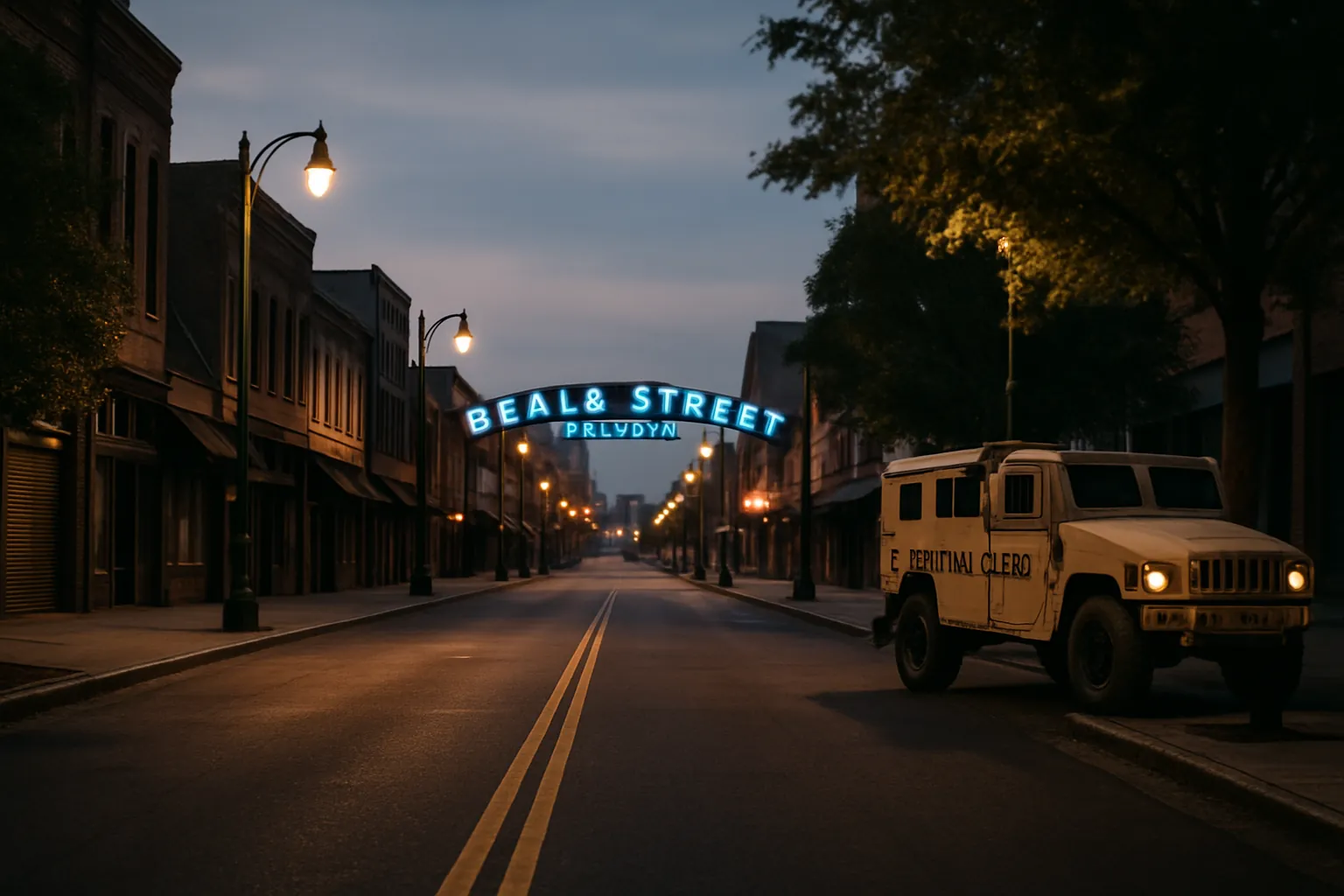
A chorus of sirens echoes down Beale Street, but not for the reason one might assume. As residents worry about crime—and policymakers jostle over statistics—a new, unsettling question looms in Memphis: will military uniforms become part of the city’s daily backdrop? That possibility now seems alarmingly real. Confidential discussions between The White House, Tennessee officials, and local leaders have broached deploying the National Guard to Memphis, a city where the wounds of past tensions between law enforcement and community never seem far from the surface.
High-profile state Republicans, led by Senator Brent Taylor (R-Memphis) and Senator Marsha Blackburn, have amplified a push for bringing in military-backed law enforcement, echoing tactics previously seen in Washington, D.C. as a response to surges in crime. Ironically, Memphis leaders point out that crime is actually down in 2024—an 11% drop in overall rates compared to last year—yet the threat of federal intervention has only grown louder.
Why is the idea advancing now? According to Mayor Paul Young, city officials have convened business titans and council members for emergency briefings, bracing for the potential arrival of uniformed troops. For progressive Memphians and those vested in civil rights, the specter of the National Guard’s presence raises not just logistical worries, but also profound questions about image, equity, and the actual roots of public safety.
A Familiar Playbook: Militarization and Its Discontents
A closer look reveals that this is not uncharted territory for America. When major urban centers face spikes—or high perceptions—of lawlessness, history is replete with heavy-handed responses masquerading as quick fixes. President Donald Trump, in a recent interview with conservative commentator Todd Starnes, boasted about National Guard enforcement in Washington, D.C., framing it as a model for cities like Memphis. “It’s working unbelievably. Much faster than we thought,” Trump claimed, referencing mass arrests of what he called “hardline criminals, people that will never be any good.”
The implication is clear: militarization equals order. But does the evidence support this narrative? Scholars such as University of California criminologist Franklin Zimring point to mixed, often outright negative, results when troops are deployed for law enforcement. “It substitutes spectacle for substance,” Zimring notes, explaining that short-term surges may marginally reduce crime, but can deepen mistrust and create the lasting perception that cities are, in the words of Congressman Steve Cohen, “out of control.”
There’s a long shadow here. In 1968, National Guard deployments in Detroit and Washington—ostensibly meant to quell civil unrest—instead exacerbated racial tensions and contributed little to sustainable safety. Recent peer-reviewed studies, such as one published in the American Journal of Sociology (2023), reinforce this: paramilitary force may temporarily disrupt violence, but at significant cost to community trust, economic development, and local morale.
Beyond that, experts like Harvard law professor Noah Feldman remind us of the legal gray zones. The 1878 Posse Comitatus Act restricts using federal troops as law enforcement domestically, except in rare emergencies. While presidents can federalize guardsmen, as happened in California and D.C., these moves face rigorous legal scrutiny and are frequently challenged in court—underscoring how extraordinary, even inflammatory, such decisions remain.
“What message does it send to young people in Memphis if the first answer to their challenges is troops rather than teachers, counselors, or opportunity? We cannot police our way out of poverty.” —Rep. Steve Cohen (D-TN)
Memphis’ Real Needs: Smart Policy, Not Showy Force
The notion of summoning boots-on-the-ground may appeal to conservative sensibilities, especially those fixated on deterrence and the optics of toughness. Yet, data tells a more nuanced, and frankly, more hopeful story for Memphis. According to a 2024 Pew Research Center report, cities investing in violence interruption programs, youth outreach, and mental health resources have experienced substantially greater declines in crime than those emphasizing militarization.
Local officials like Mayor Young and Councilwoman Michalyn Easter-Thomas have quietly championed such evidence-based strategies, expanding community responder programs and reimagining 911 response to lower nonviolent crisis encounters. Supporters hail this as a pivot toward public safety, not just policing. These efforts deserve not just headlines but resources and patience—qualities that shortsighted, performative troop deployments sorely lack.
What’s more, business and faith leaders—often the anchor institutions in Memphis’ hardest-hit neighborhoods—say privately that military presence could undermine years of bridge-building between law enforcement and the community. According to Reverend Earle Fisher, an activist pastor in North Memphis, “The National Guard isn’t trained for our streets. They don’t know our children. If D.C. or Governor Lee insists on this path, they’re trading long-term peace for short-term posturing.”
Complex truths rarely fit into soundbites. The city remains a work in progress—but it is progress, not paralysis or panic, that defines the best of Memphis. Crime’s stubborn persistence isn’t an excuse for bluster. It’s a call to double down on what works: investment in education, jobs, and health—not just armored vehicles and curfews. By confronting root causes, as public health experts from the University of Memphis’ School of Urban Affairs argue, the city can chip away at the cycles driving crime rather than perpetuating them through fear.
Whose Narrative Wins: Image, Justice, and the Road Ahead
Whose version of Memphis will endure in the national mind: a besieged city in need of rescue, or a resilient community demanding the respect—and resources—it is owed? If history teaches us anything, it’s that true safety cannot be imposed from above. It rises from within: in jobs, classrooms, clinics, and community centers. Theatrics of force may play well on cable news panels, but they rarely resolve the economic, racial, and generational inequities at the heart of urban distress.
Congressman Cohen, referencing Memphis’ complex history under federal watch, urges caution: “The sight of soldiers on our corners could push away families, scare off investments, and tell the world we’ve surrendered to fear. We deserve more than the symbolism of military might—we need the substance of civic partnership.”
As conversations stretch from City Hall to the White House, Memphians find themselves confronting not just threats of violence, but also the violence of misapplied solutions.
Is the answer to Memphis’ pain really a contingent of camouflaged troops—or the patient, principled work of building justice from the ground up? The city’s future depends on how we choose to answer that, and on our willingness to imagine—and invest in—a safer, fairer tomorrow for all.
