
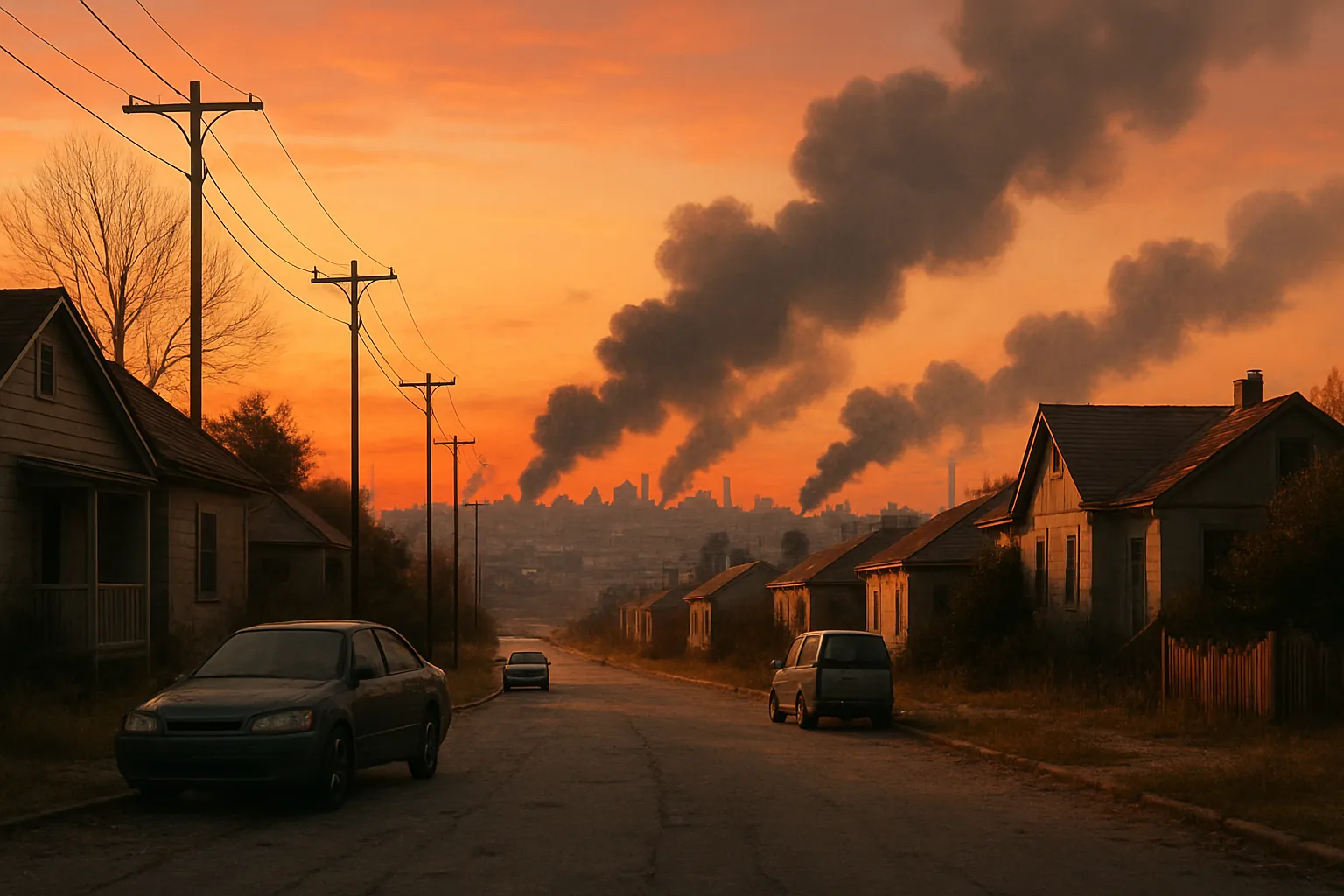
Warnings from the Skies: The IDF Urges Tehran’s Civilians to Evacuate
The midnight quiet of Tehran has been shattered—not by the distant rumbles of anti-aircraft fire, but by an urgent, chilling warning, beamed directly into homes through phones, radios, and social media feeds. “Leave now,” Israel’s military cautioned, “your life is at risk.” The Israel Defense Forces (IDF), typically known for rapid, decisive action against regional adversaries, has launched a public, Farsi-language campaign urging residents of Tehran’s District 7 and other zones marked for strikes to clear out immediately. The reason: a continuing offensive targeting the heart of Iran’s military infrastructure.
This is no idle threat; airstrikes over the past several days have targeted centers driving Iran’s security machine—the Basij headquarters, the “Thar-Allah” and “Sayyed al-Shuhada” Corps, the Alborz Corps, and, notably, the General Intelligence Directorate of the Internal Security forces. As Israel’s Farsi-language spokesperson, Master Sgt. (res.) Kamal Penhasi, made clear, these sites don’t just represent military hardware. They underpin the very mechanisms of repression and regime control within the Islamic Republic. “Stay away from military facilities,” Penhasi implored, “for your own safety.”
The escalation follows a cascade of retaliatory moves that now threaten to entangle not just Israel and Iran, but by extension, the United States and a broader swath of the region. Iran’s air defenses—long a source of national pride—have already suffered attacks, leaving the city’s civilian population alarmingly vulnerable as the specter of miscalculation looms larger than ever. Israeli Prime Minister Benjamin Netanyahu’s insistence on advance warnings to civilians stands in sharp contrast, he claims, to the behavior of the “criminal Iranian regime”—a rhetorical flourish aimed as much at global opinion as at Tehran’s leadership.
The Human Toll: Civilians Caught Between Regimes
What does a mass evacuation before a modern bombing campaign look like in a metropolis of over 8 million souls? The reality is grim. Tehran’s District 7 is a densely packed urban center, with universities, hospitals, and bustling markets spilling into residential neighborhoods. As the IDF’s warnings ricocheted across Farsi-language social media, confusion reigned. While some families hastily loaded cars and fled, many more faced impossible choices: Where could they safely go? When would it be safe to return, and would their homes still be standing?
There’s a temptation among some foreign policy hawks to write off civilian casualties as the tragic but unavoidable price of war. But history teaches us to resist such fatalism. Rachel Bronson, president of the Bulletin of the Atomic Scientists, warns that “striking urban areas, no matter how precise, places civilian lives in the direct line of fire.” Iran’s state-run security institutions like the General Intelligence Directorate, now targeted with increasing frequency, are deeply embedded in the civilian fabric of the city. Beyond that, forces such as the Basij—tasked with upholding Islamic law and cracking down on perceived dissent—operate out of buildings interspersed among schools, clinics, and shops.
The emotional and psychological toll on a population living under threat of sudden annihilation cannot be overstated. Tehranis, already battle-worn by sanctions, inflation, and sporadic civil unrest, now must weigh every daily movement against new, invisible lines of risk. The disruption is not temporary, nor does it neatly separate the so-called “guilty” from the “innocent.” Strategic air campaigns, as recent history in Gaza, Aleppo, or Baghdad attests, inevitably unleash long tails of trauma, displacement, and shattered trust in any authority.
“No matter the claims of precision or warnings, you cannot surgically remove military threats embedded in cities without endangering the people who live there.”
– Rachel Bronson, Bulletin of the Atomic Scientists
Retaliation, Regimes, and the Cycle of Instability
The justifications on both sides echo with grim familiarity. Israeli officials portray their bombing campaign as measured self-defense, telegraphing attacks in an attempt to save innocent lives. The Iranian regime, for its part, decries Israeli aggression and insists it will press ahead with its nuclear program—an assertion relayed even as warning sirens and air-raid drills become routine in Tehran’s most targeted districts.
The reality is a dangerous tit-for-tat escalation that leaves ordinary citizens in daily jeopardy. “This is a perilous cycle,” says Harvard’s Professor Trita Parsi, an expert on Middle East diplomacy. “Preemptive strikes billed as humanitarian only legitimize more repression by the Iranian regime and more militarization by hardliners on both sides.” Caught in this diplomatic deadlock, genuine détente grows ever more remote.
Is there a way forward? Progressive policymakers long for engagement over escalation, arguing that real security is built not at the barrel of a gun, but in transparent dialogue, monitored de-escalation, and a shared commitment to human rights. Yet, with every airstrike, these aspirations recede. International law is clear: Combatants must take all possible measures to protect noncombatants. In practice, however, both the precision of missiles and the best-intentioned warnings have not prevented civilian suffering—be it in Tehran, Tel Aviv, or beyond.
Today’s crisis serves as an urgent reminder: The path to lasting peace lies not in ever-sharper blows against the enemy, but in reimagining what it means to keep people—rather than regimes—at the center of security policy. Without this shift, warnings will ring hollow for those left behind in the crossfire, and cycles of violence will continue their relentless march.
