
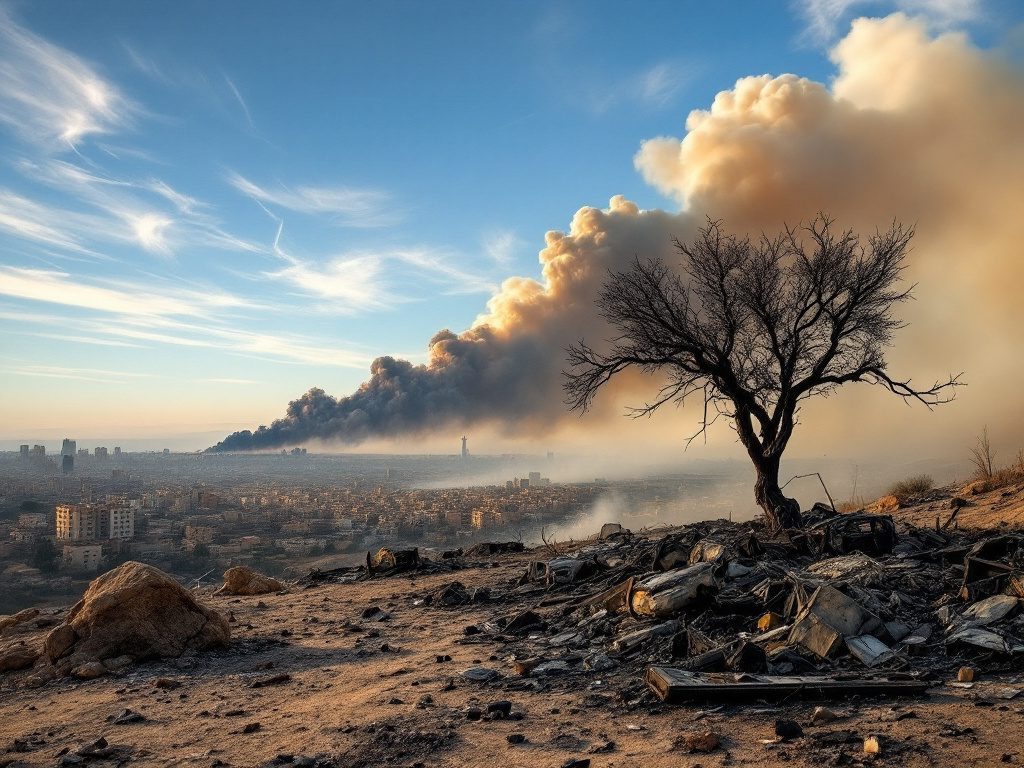
The early morning tranquility in Sidon, a bustling coastal city in southern Lebanon, was shattered by the deafening sound of an Israeli airstrike that claimed the life of senior Hamas commander Hassan Farhat. Within moments, panic gripped residents as flames and debris engulfed a residential area, leaving a heavily damaged apartment building and wounded civilians in its wake.
A Controversial Assassination and Immediate Fallout
According to Israeli military officials, Farhat was targeted due to his central role in orchestrating attacks against Israelis, including a rocket assault that struck the Northern Command base in Safed earlier this year, killing Israeli soldier, Staff Sergeant Omer Sarah Benjo. Israel described Farhat, heading Hamas’s forces in western Lebanon, as a high-value target responsible for persistent aggression against Israel.
The strike not only eliminated Farhat but tragically claimed the lives of his adult son and daughter, underscoring the human toll of military actions when conducted in populated civilian zones. Witness accounts describe scenes of chaos and fear, with Lebanese officials confirming extensive property damage and panic among city residents.
Violation of Sovereignty or Legitimate Defense?
This lethal strike has sparked fierce condemnation internationally and particularly within Lebanon, where Prime Minister Nawaf Salam quickly labeled the incident a “flagrant attack on Lebanese sovereignty”. Salam’s administration hastened to underscore the gravity of Israel breaching a fragile, U.S.-brokered ceasefire in effect since last year’s conflict between Israel and Hezbollah. Salam vociferously called upon international actors to exert maximum diplomatic pressure on Israel to halt ongoing military escalations threatening Lebanon’s fragile peace.
“This strike is a dangerous escalation that threatens to unravel the already vulnerable ceasefire and plunge Lebanon further into regional turmoil,” cautioned Lebanese Prime Minister Nawaf Salam.
The implications of this attack reverberate widely, placing renewed scrutiny on Israel’s geopolitical strategy beyond its own immediate borders. The Lebanese foreign ministry has formally registered its grievance, highlighting that Israel’s continued military interventions undermine Lebanese sovereignty and jeopardize the delicate balance across this volatile region.
Unfolding Regional Tensions Amid Gaza Offensive
Farhat’s assassination came just as Israel was launching a new ground offensive in Gaza City, expanding its security zones in the continuing aftermath of hostilities ignited in October 2023. Analysts interpret these synchronized military operations as strategic moves to intensify the pressure on Hamas, particularly regarding ongoing hostage negotiations and attempts to curtail Hamas’ operational abilities in the region.
Yet critics question the efficacy and morality of such aggressive tactics, highlighting that the ongoing violence frequently harms innocent civilians, exacerbates regional tensions, and entrenches deeper hostility.
Hezbollah, Lebanon’s influential militia and political faction closely allied with Hamas, abruptly refuted any direct involvement in recent rocket launches against Israel, including those attributed to Farhat’s command. This careful distancing suggests Hezbollah’s attempt to avoid further escalation that might challenge its tenuous political influence domestically, even while adamantly criticizing Israeli aggression.
But could such piloted targeting of Hamas operatives within Lebanese territories unintentionally provoke a wider crisis? History reveals the hazards of these military gambles: Israel’s aggressive 2006 campaign against Hezbollah in Lebanon resulted in devastating humanitarian consequences and a deeply unstable geopolitical landscape.
Senior fellow at the Atlantic Council, Dr. Lara Rahman, specifically points to the serious risks vested within such Israeli attacks. “Targeting high-profile figures within Lebanese cities isn’t simply a deterrent—it risks involving multiple factions in a conflict spiral that can quickly become unmanageable,” Rahman warns.
The international community now eyes these developments with growing unease. Can Israel balance its assertive security policies with the diplomatic obligations it owes regional stability and civilian protections? For all parties involved, the stakes are extraordinarily high, with the Lebanese populace once more caught in the precarious balance of a conflict they neither sought nor control.
As diplomatic channels scramble to restore calm, the grim reality remains that (the path toward peace in this region feels increasingly unstable and uncertain). With each strike and counterstrike, the hope for enduring stability diminishes, locking Lebanon and Israel in a perilous cycle of aggression and retaliation that threatens to engulf the broader Middle East in deeper conflict.
