
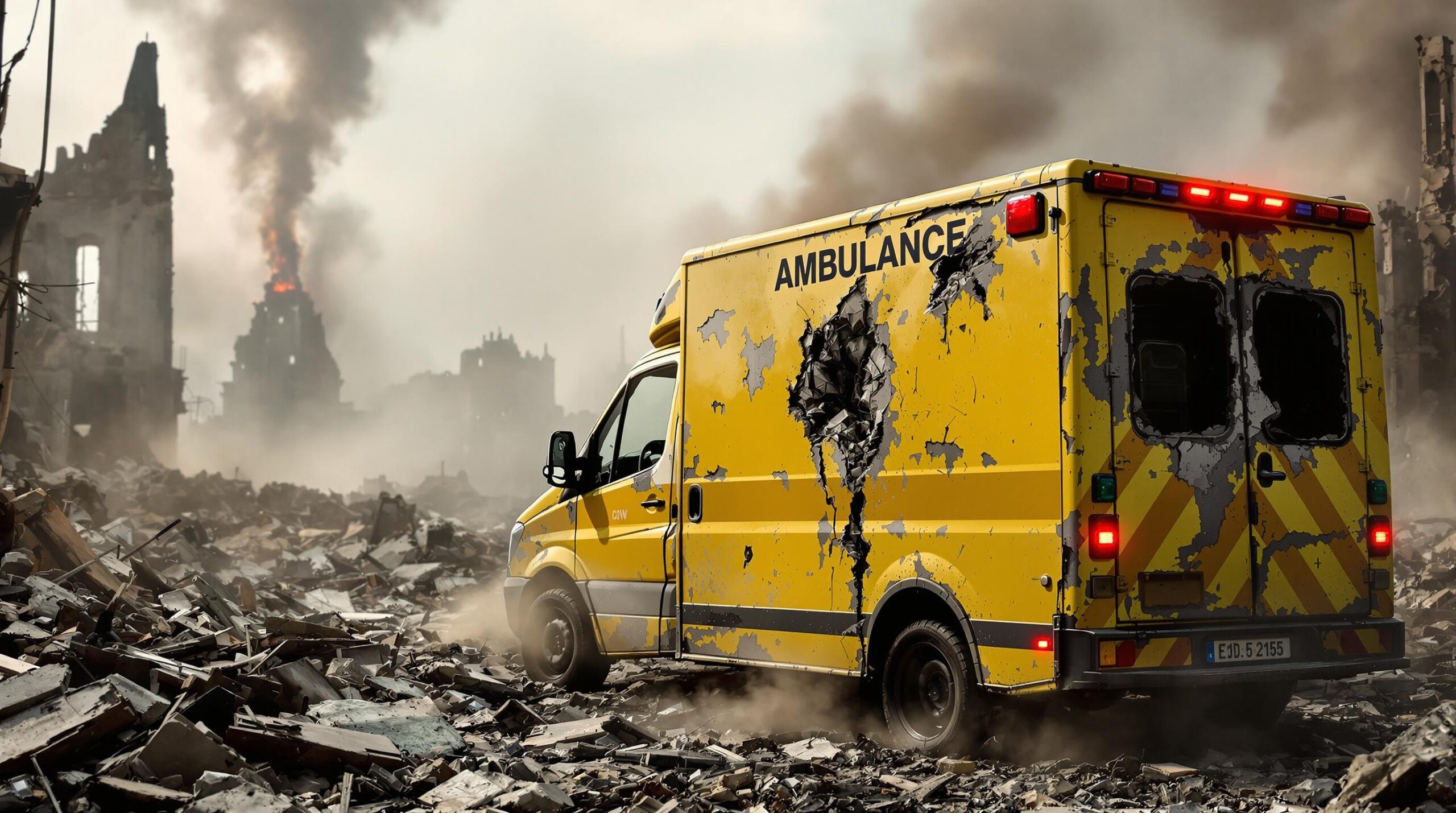
In the tense, conflict-ridden streets of Gaza, observers and humanitarian groups are reacting with outrage as they grapple with the disturbing news. The Israeli military has openly admitted firing on ambulances, labeling these critical humanitarian vehicles as “suspicious vehicles”. This incident has stunned the international community and drawn condemnation from across the globe, particularly from Palestinian authorities who have labeled these actions war crimes.
On March 28, after almost two months of fragile truce conditions, Israeli forces resumed military actions in Rafah, a key city in the southern Gaza Strip. Here, ambulances tasked with critical medical rescue missions were targeted. Gaza’s civil defense reported alarmingly that six of their rescuers dispatched to aid injured civilians went missing shortly thereafter. A week later, the grim discovery of one team leader’s body confirmed a devastating suspicion—rescue workers were direct casualties of the bombardment. Hamas swiftly branded this action as a calculated massacre, designed intentionally to spread terror and disrupt urgent humanitarian aid.
A Delicate Line Between Conflict and Barbarism
Critically, the Israeli Defense Forces (IDF) argue that the ambulances and fire trucks were being used for nothing less than militant operations by Hamas and Islamic Jihad, thus justifying their lethal response. Yet, the IDF’s official statement remains unsettlingly vague on a crucial point—was there any actual immediate threat or gunfire coming from these emergency vehicles before they became targets? This ambiguity in Israel’s justification has propelled sharp criticism from watchdog groups and humanitarian bodies alike, raising concerns about flagrant breaches of international humanitarian law.
Gaza’s civil defense crews embody courage daily, facing unimaginable risk as they race toward danger to aid those in urgent need. The tragic impact of this latest attack highlights the peril and sacrifice made by Gaza’s frontline responders—individuals who bravely commit themselves to life-saving work amidst perilous conditions. As Hamas official Basem Naim passionately articulated in his condemnation, “targeting rescue workers represents a deliberate and brutal massacre,” severely compromising humanitarian principles, jeopardizing future rescue initiatives in conflict settings.
Humanitarian Voices Denounce Violence Against Civilians
Meanwhile, global voices amplify condemnation against perceived war crimes. Tom Fletcher, head of the United Nations Office for the Coordination of Humanitarian Affairs, explicitly condemned recent Israeli raids, emphasizing that strikes within densely populated zones have resulted in an unacceptably high toll, including significant child casualties. Fletcher called urgently upon international stakeholders to act firmly and swiftly to uphold humanitarian law and bring an immediate cessation to attacks compromising civilian lives and emergency response efforts.
“Strikes within densely populated areas create an unendurable humanitarian tragedy, slaughtering innocent civilians and children. We must act decisively to uphold international law and stop this continuous onslaught.” — Tom Fletcher, United Nations Office for the Coordination of Humanitarian Affairs
These devastating civilian impacts are further underscored by Gaza’s authorities, who estimate chilling figures of death and injury since hostilities resumed. Reports indicate that casualties have skyrocketed, with over 50,000 Palestinians reportedly killed and 114,000 more wounded. These numbers paint an alarming portrait, representing stark human suffering amid escalating military hostilities.
Allegations From Both Sides and The Dilemma of Credibility
With accusations and counter-accusations echoing back and forth, Israel has raised, albeit controversially and without clear evidence, that terrorist factions exploit ambulances for militant purposes. Such claims, however, face intense scrutiny given the critical humanitarian lifeline ambulances provide, coupled with international obligations shielding medical personnel and emergency responders from hostile engagements in conflict scenarios.
This cycle of accusation and denial entrenches divisions and deepens ongoing humanitarian crises, increasingly fraying hopes for peaceful resolutions. Reviewing historical examples, such as the troubling precedents set during conflicts in places like Syria and Yemen, highlights how easily accusations of misusing humanitarian aid vehicles can be weaponized, adding complexities and grave implications for impartial humanitarian operations globally.
The charges from Israel claiming Hamas’s misuse of emergency vehicles, without substantiated evidence or transparent investigations, have only deepened wounds of mistrust. This absence of empirical proof weakens the credibility of military justifications, emphasizing instead the profound need for independent verification to ascertain facts amidst charged and volatile situations.
The Urgent Imperative for Neutral Humanitarian Access
Amid escalating international outcry, there’s an imperative call for robust measures ensuring neutral, unhindered access for humanitarian teams. Such provisions are not merely symbolic gestures—they are desperately required to alleviate suffering and safeguard medical and emergency response endeavors against aggressive military campaigning.
Right now, for the countless Gazan civilians caught in the crossfire, survival hinges precariously on ambulances and dedicated rescue workers. To undermine or endanger these critical life-lines is not only deeply troubling ethically but represents a stark violation of universally respected humanitarian norms—a stark message underscored by the chorus of international denunciation reverberating today.
In the backdrop of intense violence and human suffering unfolding in Gaza, international voices must unite demanding transparency, accountability, and adherence unequivocally to humanitarian laws and ethics. The questions remain stark and demanding—will the global community rise effectively to enforce protection measures shaping the conflict decisively? More crucially, how many innocent lives, caught tragically amidst ceaseless hostilities, will be sacrificed before robust protections and universal humanitarian standards are prioritized above military ambitions and hostile allegations? The stakes could scarcely be higher for humanity and decency alike.
