
A New Face of Power: Jude Law’s Immersion into the Kremlin
Spotting Jude Law in Venice, you might not recognize the blue-eyed British star with his signature charm. That sense of uncanny unfamiliarity is the point. For “The Wizard of the Kremlin,” premiering at the Venice Film Festival, Law vanishes into the role of a young Vladimir Putin—a transformation so complete that even veteran fans did a double take. Social media bubbled over with reactions, many noting the striking effectiveness of Law’s physical transformation. But behind the makeup and the cold, steely gaze lay something far more important than mere imitation: an exploration of how modern autocrats come to power, and why their stories matter on the world stage.
Director Olivier Assayas, celebrated for peeling back the layers of political and psychological complexity in his films, chose Law for a reason. This was not to create tabloid controversy, but to dig into the nuance behind Putin’s public poker face and the shadowy figures—real and fictional—who shape strongman rule. The script, adapted from Giuliano da Empoli’s lauded 2022 novel, uses a mix of real events and creative license to craft a chilling portrait not just of Putin, but of the broader disease of autocracy. Law’s willingness to take on this role, especially at a time of heightened tensions with Russia, only shows how urgent and relevant these questions are.
The film bypasses caricature. Instead, Law uses his own voice—eschewing a Russian accent—and peers out from behind the tailored suits and receded hairline to convey a man driven as much by insecurity as ambition. “I didn’t fear repercussions,” Law said candidly at Venice, adding, “I hope not naively, but … I didn’t fear repercussions.” He emphasized that the film wasn’t made for shock value, but to offer a story told “with nuance and consideration,” a point critics lauded following the premiere.
Behind the Curtain: Manipulation, Spin, and the Path to Power
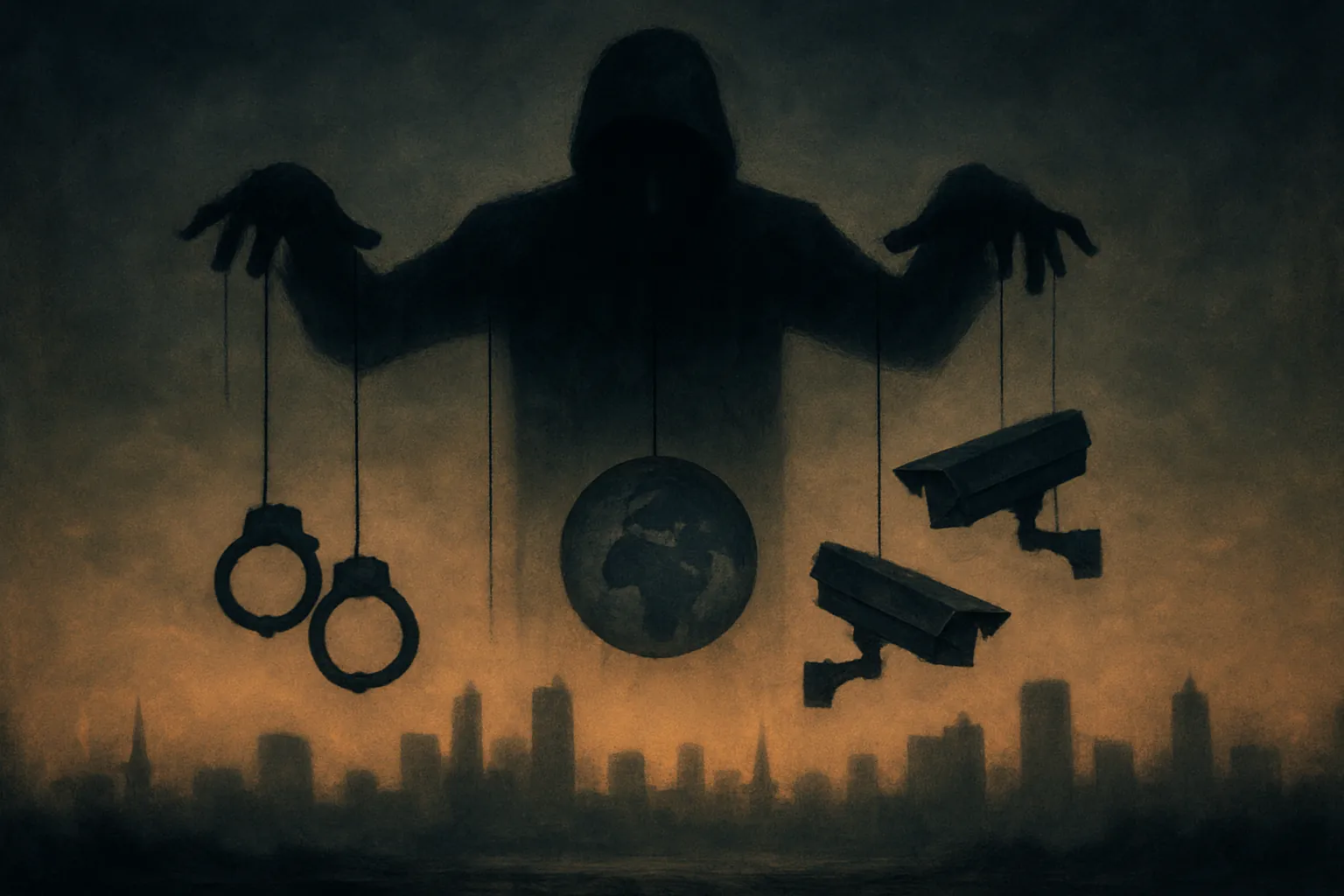
Political theatre—especially in the age of disinformation—relies on more than a single actor, and this film understands the machinery behind the strongman. Enter Vadim Baranov, played with intellectual chill by Paul Dano. A fictional composite inspired by Vladislav Surkov—a real-life architect of modern Russian propaganda—Baranov is the ultimate spin doctor, orchestrating narratives with the precision of a master dramatist. His weapon is not brute force but the subtle corrosion of objective truth, transforming society into what he provocatively calls a “great reality show.”
The film exposes how political strategy mutates into social engineering. Baranov’s role is to bend reality at the Kremlin’s whim, undermining not only public discourse but citizens’ very sense of shared reality. Harvard sociologist Shoshana Zuboff has called this process “manufactured confusion—where power is built on controlling uncertainty and weaponizing ambiguity.” This isn’t restricted to post-Soviet states. The movie holds up a mirror to Western democracies, where the blurring of truth and spectacle has fed into the rise of extremism, media distrust, and a renewed appetite for authoritarian promises.
Dramatizing this descent isn’t about gloating on Russia’s moral failures. It’s an invitation to question how close our own systems hover over similar precipices. The fact that the movie had to be filmed in Latvia—Russian restrictions on foreign filmmakers have tightened in tandem with the state’s clampdown on dissent—brings home the real risks involved in challenging authoritarian narratives. Filmmaking itself becomes a subversive act, creating art in the space where politics breeds fear.
“In constructing a reality where the borders between fact and fiction dissolve, the real danger is not merely state propaganda—it is the erosion of our very ability to know or care what is true.”
The impact of this mechanism is hard to underestimate. Pew Research studies routinely show growing mistrust in media and governance, not just in authoritarian regimes, but in electoral democracies plagued by strategic misinformation and culture war politics. So what happens when the narrative masters have no limits?
Beneath the Fiction: Repercussions for Art and Democracy
A closer look reveals why “The Wizard of the Kremlin” resonates far beyond Putin’s biography—and why conservative pundits’ critiques miss the mark. Critics from the right disparage such films as biased or “too political,” but what does that really mean? Instead of defending the status quo, the film asks the uncomfortable question: What happens when a society’s foundational truths become negotiable?
Paul Dano’s Baranov serves as a stand-in for the modern political technocrat—always shaping reality, never seen. A generation ago, the Watergate scandal exploded because journalists and artists were able to question power structures without fear. Nixon’s fall became a touch-point for institutional accountability. Compare that to today, when whistleblowers are jailed, the press is shunned as “the enemy of the people,” and the “alternative facts” doctrine is essentially mainstreamed by authoritarian-adjacent leaders worldwide. Professor Anne Applebaum, historian of Eastern Europe, often reminds us: “Authoritarianism isn’t a bug in the system—it’s an ever-present risk when democratic safeguards are hollowed out.”
The logic of autocracy travels quickly across borders, transforming entertainment into statecraft and vice versa. Even in the U.S., the rise of disinformation and partisan news echo chambers often mirrors the techniques depicted in the film: distraction, spectacle, villainization of outsiders, the glorification of strongman charisma. The insidious danger lies in how closely these forms of manipulation track with rising intolerance and creeping illiberalism: from book bans in American libraries to crackdowns on LGBTQ rights and the targeting of vocal activists. There is nothing uniquely Russian about these threats—they are global, urgent, and demand the vigilance of citizens and artists alike.
Stories like “The Wizard of the Kremlin” stir discomfort because they force recognition: authoritarianism is rarely imposed; more often, it is chosen—or at least tolerated—by a public numbed into apathy or doubt. That’s why Jude Law’s performance is more than a transformation; it’s an urgent wake-up call. To quote Assayas at the premiere: “This film isn’t just about Putin. It’s about all of us—about what we allow, what we ignore, and how quickly our reality can be shaped by others’ hands.”
