
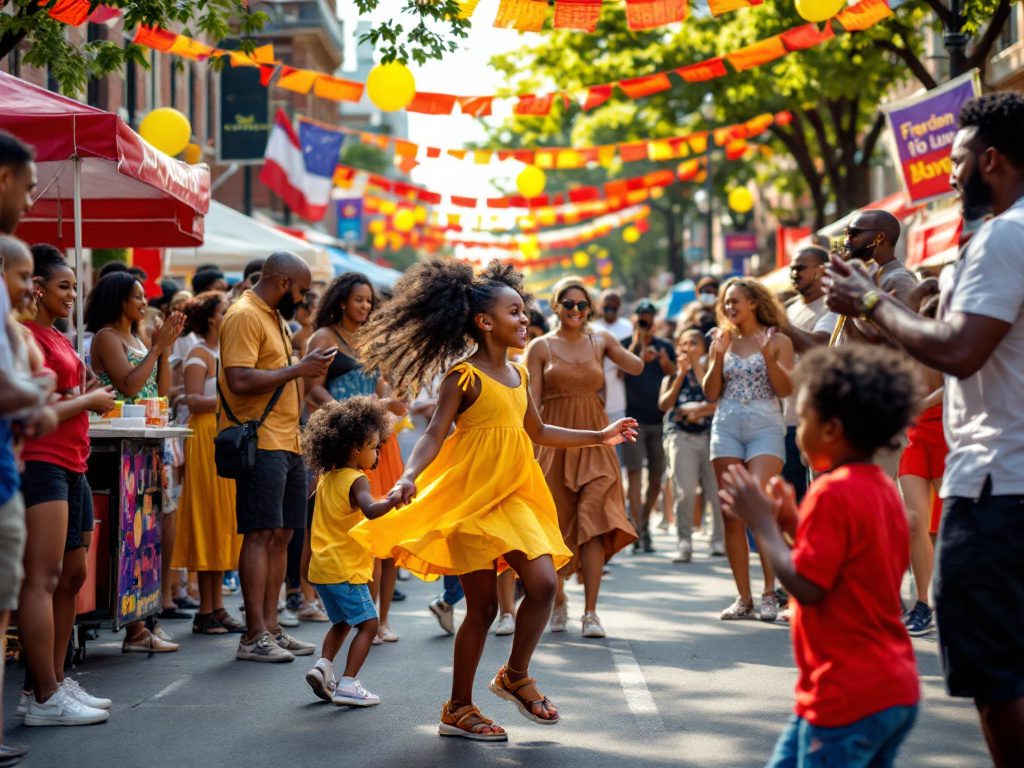
A Tapestry of Celebration: Juneteenth Reimagined Nationwide
On a warm June morning, a kaleidoscope of floats, banners, and joyful families cascades down Rochester’s State Street as the city’s Juneteenth parade embarks on its newly extended route, weaving its way toward Martin Luther King Jr. Park. The jubilant procession is just one thread in the vibrant tapestry of Juneteenth celebrations now unfurling across America, as cities from Longview, Texas to Catawba County, North Carolina, expand their observances of the country’s newest federal holiday. Three years since Juneteenth’s elevation to national recognition, the tone and tenor of these local festivities reveal both the growing significance of the holiday and the collective hunger for authentic community storytelling and remembrance.
What does it mean—truly—to commemorate a day announcing freedom to “the last enslaved African Americans,” almost two and a half years after the Emancipation Proclamation first promised it? In practice, it looks like a patchwork of parades, book readings, concerts, homemade meals, resource fairs, scholarship presentations, and, above all, multigenerational gatherings dedicated to truth-telling, laughter, and healing. According to Lonnie Bunch, Secretary of the Smithsonian Institution and founding director of the National Museum of African American History and Culture, “Juneteenth offers a moment to pause—not simply to celebrate, but to reflect on the long and unfinished journey toward justice in America.”
From the bustling park stages of Longview’s Festival in the Park to the intimate book circles of Catawba County libraries, this year’s commemorations echo the sentiment that Juneteenth—far from a one-size-fits-all holiday—continues to be shaped by the communities who claim it as their own, powered by their ingenuity and resolve.
From Parades to Pageants: Grassroots Creativity and Civic Engagement
Step into Longview, Texas in June, and the notion of Juneteenth as a single day fades quickly. Instead, the celebration stretches across weeks, balancing city-sponsored highlights like the bustling Festival in the Park—complete with live music, children’s activities, historical sessions, and scholarship presentations—with a mosaic of neighborhood-run events: comedy shows, pageants, sports tournaments, and worship gatherings. One cannot ignore that “powered by the people” is more than a motto; it’s a modus operandi here. The city amplifies what grassroots organizers begin, ensuring everyone from toddlers to elders find resonance and belonging.
Local business expos spotlight Black entrepreneurs helping to revive Main Streets still scarred by the economic devastation of the pandemic. Meanwhile, the Juneteenth Parade—the heartbeat of the festivities—serves as a rolling history lesson, celebrating past triumphs and shining a light on unfinished business. According to historian Henry Louis Gates, Jr., “Every Juneteenth, communities do the work of making history visible again, reminding the nation that freedom’s promise always requires participation, vigilance, and celebration.”
Turn to Catawba County, North Carolina, and a similar logic prevails, but in the language of discussion circles and literary engagement. Recurring events—such as the “Let’s Talk: Juneteenth” series in partnership with local NAACP chapters—signal a profound transition from passive ceremony to active citizenship. Libraries across the county host Community Reads and Book Discussions of The American Queen, expanding the reach of Juneteenth from historical commemoration to present-day reflection and action. “When you create space for dialogue, you nurture civic responsibility in the next generation,” observes civil rights scholar Dr. Keisha Blain. “Education is fundamental to any lasting movement for justice.”
“Every Juneteenth, communities do the work of making history visible again, reminding the nation that freedom’s promise always requires participation, vigilance, and celebration.” – Henry Louis Gates, Jr.
Across all these locales, it’s the fusion of grassroots energy and institutional support that turns Juneteenth from a passive holiday into a living, breathing movement. This is how community healing begins—in ritual and in dialogue, both shaped by and shaping the American story.
The Politics of Remembrance: Juneteenth and American Identity
Since Juneteenth became a federal holiday in 2021, conservative critics have questioned whether another day of national observance is necessary or productive. Their arguments echo familiar refrains: concerns about dividing the American story, resistance to teaching uncomfortable truths about history, and the age-old anxiety that civic holidays will devolve into mere pageantry. But a closer look at the robust, community-driven celebrations playing out in places like Longview and Catawba County challenges these limitations—and exposes the short-sightedness of those claims.
True progressivism insists on truth-telling as the bedrock of collective healing. Juneteenth is not a divisive insertion into the calendar—it’s a necessary corrective, a platform for dialogue about the hard realities of racial injustice alongside the celebration of Black ingenuity, resilience, and joy. The parades and music are not distractions; they are affirmations of a community’s right to be seen and celebrated. The book discussions and resource fairs are not tangential. They represent a deliberate movement towards justice through education, empowerment, and shared memory.
When you listen to a young resident at Rochester’s MLK Park describe learning about their great-grandparents’ journey from enslavement to entrepreneurship, or you see elders in Longview tear up during scholarship presentations, it’s painfully clear that Juneteenth isn’t about division. It’s about fortifying America’s promise by including every voice, every family, every story.
Pew Research Center data from 2022 reveals that, while 70% of U.S. adults now recognize Juneteenth as significant to American history, only about 38% say they know “a lot” or “some” about its origins. This signals both progress and lingering gaps—reminding us that the work of commemorating Juneteenth is far from finished. As activist Brittany Packnett Cunningham stated in a recent interview, “The real power of Juneteenth is not in having a day off—it’s in building a country where Black freedom is not just celebrated, but secured.”
America cannot afford to treat Juneteenth as a footnote or a “niche” celebration. Instead, the holiday demands an honest reckoning with the past and an invitation to participate, together, in shaping a more inclusive future. That invitation—written in parades, in book discussions, in amplified voices on main stages—remains open to all who are willing to listen, learn, and work toward justice.
