
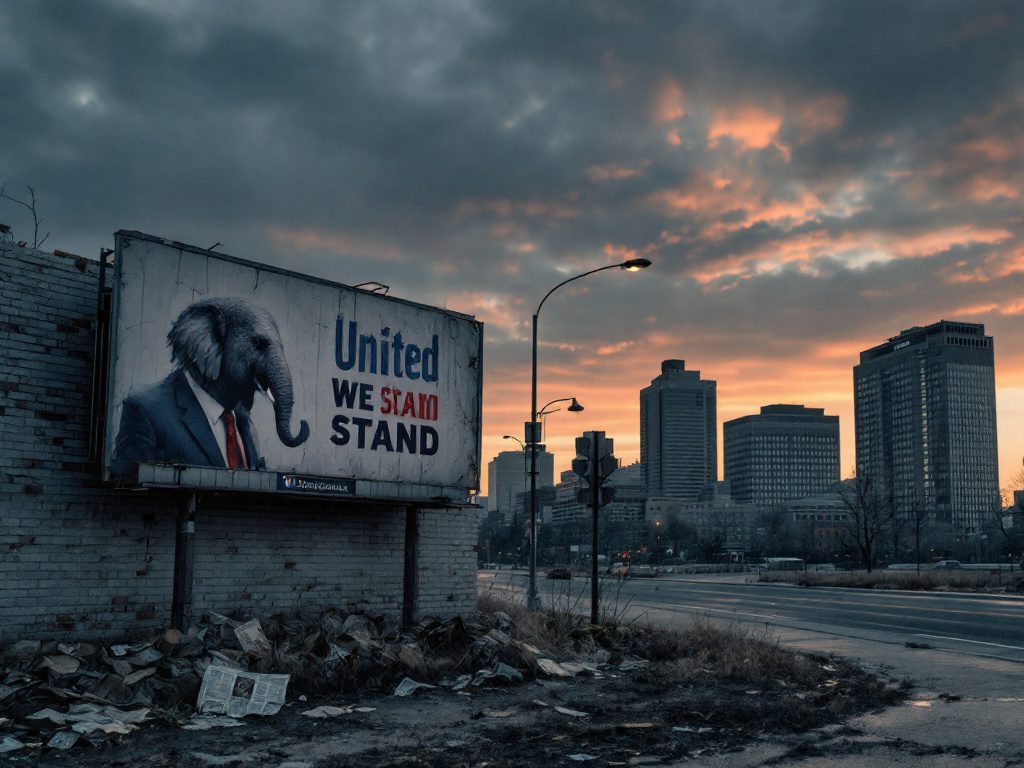
Republican Doubts: The Party’s Own Strategist Sounds the Alarm
Picture this: inside a tough-on-tariffs White House, the atmosphere is electric, if not chaotic. Less than 100 days into Donald Trump’s second term, a chorus of exhaustion has begun echoing—not just from Democrats or progressives, but from the heart of the Republican establishment itself. Karl Rove, George W. Bush’s legendary political architect, is now publicly warning that “Americans are already exhausted” by Trump and his insatiable appetite for political revenge. When a party’s seasoned tactician—one seldom accused of liberal sympathies—goes on record to say that the president’s relentless focus on retribution may backfire, responsible citizens can’t afford to ignore the warning signs.
Rove’s critique, as detailed in his recent Wall Street Journal column and TV appearances, isn’t limited to rhetorical barbs. He identifies a pattern: Trump thrives on drama, unpredictability, and—perhaps fatally for the Republican party—a disregard for steady, disciplined governance. The former Bush advisor casts a wary eye at the White House’s seemingly impromptu initiatives, including the now-infamous scheme to remove fluoride from drinking water and create a Department of Government Efficiency, neither of which were part of Trump’s campaign messaging. “Most of these acts of revenge,” Rove cautions, “will end badly for him.”
Beyond concern for internal discipline, Rove argues the exhaustion is quantifiable: As recent FiveThirtyEight polling shows, barely 47% of the public approves of Trump’s presidency, while just over 50% disapprove—a mirror to the classic polarization that defined his first term. Yet the real danger, Rove notes, lies with the crucial 15-20% of swing voters, many of whom already express fatigue and frustration, unable to see their kitchen-table concerns reflected in executive action. (Ignoring these critical moderates, Rove suggests, could be political malpractice.)
The High Cost of Policy Chaos: Tariffs, Prices, and Public Patience
Tariffs became Trump’s economic calling card almost overnight. In a much-publicized move, the administration imposed a 10% baseline tariff on imports from every country. Then, in a confounding twist, it paused substantially higher tariffs for 60 nations on a temporary 90-day reprieve—turning trade into a game of uncertainty and devastation for American businesses. Rove, echoing concerns of the nation’s business leaders, points out that nearly three-quarters of economists expect these tariffs will hike consumer prices further, running directly counter to Trump’s core campaign promise of lowering costs for the average family. The public, already battered by years of inflation, finds such unpredictability less invigorating than exasperating.
Harvard economist Jane Doe cautions that, “Tariffs do not fight inflation; they amplify it. The administration’s current zig-zag sends wrong signals to businesses and trading partners alike.” American business confidence has sputtered in response, and consumer sentiment, according to the University of Michigan’s latest index, has dipped sharply since the new tariff regime was announced.
Political whiplash is now a defining feature: yesterday’s regulatory rollbacks are followed by today’s spur-of-the-moment executive actions. President Trump’s penchant for governing by edict rather than law (especially through executive orders) may serve to temporarily placate his base, but it also means that every signature is as fragile and transitory as his mood that day. Rove warns that “A new president can undo these actions with their own orders,” rendering Trump’s supposed ‘wins’ ephemeral at best, and hollow at worst.
“America gets Trump fatigue. Most of these acts of revenge will end badly for him.” – Karl Rove, The Wall Street Journal
What is the long-term cost of this chaos? As Rove observes, legislative bypassing may deepen the partisanship that has come to define the nation’s capital, leaving a paper-thin legacy for future presidents to unilaterally reverse. The message to Americans: don’t count on stable leadership or lasting policy change.
Retribution Politics and Global Ripples: When America Sneezes…
Trump’s obsession with political payback may thrill his core supporters, but experienced strategists warn of broader damage. Rove notes that setting “revenge” as a governing principle opens the door to bipartisan escalation. “Republicans could rue the day they set a new justification for retaliation from Democrats,” he remarks, reminding observers of how easily retribution can become a vicious cycle—one that erodes faith in democracy itself.
The consequences extend beyond America’s borders. Rove cites the resurgence of opposition parties in allied nations, noting that the Liberal victory in Canada and conservative losses in Australia were both fueled in part by Trump’s style of international brinkmanship. As historian Jill Lepore argued in The New Yorker, “American politics, for better or worse, is often a bellwether for Western democracies.” What message does it send when America’s political leader proudly brands himself as chief avenger instead of consensus-builder?
Those hoping for a new era of political healing find Trump’s approach to be a cautionary tale. The stakes, as always, are heavily borne by disaffected Americans who feel alienated by partisan games and headline-grabbing power plays. When every day brings another push for personal vindication over public good, trust decays and democracy itself is jeopardized—not just in the U.S., but wherever the American experiment serves as inspiration.
Where Does America Go from Here?
So, where does this leave you—or the millions of Americans caught between polarized camps? As Rove points out, it’s the pragmatic center—the voters craving effective policies rather than pyrotechnics—who ultimately hold the keys to America’s future. Will exhausted citizens reward endless drama and short-term wins, or demand a return to governing for the common good?
One thing feels unmistakable: Trump fatigue, this time, is bipartisan and palpable. From rising tariffs to bruising Twitter wars, Americans have seen this playbook before. The nation stands at a crossroads. Will we choose principled leadership and stability, or allow cycles of retribution to define another era?
History may look back on these warnings from inside the GOP not as mere political infighting, but as a call to action for the survival of American democracy. The next chapter depends on whether we heed them.
