
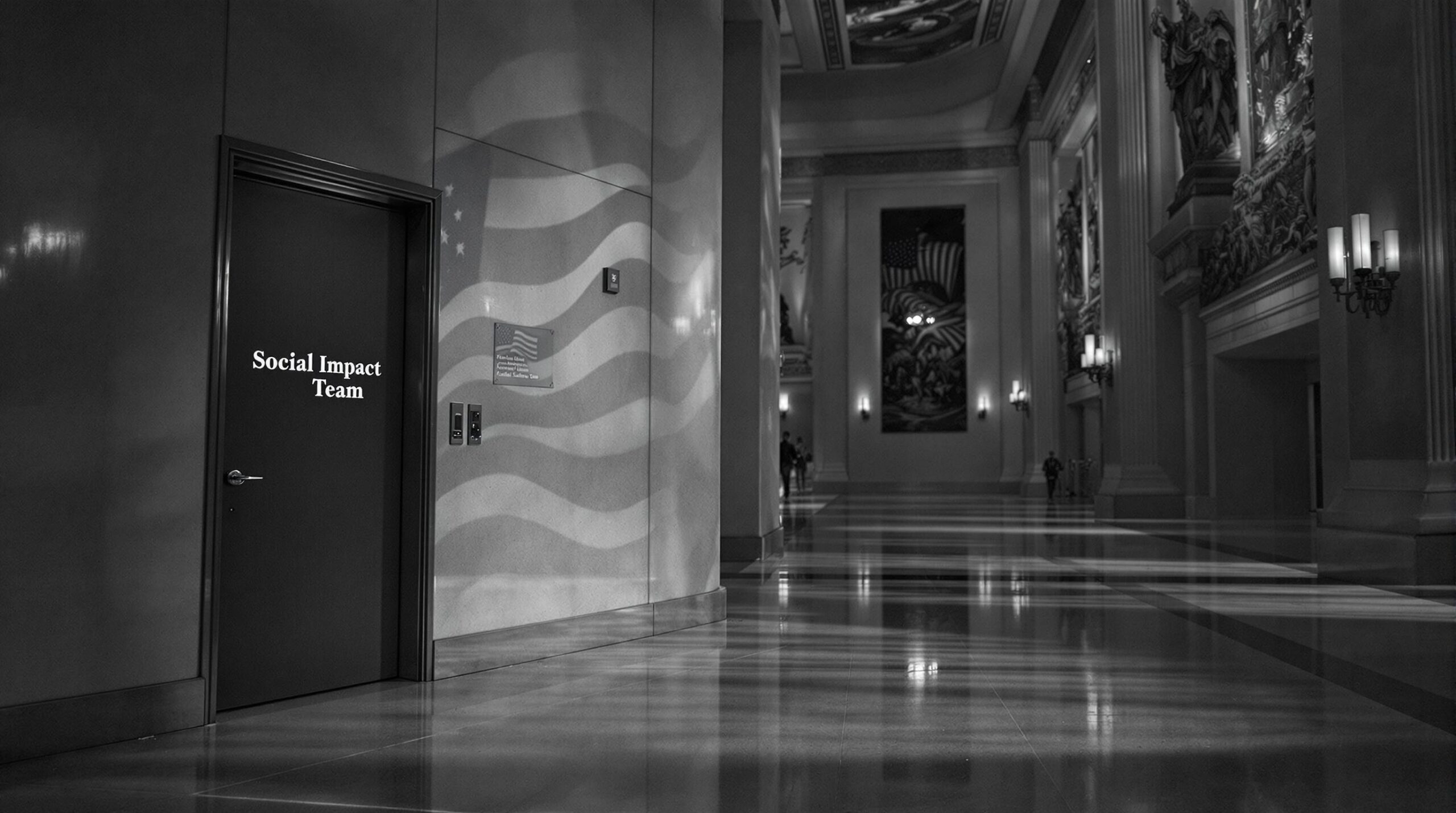
As Washington, D.C.’s iconic Kennedy Center faces one of the most tumultuous periods in its storied history, the latest decision to dissolve its entire Social Impact team has ignited fierce debates about the future direction of this revered institution. Led by Artistic Director Marc Bamuthi Joseph, the Social Impact division had championed initiatives dedicated to diversity, equity, and social justice—a mission that now appears directly at odds with the new ideological mandate imposed by President Trump’s board appointees.
An Abrupt End to Inclusivity Efforts
Previously known for fostering cultural accessibility initiatives, the Social Impact team represented a progressive force grounded in artistic justice and community spirit. Programs like “Traumedy” and “Poetry & Art as Liberation” didn’t merely entertain; they provided powerful platforms for marginalized voices, including those of formerly incarcerated individuals. These initiatives demonstrated not just creative expression, but essential dialogue around systemic inequities—a dialogue that now risks silencing under the current administration.
This abrupt dismissal sends a chilling message throughout the arts community. Marc Bamuthi Joseph, whose artistic vision served as the division’s heartbeat, was undeterred in his determination, profoundly stating, “Eras end…doors close…windows open…we fly through…” Nevertheless, the departure’s significance remains palpable, signaling not just a staffing change, but a wholesale philosophical pivot in the Kennedy Center’s approach to arts programming.
Stifling Progress in Favor of Politics
The Trump administration justified these dramatic institutional changes by labeling past programming as evidence of “woke culture” creeping into American institutions. This move reflects a clear prioritization of conservative cultural ideology at the expense of the inclusive, dynamic programs that had earned Kennedy Center acclaim beyond party lines.
These changes didn’t go unnoticed or uncontested within the arts community. Following Trump’s broad leadership overhaul—ousting respected figures like Kennedy Center President Deborah F. Rutter and Chair David M. Rubenstein—numerous influential artists and advocates began distancing themselves. Renée Fleming, the internationally acclaimed opera singer and advocate for cultural diplomacy, notably resigned citing the pendulum swing away from diversity and necessary cultural dialogue.
“When cultural institutions abandon their commitment to diversity and inclusion, they don’t merely lose progressive credentials; they erode essential democratic values.”
The loss of such esteemed figures underlines not just disapproval within artistic communities but underscores a substantive challenge to Kennedy Center’s international and domestic cultural standing. How can cultural spaces survive and thrive when political ideology overtakes artistic freedom and inclusivity?
A Question of Legacy and Future
The Kennedy Center has long stood not just as a venue for the arts, but as a symbol of American cultural diversity and collective progress. Such venues have historically been crucial for providing platforms for voices systematically excluded elsewhere. By instructing its programming team explicitly to cease social impact initiatives, the new leadership—all Trump loyalists—has not simply changed direction; it has redefined the institution’s fundamental identity.
Art plays an essential role in society, particularly in addressing complex social issues. The Kennedy Center’s innovative yet thought-provoking programming such as “Traumedy” epitomized the potential of creative spaces to foster empathy, encourage reflection, and incite social change. By divesting from these critical artforms, the institution risks fading into ideological relevance, serving only those who align closely with a restrictive vision of culture.
The unsettling irony is that a center named after President John F. Kennedy—a beacon of American liberalism and patron of the arts, who placed a strong emphasis on innovation, progress, and inclusion—is now under stewardship antithetical to its origin story. Kennedy understood that the arts “enrich our minds, broaden our horizons and deepen our appreciation for that which binds us together.” Now, this esteemed legacy faces an existential threat from an exclusionary agenda.
Taking all this into account, the current trajectory poses not only internal repercussions but external challenges as well. Broadway tours, for instance, follow industry standards championing diversity and inclusion—standards the venue might struggle to meet under Trump-era mandates, particularly given newly enacted content restrictions against drag performances and gender expression. Could the Kennedy Center even remain competitive or culturally significant amid such limitations?
As concerned community members and advocates grapple with these alarming developments, one thing remains abundantly clear: the role cultural institutions play in cultivating an equitable, empathetic society cannot be overstated. Stripping away arts programming rooted in social progress fundamentally undermines collective strides toward societal equity and justice.
The dissolution of the Social Impact team at the Kennedy Center reveals a troubling backslide toward cultural conservatism at odds with modern societal values. While the immediate consequence has been staff layoffs and stark programmatic changes, the real damage threatens the integrity and inclusive ethos once proudly synonymous with this iconic cultural landmark.
