
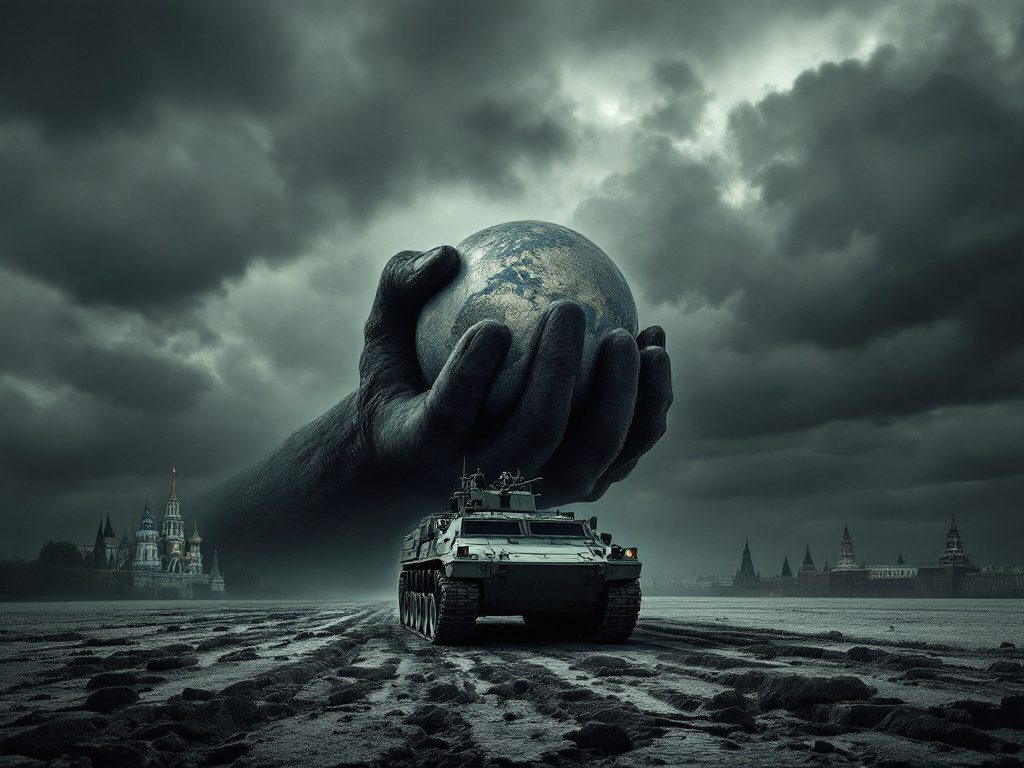
The Seizure of Glavprodukt: A New Front in Russia’s War Strategy
It’s a moment that might have once sounded like Cold War fiction: Moscow seizing a U.S.-owned company and repurposing it—canned food and all—to feed its military. Yet in October 2024, this scenario became reality for Glavprodukt, a canned food producer founded by Los Angeles businessman Leonid Smirnov. Taken under the control of Russia’s sprawling federal property agency, Rosimushchestvo, the company has become a flashpoint in the maze of international relations, asset expropriation, and wartime necessity.
How did a West-coast entrepreneur’s business become a pawn in the Kremlin’s escalating conflict with Ukraine? Prosecutors allege Smirnov and his affiliates illicitly siphoned $17 million out of the country between 2022 and 2024—a charge he flatly rejects as a “Russian-style corporate raid.” Despite such denials, the Kremlin swept Glavprodukt into the state’s embrace, citing a need to “ensure stable production, including future supplies to the national guard and defense ministry.” With a hearing on the company’s fate scheduled for April, the stakes continue to rise—not just for one business, but for the broader principle of foreign ownership in autocratic states.
Nearly a dozen European conglomerates, from Danish brewer Carlsberg to Finnish utility Fortum, have already suffered similar fates. Yet Glavprodukt stands out as the only American company so far taken under Russian state control since the full-scale Ukraine invasion. According to Reuters, internal company documents and legal filings reveal a deliberate Kremlin plan to redirect the company’s output towards feeding its own armed forces.
Political Theater or Economic Necessity? Inside Putin’s Playbook
The overt rationale for the takeover is clear enough: Russia faces rampant shortages and spiraling costs as Western sanctions tighten and the war machine grinds on. The Kremlin’s solution appears as stark as it is authoritarian—expropriate, nationalize, repurpose. Yet, behind the legal theatrics is a deeper campaign to bend economic assets to the war effort, all while signaling to domestic elites and foreign investors that the rules of the game can shift overnight.
Why Glavprodukt, and why now? It’s not only because of the company’s core business—food supplies so crucial during sustained conflict—but also because of its ownership connections. After the seizure, Glavprodukt’s new CEO was installed at the request of Druzhba Narodov, a firm with longstanding ties to Russia’s security forces and former agriculture minister Alexander Tkachov, himself sanctioned by the European Union for backing Moscow’s 2014 annexation of Crimea. Under their stewardship, Glavprodukt previously supplied the Russian National Guard, bringing the move full circle.
Senior Russian officials offered no comment when pressed about future state plans for Glavprodukt or the rationale behind its new management. It’s a conspicuous silence—one that leaves Western governments and business leaders guessing at every turn. As Harvard economist Emily Adair notes, “The arbitrary seizure of foreign assets only deepens the uncertainty and accelerates the flight of remaining Western investment from Russia. Any hope for a stable business environment evaporates with every new expropriation.”
“What we’re witnessing is not just a struggle over factories or food production. It’s a battle over the future of international norms, trust, and the sanctity of private property in a world drifting toward conflict.” — Harvard economist Emily Adair
Is there a path back from the brink? For diplomats—including Secretary of State Marco Rubio—the Glavprodukt incident will loom large in future negotiations. Official statements from Washington pledge to place the company’s fate on the agenda for talks aimed at finding a diplomatic off-ramp to the Ukraine crisis. Yet the underlying message from the Kremlin is unmistakable: in Putin’s Russia, foreign business assets are only as secure as the geopolitical winds allow.
The High Cost of Authoritarian Opportunism
Perhaps the most chilling aspect of Glavprodukt’s expropriation is the precedent it sets. About a dozen European companies have already been swept up in similar government seizures, with little recourse. While Moscow paints these actions as “stabilizing” measures, history tells a different story. The erosion of private property rights and rule of law has economic and moral consequences—as seen in the myriad post-Soviet states where such government overreach translated into decades of stagnation and inequality.
For Americans and other Western investors watching from a distance, the Cold War might feel like ancient history, but Russia’s behavior signals a stubborn revival of its most combative instincts. As Yale historian Timothy Snyder reminds us, “Authoritarian regimes see crises as opportunities—not just to consolidate power at home, but to upend the established order abroad.” The seizure of Glavprodukt, in the midst of sensitive Ukraine negotiations, is more than a footnote—it’s a shot across the bow to every multinational still clinging to their Russian operations.
Russian officials justify these actions as necessary wartime expedients, yet they highlight a deeper truth: autocracy—unchecked—breeds chaos and mistrust, not stability. Rather than strengthening Russia’s economy, such seizures risk cementing its isolation from the world’s most dynamic markets. For those who believe in the sanctity of property rights and international law, the case of Glavprodukt is a sober reminder of the perils nations—and their people—face when legal norms bend to the whims of political expediency.
Beyond that, these events should invite Americans and our allies to reflect on what kind of international order we are willing to defend. Do we acquiesce as basic rights erode at the hands of autocrats for the sake of short-term stability? Or do we champion a world where equality, justice, and the rule of law remain non-negotiable values, even when inconvenient? If we are to learn any lesson from Glavprodukt, let it be that democracy and fairness remain worth defending, even in the face of formidable adversity.
