
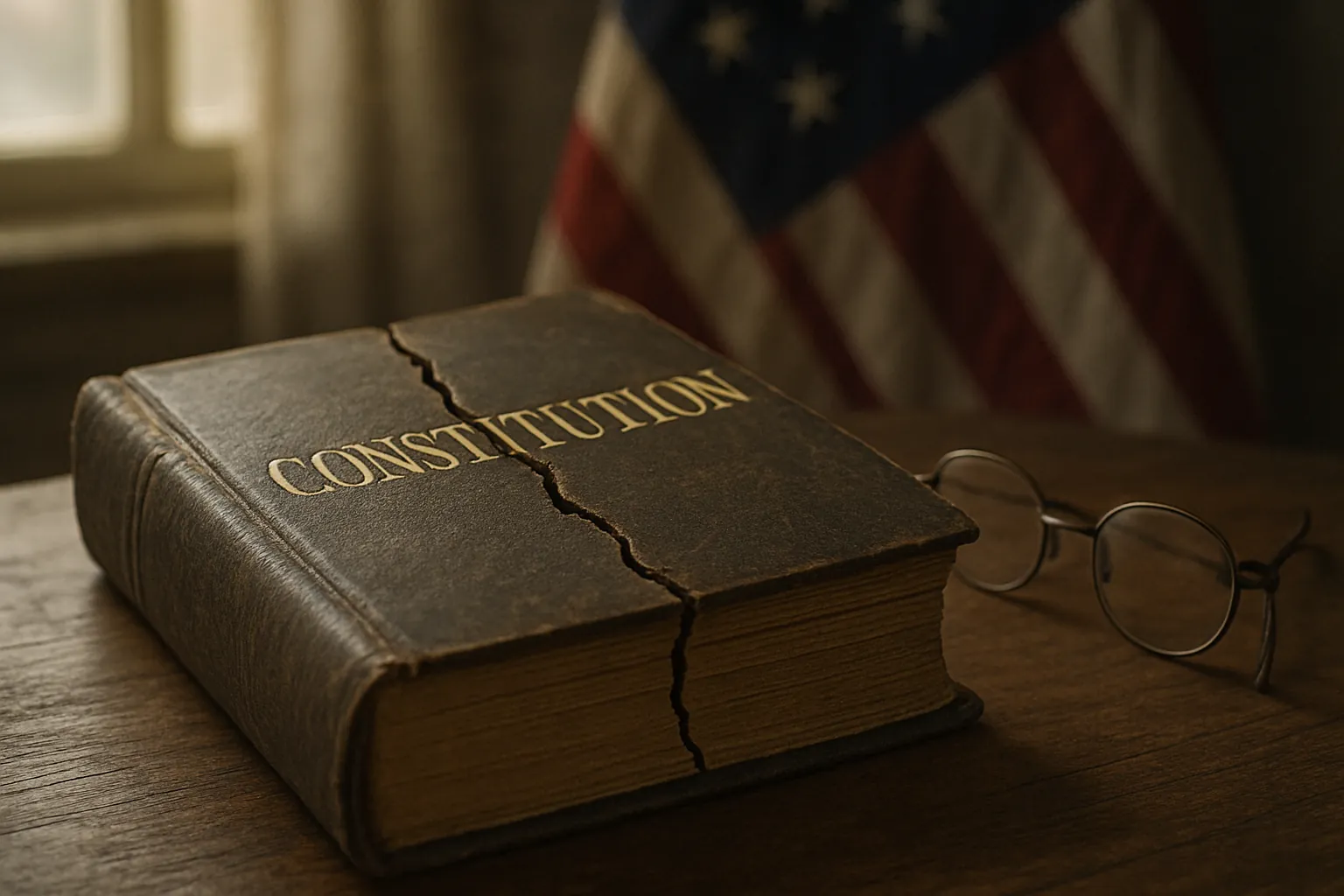
A Moment That Exposes More Than a Simple Civics Error
It’s not every day that a central American value is put on trial in full public view—and mishandled by someone entrusted with defending it. At a recent Senate hearing, Secretary of Homeland Security Kristi Noem was asked a simple question that cuts to the core of what it means to live in a free society: What is habeas corpus? Rather than recounting its essence—a shield to protect anyone from arbitrary imprisonment—Noem instead called it “a constitutional right that the president has to be able to remove people from this country.” The remark drew an immediate, incredulous rebuke from Sen. Maggie Hassan (D-N.H.), who reminded the chamber that habeas corpus is what separates open democracies from repressive regimes.
This seemingly mundane exchange has set off a resonant alarm among civil liberties advocates. They worry the Trump administration may be willing to suspend this fundamental right under the pretense of national security or immigration enforcement. Recent comments by senior adviser Stephen Miller leave little doubt: The administration is “actively looking at” suspending habeas corpus to speed deportations, bypassing judicial safeguards. If this sounds familiar, it’s because history offers chilling warnings on how easily executive overreach can erode liberty.
What Habeas Corpus Really Means—And Why It Matters
The Latin phrase “habeas corpus”—literally, “you have the body”—is one of the oldest and most vital guarantees of individual freedom. It compels the government to present a detainee before a judge, to prove there is a legitimate, legal reason for their detention. Rooted in English common law and carried into our Constitution, it reflects a bedrock commitment: government power is not unlimited, and public accountability matters.
The Constitution’s Suspension Clause (Article I, Section 9) does not mince words. It declares that: “The Privilege of the Writ of Habeas Corpus shall not be suspended, unless when in Cases of Rebellion or Invasion the public Safety may require it.” This language doesn’t grant presidents carte blanche—it restricts the circumstances under which this right can be set aside and reserves that power to Congress, not the executive branch. As Harvard Law professor Laurence Tribe puts it: “Any attempt by the White House to suspend habeas corpus without congressional approval would be flagrantly unconstitutional, setting a dangerous precedent for unchecked executive authority.”
Yet, Secretary Noem’s casual reinterpretation wasn’t simply a flub. It signals either a profound misunderstanding—or worse, a willingness to recast foundational rights in service of a political agenda. If top officials can’t or won’t defend these bedrock liberties, what’s next?
“Habeas corpus is the foundational guarantee that separates free societies like America from police states like North Korea.” — Sen. Maggie Hassan (D-N.H.)
From Lincoln to Trump: The Perilous Road of Suspending Rights
History is replete with cautionary tales. During the Civil War, President Abraham Lincoln famously suspended habeas corpus, arresting thousands without trial. In that time of national crisis, Lincoln’s move—a controversial measure—was later retroactively approved by Congress. Even then, the Supreme Court sternly rebuked the executive’s overreach in Ex parte Milligan (1866), affirming that constitutional rights don’t evaporate in fear or chaos. “The Constitution of the United States is a law for rulers and people, equally in war and in peace,” the court wrote.
So, what compels today’s Republican leadership to flirt with similarly dangerous ideas in the realm of immigration policy? Is this about border crisis management, or a calculated effort to expand the powers of the presidency at the expense of long-standing legal safeguards? Miller’s open musing about suspending due process for migrants should not be dismissed as idle rhetoric. As Stanford Law’s Jenny Martínez notes, “Once the door opens, the same justification could apply to U.S. citizens, or any other group an administration deems threatening.” When constitutional rights are trivialized for one, all Americans stand to lose.
This anxiety isn’t the stuff of left-wing hyperbole. In their 2018 report on immigration enforcement, the American Civil Liberties Union documented the real-world toll that loss of judicial review takes: wrongful detentions, family separations, and the hidden suffering of people denied their day in court. Undermining habeas corpus would create a shadow legal regime—one ripe for abuse by any administration that chooses expediency over justice.
The Slippery Slope: Eroding Civil Liberties in the Name of Security
Critics of the administration’s approach fear a scenario where political leaders, emboldened by blurred constitutional boundaries, claim unchecked powers under the banner of “public safety.” The fact that Secretary Noem—a former governor, now responsible for over a quarter million employees at DHS—either doesn’t grasp or deliberately recasts basic constitutional principles is alarming in its own right.
A closer look reveals that conservatives’ penchant for presenting themselves as “constitutionalists” often evaporates when core rights become inconvenient. According to legal historian Garrett Epps, “The Suspension Clause was written with tyrants in mind—the very people who would rather lock away perceived enemies than answer to courts.” This is why vigilant defense of habeas corpus is not some arcane fixation; it is moral and practical armor for our pluralistic democracy. If our government can imprison without good reason, we lose not just a legal guarantee, but the fabric of trust holding society together.
You might ask: If we lose the right to demand accountability for imprisonment, who truly remains free? This is not a theoretical exercise. As recent crackdowns show, rights lost at the margins—immigrants, asylum seekers, dissenters—soon threaten the majority. According to a 2023 Pew Research survey, Americans across the political spectrum overwhelmingly agree that due process is essential to national identity. Yet, these very principles face their greatest danger when leaders mislead—or are mistaken about—their meaning.
Protecting the Pillars of Democracy
The episode with Secretary Noem is more than an embarrassing civics misstep. It’s a stark reminder that democratic backsliding often begins with small erosions of long-held protections. Leaders sworn to defend the Constitution must demonstrate both knowledge and respect for it. Anything less leaves America closer to the very police states we abhor.
Mainstream liberals, moderates, and even principled conservatives must insist on constitutional literacy as a minimum qualification for public office. Only by respecting—and understanding—the laws that bind us can our democracy hope to withstand the currents of fear and division. America’s best days depend not on strongmen wielding unchecked power, but on the quiet dignity of laws that protect everyone—no matter who’s in charge. That’s the real line separating us from the world’s closed societies. Will we defend it?
