
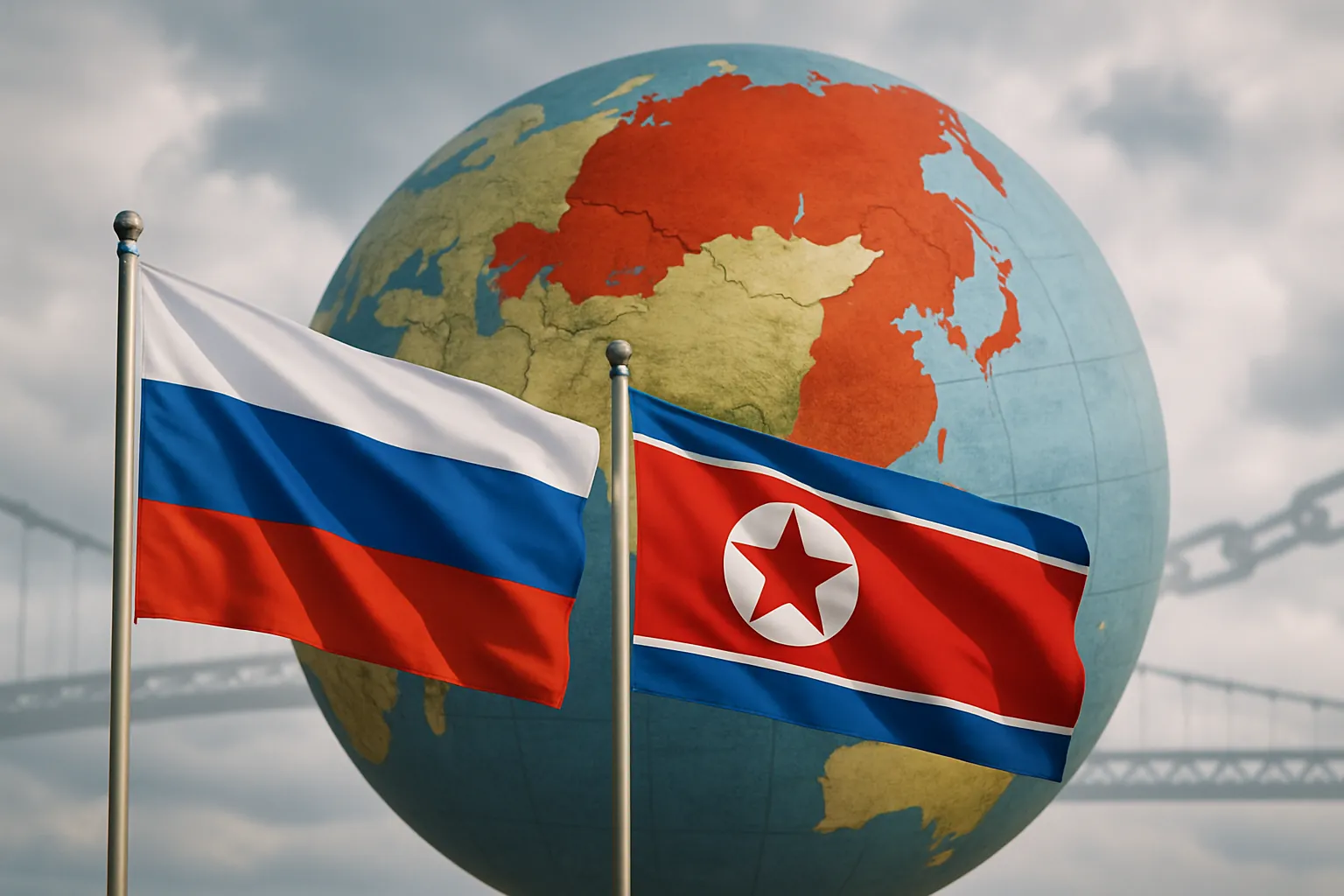
The Axis Tightens: Moscow and Pyongyang’s Military Embrace
It’s a rare spectacle for two global pariahs to put their alliance so blatantly on display, yet that is exactly what’s unfolding as Russian Foreign Minister Sergey Lavrov prepares to land in Pyongyang for the latest—and most consequential—act of Russia and North Korea’s deepening strategic partnership. This three-day visit, starting July 11, is not some routine diplomatic courtesy; it’s the clearest indication yet that President Vladimir Putin and Kim Jong Un’s regimes are drawing each other closer in defiance of international norms and, more troublingly, in pursuit of shared military ambitions.
The open military cooperation between the two countries would have been unthinkable a decade ago. The world largely regarded North Korea as a hermit kingdom, with even its traditional partners in Beijing keeping it at arm’s length. Meanwhile, Russia sought respectability (and investment) from the West. That veneer has been torched by the war in Ukraine and subsequent Western sanctions. Now, Moscow’s invasion and Pyongyang’s international isolation have made them natural, if dangerous, bedfellows.
Russian officials, including high-profile Security Council Secretary Sergei Shoigu, have been shuttling to North Korea with uncharacteristic frequency. Shoigu’s recent trips resulted in explicit agreements: North Korea, for the first time acknowledging its involvement in Ukraine, pledged to send thousands of military engineers, sappers, and construction workers to Russia’s Kursk region, as well as significant quantities of artillery shells and ballistic missiles. Kim Jong Un himself publicly honored North Korean soldiers killed fighting in Ukraine, lauding the “militant ties of friendship and genuine internationalist obligation” in language reminiscent of Cold War propaganda. The frequency and fanfare suggest a partnership far more entrenched than mere circumstantial cooperation.
Shared Sanctions, Shared Liabilities
The mutual defense pact inked by Putin and Kim during their June summit marks a dramatic escalation. North Korea’s long-standing international isolation is now mitigated by Russia’s willingness to break—or at least bend—global nonproliferation conventions, all in the name of sustaining its war effort. South Korean and Western intelligence agencies report that Pyongyang has dispatched up to 12,000 troops and shipped weapons to the Russian front, directly fueling the grinding conflict in Ukraine. Lavrov’s upcoming visit is widely interpreted by experts as a means to further coordinate logistics and, perhaps more ominously, facilitate the transfer of missile and nuclear technology back to the Korean peninsula.
This is not a partnership of equals. Russia’s demand for North Korean labor and matériel, in exchange for much-needed hard currency and advanced military know-how, leaves Kim Jong Un in a position to bargain for high-tech assistance previously denied him by global controls. “What worries us is the clear risk of technology leakage,” warns Dr. Cheon Seong-whun, a former South Korean government nuclear adviser. “If North Korea gets its hands on Russian missile or submarine technology, that will mark a dangerous turning point for stability in Northeast Asia.”
The world can no longer afford to treat the Moscow-Pyongyang axis as a sideshow. These are two nuclear-armed states bartering blood and technology, undermining decades of painstaking nonproliferation efforts.
Lavrov’s itinerary also includes a meeting with North Korean Foreign Minister Choe Son Hui, and Kremlin press secretary Dmitry Peskov has confirmed that a personal message from Putin will be delivered to Kim. Talks are expected to cover not only military support but burgeoning economic ties, including the recent authorization for Nordwind Airlines to begin direct Moscow-Pyongyang flights. Russia’s overt campaign to boost North Korea as a travel destination—however limited in scale—serves a symbolic purpose: breaking Pyongyang’s global quarantine and signaling a new era of Eurasian realignment.
What’s at Stake for Democracy and Global Security?
Why should anyone outside the region care? Because what’s happening here chips away at the foundation of global security, exposes the dangers of isolationist and adversarial foreign policy, and makes a mockery of decades-long bipartisan U.S. efforts to contain nuclear proliferation. The conservative embrace of “America First” and “maximum pressure” sanctions has, paradoxically, driven both Moscow and Pyongyang further into each other’s arms. Instead of deterring bad actors, these policies have fostered conditions for their mutual survival and strategic cooperation.
Harvard historian Sergey Radchenko notes, “The hyper-militarization of this new alliance sets a troubling precedent. It emboldens rogue regimes worldwide to believe that, when isolated, their best bet is to double down on risky behavior and seek out fellow pariahs.” The consequences extend beyond Ukraine’s ruined fields and the Korean peninsula’s tense DMZ: this partnership could accelerate a global arms race, undermining fragile security architectures from the UN Security Council to the Treaty on the Non-Proliferation of Nuclear Weapons.
There are echoes here of the 1950s, when superpower competition in Korea and Europe forced moderate voices to the sidelines. Yet the stakes today are even higher. Both Russia and North Korea possess nuclear arsenals, and both relish the signaling power of unpredictable, destabilizing behavior. It’s not just about tactical alliances, but about normalizing the open defiance of international law and collective security norms.
History gives us reasons for hope as well as warning. Progressive leadership—rooted in principled engagement, multilateral diplomacy, and creative confidence in alliances—has managed to contain even nuclear adversaries before. The Biden administration, along with trusted global partners, must seize this moment to reaffirm solidarity, bolster sanctions enforcement with smarter humanitarian carve-outs, and invest in people-to-people exchanges where possible, ensuring that authoritarian regimes are not the only interlocutors. If neutrality and nonintervention are allowed to prevail, or if the West turns inward once more, the world risks ceding ground to a new age of unchecked despots, armed and emboldened by each other’s patronage.
Beneath the headlines about official visits and diplomatic choreography, a profound threat is materializing. It is time—for both progressives and pragmatic conservatives—to recognize that this Russia-North Korea axis is not a regional anomaly, but a global warning.
