
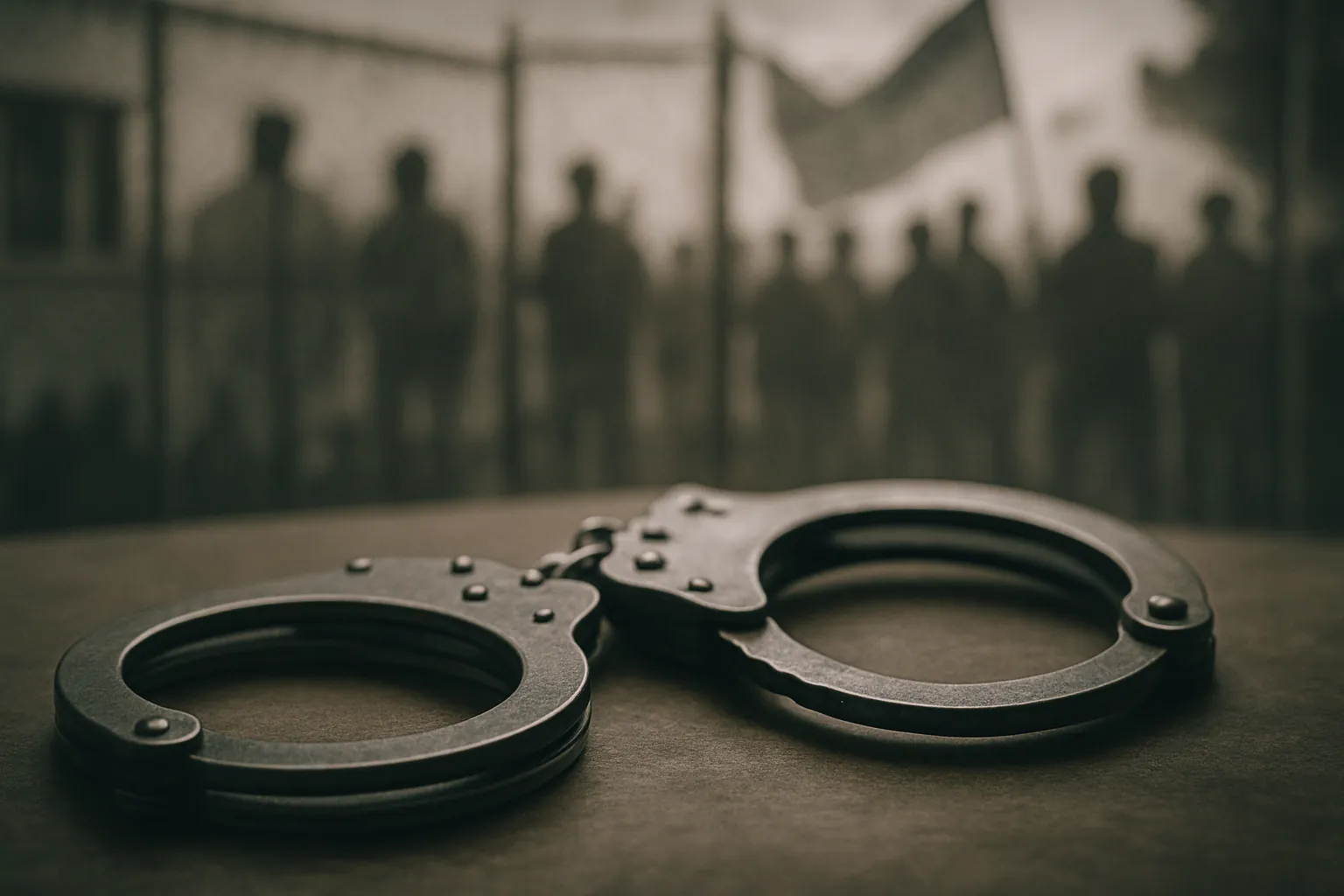
Inside the New Battleground: ICE Arrests and Due Process Under Siege
Consider walking into a courthouse not as a criminal, but as someone seeking legal refuge—a chance to plead your case, to find protection from persecution, or simply to fulfill a mandatory appearance. In the Trump era, this ordinary act became the trigger for an extraordinary danger: the risk of being arrested, detained, and swept toward deportation before your story was even heard. The latest wave of class-action lawsuits filed against the federal government illuminates one of the most consequential—and chilling—traditions to emerge from the anti-immigrant machine constructed over the past several years.
Courthouses have turned from sanctuaries of justice into hunting grounds for ICE agents, a transformation the lawsuits argue violates fundamental rights and deters participation in the legal process itself. Plaintiffs—many of whom are LGBTQ+ asylum seekers or survivors of sexual violence—describe being picked up in the hallways outside courtroom doors, separated from families, and funneled into an opaque detention system nicknamed “Alligator Alcatraz.” Far from the administrative corners of immigration, the policy shift has brought the nation’s most vulnerable into direct clash with federal power.
Prior to the Trump administration, agencies like the Department of Homeland Security (DHS) and the Department of Justice (DOJ) had policies that constrained civil immigration arrests inside courts, recognizing that legal fairness demands open access to justice. Yet with these guardrails repealed in 2017, even those willing to place trust in the American judicial system found that doing so could, paradoxically, put them in jeopardy of summary removal. The strategy, critics say, betrays the core values of due process and equal protection.
Weaponizing Justice: Fast-Track Deportations and Barriers to Legal Counsel
What happens next for those ensnared at the courthouse steps is equally harrowing. The lawsuits spotlight detainees—like Cuban national Michael Borrego, held at the Everglades “Alligator Alcatraz” facility—who endure prolonged detention without meaningful access to attorneys. According to his mother, “His attorney waited three hours outside and could not get in [to the detention center],” a scene mirrored by countless others desperately seeking representation. At Alligator Alcatraz, protocols for confidential attorney-client communication are non-existent, replaced by fleeting, monitored phone calls insufficient for substantive legal counsel. The American Civil Liberties Union (ACLU) and National Immigrant Justice Center (NIJC) describe these measures as infringing upon the basic right to representation enshrined in American jurisprudence.
Expert voices underscore the broader stakes of these practices. Skye Perryman, president and CEO of Democracy Forward, characterizes the Trump administration’s deliberate escalation of courthouse arrests as “weaponizing immigration courts and chilling participation in the legal process,” warning that justice is dangerously one-sided when noncitizens are stripped of their right to be heard. Harvard Law professor Gerald Neuman, writing in the Yale Law Journal, identifies courthouse arrests as a form of intimidation, noting “people will be less likely to attend court, undermining not just individual rights but the integrity of the legal system.”
“Individuals seeking refuge should not be deported without due process. Turning courts into traps shatters trust and undermines the rule of law.”
—Skye Perryman, Democracy Forward
Behind the legal arguments lies another, more human calculus: Family separation, the silencing of abuse survivors, and the perpetual fear among immigrant communities that the mere pursuit of justice could result in indefinite detention or abrupt removal. The lawsuits point out that the majority of ICE’s targets at courthouses have no criminal convictions, directly contradicting administration rhetoric that promises to focus on protecting the country from dangerous offenders.
The Road Ahead: Advocacy, Accountability, and the Spirit of American Justice
A closer look reveals that these court challenges are not simply legal skirmishes—they are a referendum on the nation’s moral priorities. For decades, the United States has weathered contentious debates over immigration enforcement. Yet few periods have seen federal authority used so aggressively, or the principle of access to justice so explicitly threatened. Critics warn that the chilling effect of courthouse arrests runs deep, deterring victims from pressing charges, witnesses from cooperating, and parties from defending their rights, all undermining public safety and judicial integrity for everyone.
Even the Trump administration has not sought to disguise its priorities. Homeland Security officials, represented by Tricia McLaughlin, argue that courthouse arrests are “safer” for law enforcement, claiming that individuals have been screened for weapons at the door. “Nothing in the constitution prohibits arresting a lawbreaker where you find them,” she asserts—an answer which deftly sidesteps the deeper question of what justice demands, not merely what power allows.
Across the nation, groups like the ACLU, NIJC, and Democracy Forward are pushing to restore something essential: reassurance that the judiciary is not a tool of expulsion, but a forum for mercy, truth, and proportionate justice. Their lawsuits demand not only relief for current detainees and revisions to arrest protocols, but also an accountability that has too often proven elusive in recent years. As these cases move through the courts, the stakes will be measured not just in legal outcomes, but in whether America remains a place where the vulnerable can find sanctuary in its courts rather than new forms of exclusion.
Historical parallels abound, from the Japanese-American internment of the 1940s (later condemned as a national shame) to the Palmer Raids of the 1920s. Time and again, abuses justified in the name of “security” have led to later regret and—given enough distance—national self-correction. The present moment, advocates argue, demands that we choose human rights over expediency, and justice over short-term political gain. It is a test of the moral substance that underpins progressive values and, ultimately, the American experiment itself.
