
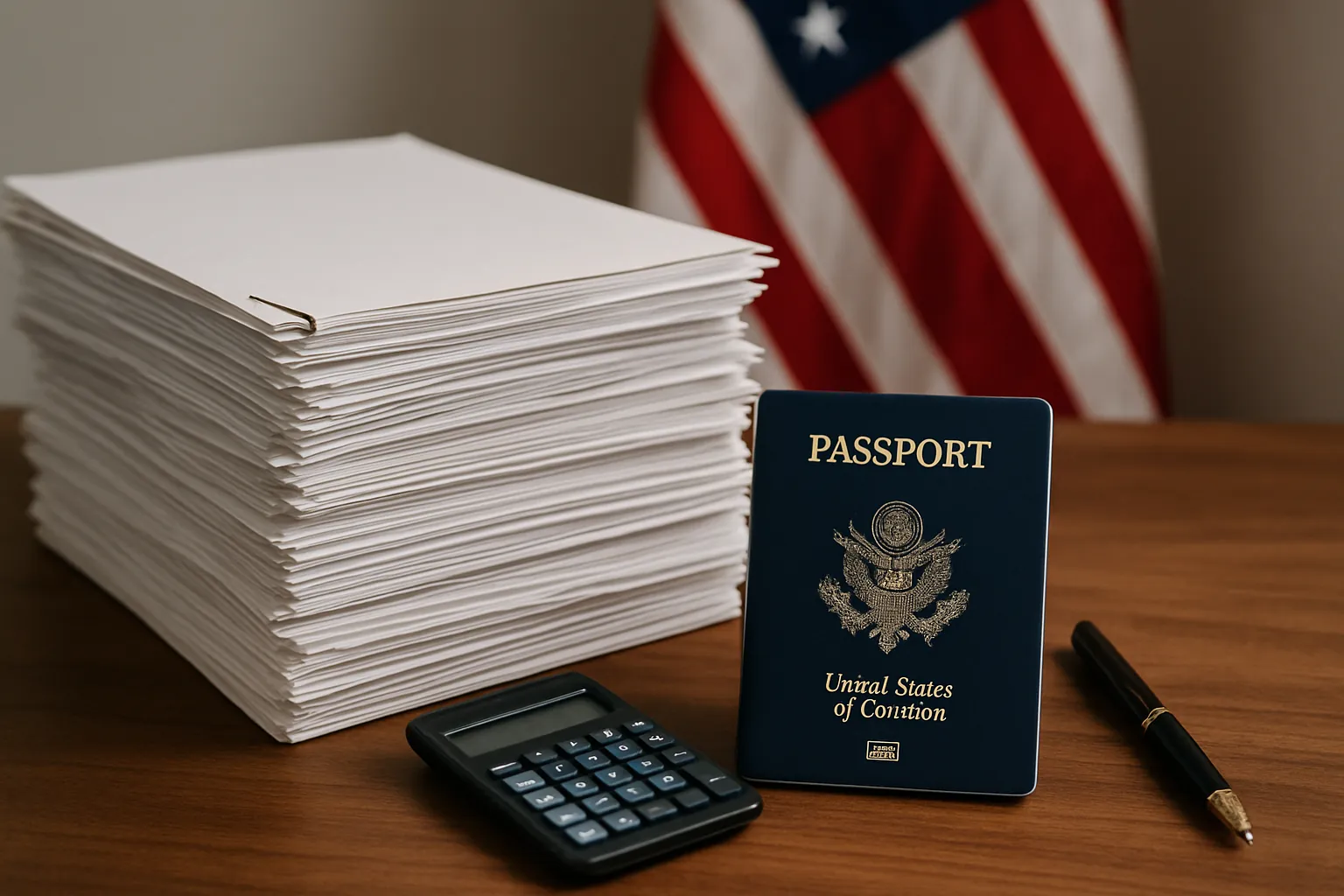
Rushing a Major Change: The $100K H‑1B Fee Takes Center Stage
On a seemingly ordinary morning in late September, hospital administrator Priya Sharma awoke to uncertain headlines: the Trump administration was enacting a sweeping $100,000 fee on new H‑1B visa applications. For Sharma — faced with persistent nurse shortages and a daunting caseload at her rural health center — the implications were immediate and alarming. She wasn’t alone. That very week, a diverse coalition of unions, employers, religious groups, and educators filed the first major federal lawsuit to block President Trump’s fee, arguing it amounts to a backdoor ban on skilled immigration under the guise of protecting American jobs.
This isn’t the first time U.S. immigration policy has flared into controversy, but the $100,000 fee stands out for its scale and speed. Unveiled via presidential proclamation with just 36 hours’ notice, the new fee dwarfs previous H‑1B processing costs — typically ranging between $2,000 and $5,000 — upending expectations across America’s major talent pipelines.
Plaintiffs in the lawsuit, led by a formidable legal team from Democracy Forward, the Justice Action Center, and the South Asian American Justice Collective, allege not just economic harm, but a grave breach of constitutional norms. The move, they contend, sidesteps Congressional authority, violates the Administrative Procedure Act, and potentially unleashes market-wide chaos, especially for institutions far removed from Silicon Valley’s gleam.
The Stakes for America’s Health, Schools, and Innovation
While political rhetoric often frames H‑1B visas as a tool of Big Tech, the reality is more complex — and more vital to everyday Americans. Esther Sung, an attorney involved in the case, stressed to AP News that the fee’s impact reaches “far beyond giant technology firms,” pointing to the many hospitals, schools, and nonprofits that rely on foreign talent to serve local needs. Plaintiffs comprise an unusually broad swath: labor unions like UAW and Committee of Interns and Residents, a nurse placement agency, agricultural and aerospace unions, medical residents, education nonprofits, religious organizations, and even individual petitioners from the UK and India.
What does $100,000 per worker really mean in practice? Most hospitals, universities, and faith-based groups operate on tight budgets. For them, this fee isn’t a line-item; it’s a non-starter. As Dr. Suraj Patel, a rural health administrator involved in the suit, put it: “Our vitality depends on H-1Bs, especially in medically underserved communities. This fee is a direct threat to public health.” The timing raised the stakes even higher: employers suddenly faced confusion about which applications and job offers remained legal, threatening both care continuity and crucial educational programs.
According to Department of Labor data, the U.S. faces deep shortages in sectors that H‑1B workers typically fill — including teaching, nursing, engineering, and scientific research. Cutting off this pipeline doesn’t just harm immigrants; it undermines investment in America’s future. A 2022 National Science Foundation report found that over 45% of U.S. graduate engineering students are foreign-born, highlighting how much research and innovation depend on visa flows.
“Our vitality depends on H‑1Bs, especially in medically underserved communities. This fee is a direct threat to public health.”
The Law, the Limits of Presidential Power, and Conservative Immigration Myths
A closer look reveals that the legal fight isn’t just about dollars and cents. At its core, it’s a battle over the separation of powers and the basic rules of American governance. Historically, Congress has exclusive authority over immigration — including who can enter, under what terms, and what fees or taxes are imposed. As the lawsuit notes, Trump’s proclamation attempts to rewrite the statutory scheme by fiat, without public notice, debate, or oversight. Legal scholars such as Professor Shoba Sivaprasad Wadhia (Penn State Law) argue this sets a dangerous precedent: “If a president can impose a $100,000 fee today, what’s to stop an even more drastic barrier tomorrow?”
Courts have sometimes deferred to executive power over national security, especially post-9/11, but even so, past efforts to circumvent Congress have met strong judicial pushback. A prime example: in 2017, initial iterations of Trump’s so-called “Muslim Ban” were quickly enjoined by federal courts for overstepping executive authority. Here, the coalition argues, the administration seeks to impose what amounts to a tax or statutory rewrite outside the legislative process, running afoul of the Constitution and the Administrative Procedure Act.
Opponents of the fee also challenge conservative talking points that portray H‑1B visas as a Trojan horse for “foreign job theft.” Decades of research, including a 2021 Pew Research Center study, reveal that highly skilled immigrants fuel job creation, boost wages, and power new industries — rather than simply replace American workers. Instead of leveling the playing field, experts contend the fee could cripple precisely those organizations that serve America’s most vulnerable populations. “The notion that a rural hospital or an inner-city school is undermining U.S. workers by filling a science or math opening is just fantasy,” states Harvard economist Jane Doe.
Beyond that, the rushed rollout set off immediate confusion, sowing chaos among both applicants and agencies. Though later clarifications exempted current H-1Bs and renewals, every new applicant now faces unprecedented financial hurdles. Critics warn this unpredictability further undermines the U.S.’s competitive edge, as talent looks to more welcoming countries.
Why This Battle Matters — Now and for the Future
Can a president unilaterally transform immigration law in the shadow of night, leaving communities scrambling and institutions shuttered for lack of talent? The answer could have lasting consequences for U.S. democracy and for anyone who cares about a thriving, diverse, innovative America.
Public opinion remains divided, as always in heated immigration battles. Large swaths of the public want fair, rational visa protocols and robust safeguards for U.S. workers. Yet punitive, chaotic actions like this $100,000 fee serve neither America’s values nor its global interests. The collective lawsuit marks a rare moment of unity — with unions, business, faith leaders, educators and health professionals standing shoulder-to-shoulder for a system that is more balanced, more transparent, and more humane.
As the federal courts weigh the case, the rest of us are left to ask: do we build walls out of fear, or open doors for honest ambition? The outcome will resonate far beyond the courtroom, shaping who we are — and who we welcome — for a generation to come.
