
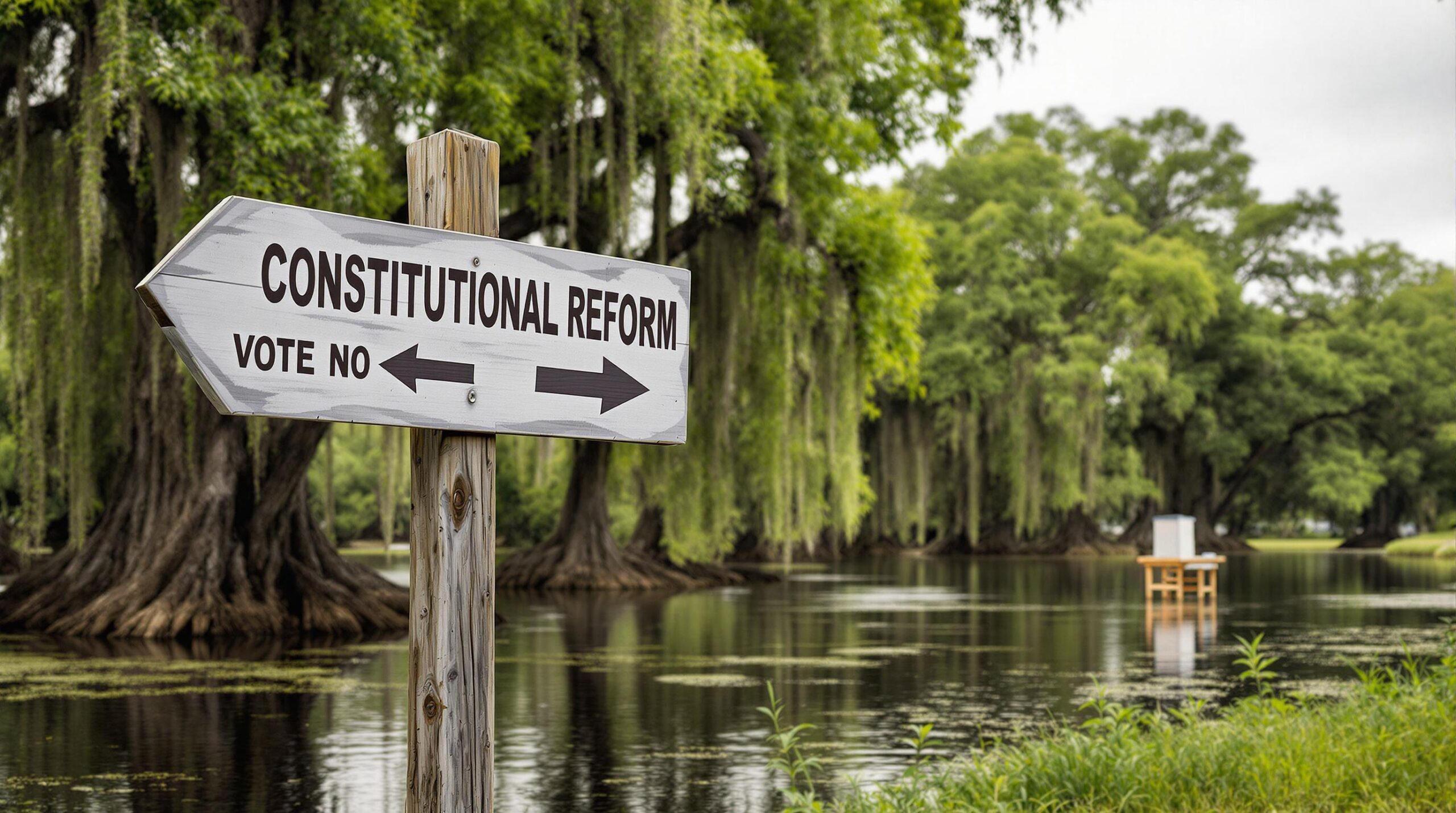
In a resounding statement on governance and reform, Louisiana voters handed Governor Jeff Landry a pointed defeat, decisively rejecting all four of his proposed constitutional amendments by significant margins. Viewed as a referendum on both the policies and the political approach of the conservative governor, the vote underscores the challenges conservatives face when citizens mobilize behind progressive values of transparency, justice, and economic equity.
Tax and Budgetary Restructuring Faces Firm Rejection
One of the more complex—and controversial—measures was Constitutional Amendment 2. It proposed a significant overhaul of Louisiana’s tax and budgetary system, aiming to liquidate several education trust funds to offset roughly $2 billion in public school system debt. This amendment would also restrict annual state budget increases, reduce the maximum income tax rate, and complicate enacting new taxes.
Critics fiercely opposed the amendment, branding its approach as convoluted and arguing it risked undermining long-term educational funding. Indeed, education advocates sounded alarm bells, cautioning voters that tapping into trust funds would significantly weaken public schooling’s fiscal stability, imperiling generations of future learners.
Voters heeded these warnings, rejecting Amendment 2 by a convincing margin, with more than 62% voting ‘no.’ This strong show of dissent sends a clear message that short-term fiscal maneuvers that jeopardize long-term educational sustainability are unacceptable.
Justice and Judicial Reform Proposals Crumble Under Scrutiny
Substantial opposition similarly arose against Constitutional Amendment 1, which sought to allow the legislature to establish specialized courts beyond traditional geographic boundaries and grant more power to the Louisiana Supreme Court in supervising out-of-state attorneys. Although proponents claimed this measure would increase judicial efficiency and accountability, voters cited concerns about potential judicial overreach and unfair procedural practices, rejecting this amendment by a margin of 64% to 36%.
Complementing this was Amendment 3’s proposed expansion of crimes for which minors could be automatically tried as adults. Progressive voters, guided by a broad consensus among juvenile justice reform advocates, argued strongly that increased prosecutions of juveniles as adults do little to curb crime and instead exacerbate systemic inequities within the justice system. The amendment’s defeat, with roughly two-thirds voting against, signifies a powerful rebuke of harsh punitive measures against youth.
Louisiana voters’ collective rejection displays a clear unease about the notion of broadening judicial authority and increasing punitive measures without addressing underlying root causes—an endorsement of fairness over retribution, rehabilitation over punishment.
Governor’s Power Faces a Public Reckoning
The sweeping rejection reflects more than policy disputes—it signals an increasing dissatisfaction with Governor Landry’s governing style itself. Known for bold and sometimes aggressive tactics in pushing conservative policies, Landry faced serious scrutiny at the ballot box. The overwhelming rejection of his four constitutional changes serves as a clear message from voters; they are demanding thoughtful, equitable policies over partisan maneuvers.
This defeat arrives early in Landry’s term, suggesting it may weaken his political position going forward. It also raises critical questions about the governor’s legislative approach. Will he recalibrate and seek broader bipartisan coalitions, or double down on contentious, divisive strategies?
“This is not the end for us; we will continue to fight to make generational changes for Louisiana to succeed,” Governor Landry responded defiantly post-election.
Yet, with turnout exceeding 21%, significantly strong for off-cycle elections, voters have clearly demonstrated they are paying attention—and they demand approaches that embody accountability, transparency, and collective prosperity.
Louisiana’s electorate has spoken loud and clear: constitutional amendments that appear to obscure transparency or threaten fair judicial practices will face heavy public scrutiny and opposition. Landry, and indeed all political leaders in Louisiana, would do well to heed this powerful public sentiment. The message is simple yet profound—transparent governance, equitable policy-making, and long-term sustainability must guide the state’s future.
