
When Wilmer Escaray arrived from Venezuela in 2007, he saw Miami’s vibrant neighborhoods as a land of opportunity, a chance to rebuild away from the daunting economic collapse of his home country. Just six years after enrolling at Miami Dade College, Escaray opened his first restaurant—today, he owns a dozen thriving businesses, hiring dozens of Venezuelan migrants who share his past experiences and aspirations. Now, those hardworking individuals face an uncertain future as the Trump administration’s recent immigration crackdowns dismantle the very protections allowing their presence in the United States.
The End of an Era in ‘Little Venezuela’
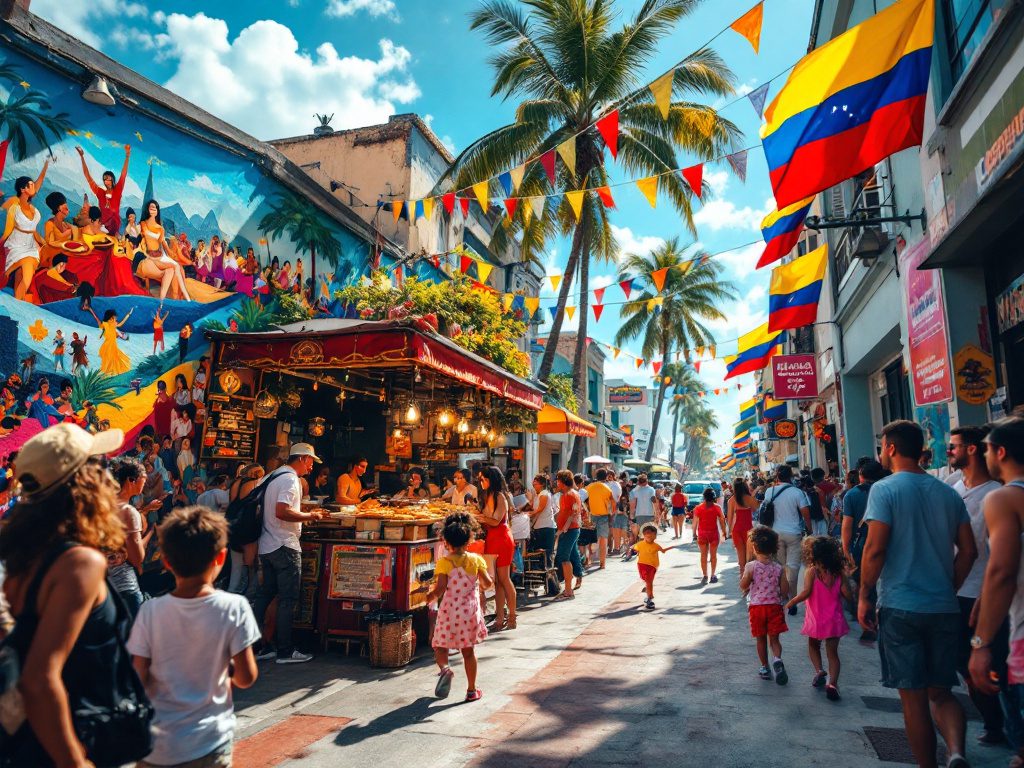
The neighborhood of Doral, affectionately called “Little Venezuela,” is the heart of the Venezuelan community in Miami, a vibrant district filled with smells of traditional foods like arepas and the cacophony of Spanish-language chatter. But the recent decision by the Trump administration, terminating two critical federal immigration programs, has created a stark tension beneath this colorful surface. A legal shield that allowed more than 700,000 Venezuelans, along with thousands of Cubans, Haitians, and Nicaraguans, to reside and work legally in the U.S. has vanished, leaving families in limbo, vulnerable to deportation and instability.
“Venezuelans are worried,” said Frank Carreño, President of the Venezuelan American Chamber of Commerce. He explained how many of these migrants, having escaped political upheaval and economic despair, possess no desire or means to return to their troubled homeland. This isn’t a scenario fueled solely by economic fears—Venezuela’s current humanitarian and political crisis under Nicolas Maduro’s authoritarian regime has produced hyperinflation, food shortages, and widespread violence, making the prospect of returning not just unattractive, but outright dangerous.
Local Leaders Confront a Looming Humanitarian Crisis
Doral’s Mayor Christi Fraga is among local officials alarmed at these developments. Highlighting the cohesive community Venezuelans have become in South Florida at a recent press conference, she stressed the vital economic and social role these migrants play in districts like Doral. She insisted that the U.S government should provide solutions: “These families do not want handouts, they want an opportunity to continue working, building, and investing in the United States.”
“These families do not want handouts, they want an opportunity to continue working, building, and investing in the United States.” — Doral’s Mayor Christi Fraga
Indeed, Doral thrives economically precisely because of immigrant innovation, entrepreneurship, and investment. Both longstanding locals and recent arrivals worry about economic consequences if mass deportations ensue, stripping neighborhoods of their businesses and workforce overnight.
Cesar Mena, a local resident who previously cast a vote for President Trump, shares the concerns surprisingly common among conservative constituents of the area. Seeing friends and family affected has shifted his opinion, reflecting an emerging internal conflict among many Republican voters in immigrant-rich areas. “I feel bad for them,” he admitted poignantly, “but it’s a temporary situation, and you need to resolve the problem.” His sentiments highlight how personal narratives often clash with anti-immigration policies politically attractive in broader conservative platforms—but destructive at ground zero.
Political Fallout: Will Republicans Respond?
Notably absent—or cautiously silent—are many Republicans who have long enjoyed support from Miami’s Venezuelan enclave. This community, traditionally sympathetic to GOP anti-socialist stances linked rhetorically to Venezuelan politics, now finds itself betrayed and faced with an acute dilemma. Yet, some Florida Republicans like Congress members Mario Diaz-Balart and María Elvira Salazar have spoken out against these deportations, urging the Biden administration and their colleagues within the GOP to act compassionately towards Venezuelan migrants who embody conservative work ethics and entrepreneurism. Their calls reflect recognition, however hesitant, that pushing out enterprising, community-oriented individuals is economically irrational and morally indefensible.
A federal court has temporarily extended protections as lawsuits move through judicial processes, offering short-term relief but scant comfort. Without long-term, humane solutions, the potential exodus or forcible removal of over half a million migrants remains a realistic threat.
You have to wonder—are Republicans ready for the economic and political fallout from abandoning an immigrant community that contributes so richly to the American social fabric?
The uncertainty is palpable in the streets of “Little Venezuela,” where Escaray’s restaurants continue serving food under a shadow of profound uncertainty. Venezuelan migrants, who left behind countless hardships seeking safety, dignity, and opportunity, now face an entirely new struggle—a crisis created not by dictators abroad, but by policymakers here at home.
