
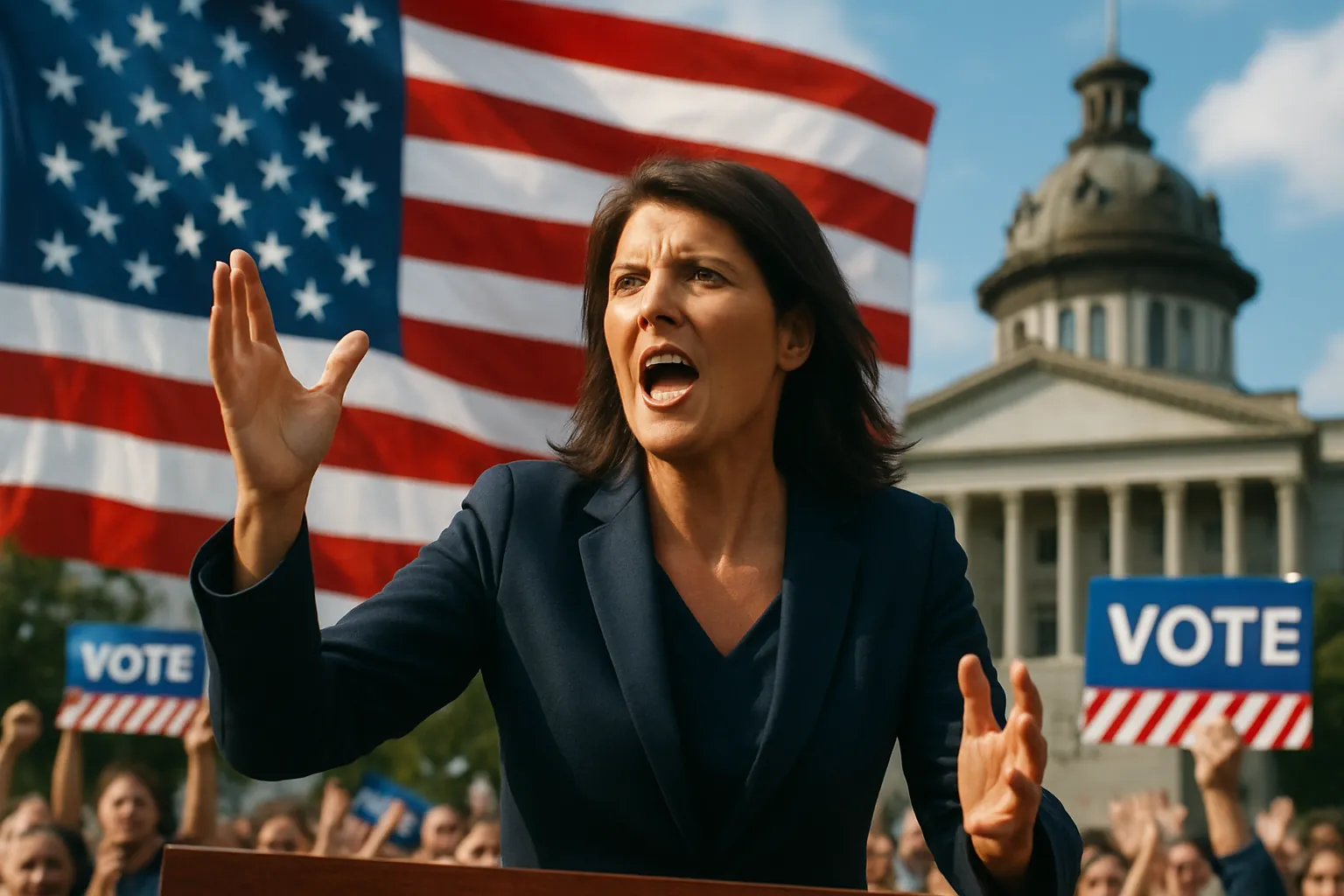
Storming the Citadel: Nancy Mace’s Theatrical Bid for Power
Late Sunday evening, as the moon hung heavy over Charleston, Rep. Nancy Mace flipped the switch on her political fortunes with a video titled “Huge MAGA Announcement.” The message wasn’t subtle and neither was the setting. Choosing The Citadel—her alma mater and a landmark scarred with lost traditions—Mace declared her entry into the 2026 South Carolina gubernatorial race. There, she not only invoked her distinction as the first female graduate of The Citadel’s Corps of Cadets, but also signaled a breakneck turn toward the hard-right orthodoxy that has come to define the Republican Party in the Trump era.
Why launch at The Citadel? For Mace, the answer is as much about symbolism as strategy. Framing herself as a “fighter” and “trailblazer,” Mace hopes to extend her narrative as a political outsider and battler—despite her status as a three-term Congressional insider and seasoned Capitol Hill player. Yet, beneath the pageantry, her campaign announcement revealed sharper edges. “We’re going to drag the truth into the sunlight and flip the tables if that’s what it takes,” Mace promised, echoing phrases as familiar to Trump loyalists as the red ball caps at his rallies.
For many South Carolinians, especially those who have watched Mace’s ideological journey, the moment is fraught with tension. Mace has morphed from a 2016 Trump campaign worker to a post-Jan. 6 critic and back again to a self-declared MAGA warrior. Now she joins a packed Republican field—one that notably includes Attorney General Alan Wilson and Lt. Gov. Pamela Evette—with each candidate jostling to wear the Trump mantle most convincingly, regardless of uncomfortable past departures from loyalty.
The Trump Effect: Loyalty Tests and the Cost of Imitation
What does it mean for South Carolina’s future that its leading gubernatorial contenders are racing to prove their MAGA credentials? If Rep. Mace’s announcement is any indication, the coming campaign will pivot around cultural grievances, punitive policy pledges, and heated displays of allegiance to Donald Trump. In her debut, Mace boasted of early and vigorous support for Trump, even highlighting an ABC News settlement—reportedly $15 million to Trump’s presidential library—as a vindication of her willingness to “defend” him on national TV. Every visual element of her announcement, from updated campaign graphics to a header image with the former president, operates as a not-so-quiet dog whistle to Trump’s staunchest supporters.
Mace’s campaign is built on platform planks forged in the fires of conservative backlash politics. She calls for restoring “law and order,” eliminating South Carolina’s income tax, overhauling a judicial system she claims is rife with “corruption,” and combating “woke ideology” in schools. Critics have flagged many of these priorities as dogmatic, short on detail and decoupled from the complex, intertwined realities of South Carolina’s diverse communities.
A closer look reveals deeper cracks in these appeals. Mace’s public criticism of Attorney General Alan Wilson for allegedly cutting “sweetheart deals” for child molesters—citing the infamous case of Donald Gresh—raises questions about prosecutorial decision-making. But experts warn against using extreme cases for political point-scoring. Law professor David L. Wilkins, writing for the South Carolina Law Review, cautions, “When politics mixes with individual cases, the very integrity of the justice system is at risk.” The atmosphere of mutual accusation among Republicans foreshadows a primary likely to be bruising on both the candidates and public trust.
“When a candidate promises to ‘flip the tables,’ the real question we must ask is: Will these political theatrics address the state’s urgent needs or merely inflame our divisions?”
Contrast the campaign rhetoric with what South Carolinians say they want. A 2023 Pew Research Center report found strong public demand for improved public education, affordable health care, and genuine economic opportunity—much less appetite for scorched-earth cultural battles or tax cuts that disproportionately benefit the wealthy. The gap is stark, and it’s widening, as Mace and her rivals escalate the rhetorical arms race.
Culture Wars, Women’s Rights, and the Progressive Crossroads
Many will note the profound contradiction at the heart of Mace’s campaign: as the first woman to graduate from The Citadel’s Corps of Cadets, she is a living example of breaking barriers that conservative orthodoxy once sought to preserve. Yet her recent positions—opposing transgender rights, supporting mass deportation, and promising to root out “woke ideology”—align her more closely with the cultural rollback agendas that threaten to squeeze out South Carolina’s growing diversity.
The reality for progressives and moderate voters could not be clearer. The field’s near-total embrace of Trumpism leaves little room for nuanced debate on reproductive rights, systemic inequality, or concrete improvements to public education. When candidates deride “wokeness” while promising school “overhauls,” what are they really pledging? As education policy expert Dr. Gloria Boutte of the University of South Carolina notes, “Invoking ‘woke’ as a pejorative is a smokescreen—these are policies that risk erasing hard-won inclusivity and critical thinking from our classrooms.”
Is there hope for a different kind of conversation in South Carolina? History provides little comfort. The state’s last truly competitive governor’s race was over 16 years ago, a time when bipartisan debate, though far from perfect, still allowed for a broader swath of perspectives. Now, with Democrats all but silent and the Republican field crowded with echo chambers, the stakes feel existential—not just for the Palmetto State’s politics, but for its very identity.
The cost of escalating cultural polarization is measured not just in votes, but lives and livelihoods. Voters deserve candidates whose vision extends beyond allegiance tests to the hard, essential work of governance. Ignoring this call risks leaving communities further divided, progress further delayed, and the state’s promise—embodied imperfectly, perhaps, by The Citadel’s shifting legacy—on uncertain ground.
