
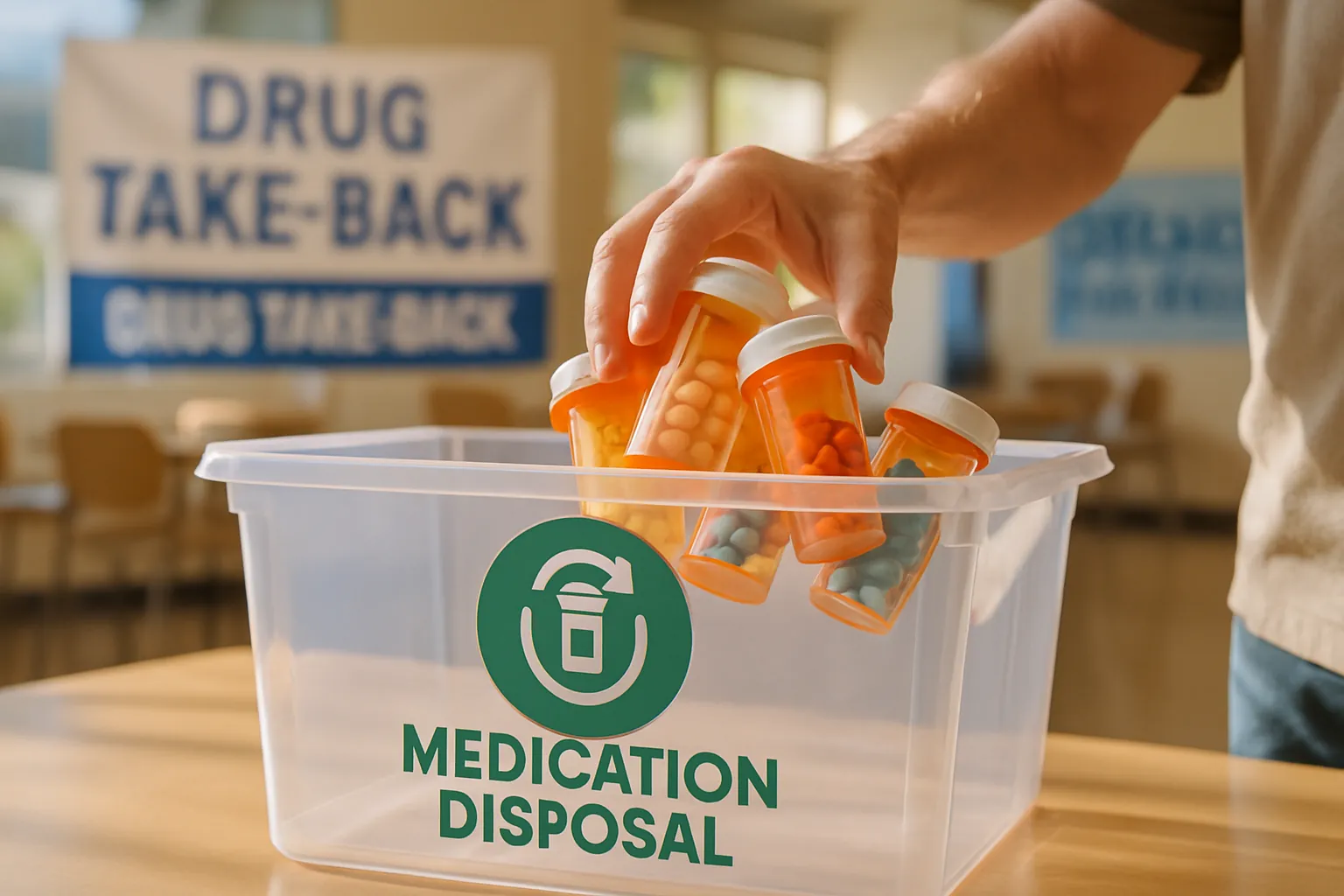
Tackling a Hidden Threat: Why Drug Take Back Day Matters
Picture a suburban kitchen. In the back of a cabinet sits a bottle of unused painkillers, long forgotten after a knee surgery. For many Americans, these remnants of past illnesses quietly accumulate, lulling us into a false sense of security. Yet, according to the CDC, prescription drug misuse remains a leading driver of opioid addiction and accidental poisoning deaths in the United States. This is the sobering backdrop to the National Prescription Drug Take Back Day, which returns on October 25, 2025, as communities nationwide unite in a quiet, urgent battle to rid homes of unneeded medications.
The initiative—led by the U.S. Drug Enforcement Administration (DEA) and thousands of law enforcement agencies—aims to make it easy for ordinary people to safely turn in expired, unused, or unwanted prescriptions. In Illinois, police departments from Arlington Heights, Northbrook, and Glenview will open their doors to the public, offering a secure, judgment-free space to drop off medications between 10 a.m. and 2 p.m. Northbrook’s collection point is set at 1401 Landwehr Road, while Glenview will operate out of 2500 E. Lake Ave.
This effort is far from ceremonial. The stakes are immense. “Unused medications in homes create a public health and safety concern, because they are highly susceptible to diversion, misuse, and abuse,” notes the DEA in its annual report. The organization’s data backs this up: Over 620,000 pounds of unwanted medications were collected nationwide during the previous Take Back Day in April 2025, a number that’s both inspiring and unsettling in its reflection of just how much pharmacological excess exists behind American doorways.
Beyond Law Enforcement: Communities, Coalitions, and Real Impact
If the opioid epidemic has taught us anything, it’s that a patchwork approach falls dangerously short when it comes to public health crises. Local efforts succeed when they’re backed by coordinated state and national action. Nowhere is this more evident than in Arkansas, where the Drug Take Back Day reflects a partnership not just between police, but a suite of agencies: the Arkansas Opioid Recovery Partnership (ARORP), Arkansas State Drug Director’s Office, Arkansas Sheriff’s Association, Arkansas State Police, and the Counterdrug Joint Task Force of the Arkansas National Guard.
Since launching its own Drug Take Back initiative in 2010, Arkansas has collected more than 329 tons—that’s over 658,000 pounds—of prescription drugs. This isn’t just about numbers. Each bottle turned in is a victory for prevention. According to the Arkansas State Drug Director’s Office, nearly 300 permanent drop boxes now blanket the state, ensuring residents don’t have to wait for a special event to safely discard their prescriptions. The user-friendly ReviveAR app and simple zip code search tools are making it easier than ever for residents to locate drop-off points.
“Unused prescription drugs are an enormous, largely preventable threat to our communities—not just for those battling addiction but for curious teens, small children, and even our water supply. Every pill turned in is a step toward a safer, healthier future.”
Beyond that, data from the Substance Abuse and Mental Health Services Administration (SAMHSA) underscores that the majority of people who misuse prescription drugs obtain them from friends or family—often without their knowledge. Disposing of unneeded Medications directly cuts off a major supply route for potential misuse. It’s common sense, but it’s also science-backed harm reduction.
The environmental angle cannot be ignored. EPA studies warn that flushing drugs or tossing them in the trash introduces pharmaceutical contaminants into groundwater and surface water, creating ripple effects that threaten both ecological and human health. Secure disposal prevents this quiet pollution.
A Call to Action: Policy, Responsibility, and Progressive Solutions
Conservative narratives often frame the opioid crisis around personal responsibility or criminal culpability—but neglect the massive accountability of pharmaceutical companies and policy architects who allowed this crisis to bloom. Dismissing institutional accountability leaves communities with less effective solutions and places the onus entirely on individuals, rather than on systemic reforms that address the root causes of addiction and medication over-prescription.
Progressive public health advocates urge a broadened view. Dr. Sarah Wakeman, addiction medicine director at Massachusetts General Hospital, highlights that, “harm reduction and preventative efforts must be at the center of opioid policy if we are to save lives and restore communities.” Take Back programs are one crucial piece of a larger puzzle—complemented by accessible treatment, expanded mental health care, and aggressive regulation of prescription practices.
The results are clear. By supporting Take Back events—showing up at your local drop site or encouraging a neighbor—you cut off the pipeline of unused medication that leads to addiction, overdose, and environmental harm. These events create an entry point for critical conversations about drug safety, substance use, and community well-being. According to a recent Pew Research study, seven out of ten Americans support permanent prescription drug disposal sites in their communities—a rare political consensus in a divided era.
The fight against the opioid epidemic cannot be won in a single day, but collective action leads to lasting impact. October 25 may only span four hours, yet the ripple effect of those hours touches lives all year. Whether you’re cleaning your medicine cabinet or helping spread the word, the power to protect your community truly is in your hands.
Communities that prioritize equity, holistic health, and environmental protection are laying the groundwork for a more just and resilient society. On National Prescription Drug Take Back Day, the small act of returning unwanted pills becomes a profound expression of that commitment.
