
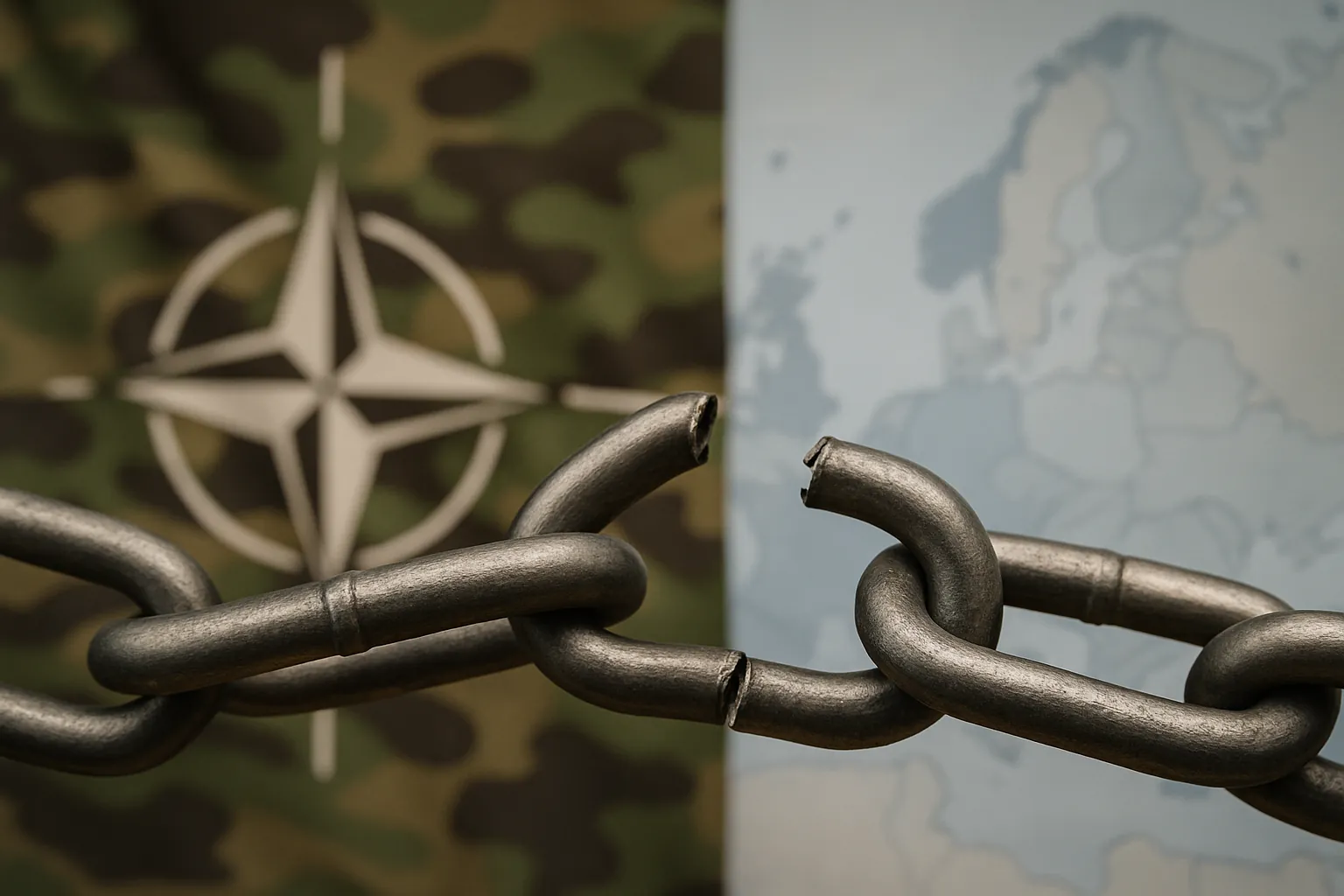
The Question NATO Won’t Answer: Ukraine’s Place in the Alliance
On the eve of the NATO summit in The Hague, a conspicuous silence echoes across diplomatic corridors: Ukraine’s possible membership—the issue that has, for years, defined the fault lines between democratic aspiration and authoritarian pushback—will not grace the final declaration. Insiders confirm the omission is no accident. Leaders, wary of inflaming divisions, have chosen unity over clarity. Yet this calculated ambiguity comes at a cost, especially for a nation under siege.
Why choose to sidestep such a pivotal subject when Ukrainian cities are still under attack and civilians have paid the ultimate price for aligning with Western values? According to sources cited by AFP and European diplomats speaking anonymously, NATO’s “don’t ask, don’t tell” maneuver is less about principle and more about preserving a fragile internal cohesion, as tensions between Washington and EU capitals simmer.
NATO Secretary-General Mark Rutte’s official invitation for Ukraine to attend did little to quell speculation. Asked directly about President Volodymyr Zelensky’s presence, Rutte demurred, suggesting, “More details will be released later.” The symbolism is striking: Ukraine is welcome at the table, but only as a guest, not a partner in shaping the menu.
This unwillingness to address, let alone resolve, Ukraine’s NATO aspirations underlines a pressing reality. Volodymyr Horbach, Executive Director of the Institute for North Eurasia Transformation, bluntly states, “Fear and paralysis over Russian aggression still prevail in NATO.” His critique isn’t reserved for former President Donald Trump, but spans administrations including George W. Bush, who despite voicing support, never stamped a date on Ukraine’s accession. In Horbach’s view, an earlier commitment could have blunted Russian expansionism from the onset.
Unity or Uncertainty? The Consequences of U.S. Hesitancy
So, what drives this reticence? A closer look reveals that the alliance’s reluctance reflects deep-seated anxieties about provoking Vladimir Putin’s Russia. For the White House, there is also the looming specter of domestic politics, amplified by the polarizing voice of former President Trump. Trump’s outright opposition to Ukraine’s NATO trajectory—recently echoed in campaign speeches—puts nervous pressure on an alliance not eager to splinter ahead of U.S. elections or amid rightward political shifts in Europe.
Yet, history tends to show that kicking the can down the road rarely yields strength or stability. In 2008, when NATO first floated the idea of Ukrainian membership, the alliance’s tepid language gave Moscow all the ambiguity it needed. Months later, Russia invaded Georgia; years later, Crimea fell. Harvard historian Serhii Plokhy reminds, “Ambiguity in collective defense emboldens authoritarian actors.” This isn’t just bad optics—it’s a dangerous precedent for any nation relying on the West’s word as deterrence.
For this summit, the main event isn’t eastward expansion—it’s appeasing demands for higher defense spending. “NATO today is laser-focused on giving President Trump what he wants—bigger budgets from European capitals—not advancing the cause of those fighting for democracy at its borders,” comments Elisabeth Braw, senior fellow at the Atlantic Council. That focus, while perhaps expedient for short-term unity, leaves Ukraine in geo-strategic limbo.
Complicating matters, the U.S. continues to send mixed messages. Secretary of State Marco Rubio disputed claims that Washington is against involving Zelensky in the summit, affirming Ukraine’s inclusion in the event. Yet, as reporting makes clear, the summit will feature little more than symbolic appearances, devoid of substantive negotiations about membership or fresh aid. NATO doesn’t plan any new financial commitments to Ukraine during or after the summit, making the invitation feel more like window dressing than a step toward solidarity.
“The symbolism is striking: Ukraine is welcome at the table, but only as a guest, not a partner in shaping the menu.”
What message does this send to Kyiv, to Moscow, or to populations stuck between grinding conflict and Western promise? The absence of forthright action feeds not only Russian narratives of Western weakness but also Ukrainian doubts about the West’s resolve.
The Risks of Silence: Lessons From History—and the Road Ahead
Beyond the diplomatic stagecraft, the choice to keep Ukraine’s NATO hopes off the summit agenda signals both a crisis of confidence and a political calculation. NATO policymakers are haunted by the specter of escalation, but they must also reckon with the corrosive effects of hesitation. As the late Senator John McCain once warned, “Half measures in the face of aggression serve only to invite more.” That lesson, lost amidst the current chorus of caution, resonates too clearly in Kyiv’s battered neighborhoods.
The sharp divide in the alliance reflects not only U.S.-EU frictions but also faltering American leadership on the world stage. Emily Harding of the Center for Strategic and International Studies observes, “The U.S. decision to back away from firm commitments on Ukraine is more about internal paralysis than external threats.” The risk is that in seeking to avoid controversy today, NATO lays the groundwork for greater instability tomorrow. Failure to offer clarity emboldens Moscow and undermines Europe’s long-term security.
To be sure, the stakes for Ukraine are existential, but the risks for NATO are strategic—and moral. Guarantees made and deferred erode trust. As NATO pivots the spotlight to defense budgets, the cost of its indecision may be measured not just in dollars, but in democracy’s durability at Europe’s edge.
Many progressive voices, both in Europe and across the Atlantic, argue for a more courageous, values-driven response, one reflecting not just realpolitik but the founding commitments of the alliance itself: mutual defense, the promotion of freedom, and an unerring stance against autocratic aggression. As the summit closes with little more than careful, cautious consensus, the world is once again asked to witness the enduring struggle between fear and principle.
