
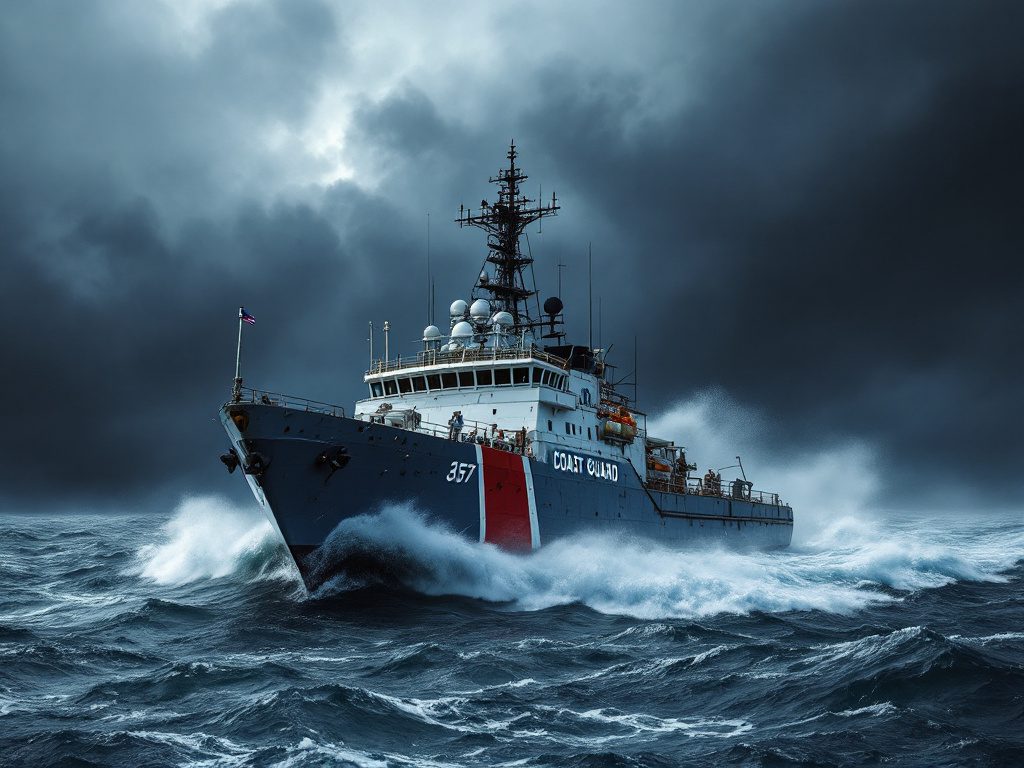
The ebb and flow of migration and drug trafficking can be hard to predict, and the United States Coast Guard is demonstrating its flexibility by significantly intensifying its maritime border security efforts. With a steep decline in illegal land crossings at the U.S.-Mexico border, the Coast Guard has shifted resources to take on maritime routes where human smugglers and drug traffickers are increasingly operating. Recent activities off the coast of San Diego and plans for expanded capabilities on Guam exemplify this strategic pivot toward tighter maritime protections.
Stemming the Tide in San Diego
Since late January this year, Coast Guard District Eleven has notably increased its efforts, evidence of which is reflected in a 75% increase in illegal alien apprehensions along the southern maritime border. This enhanced enforcement comes from tripling operational manpower and intensifying coordination with partner agencies such as Customs and Border Protection.
Chief Peter Nelson, responsible for operations against maritime smuggling near San Diego, has registered serious concerns about the escalating aggressive behaviors smugglers exhibit during confrontations. Incidents include smugglers deliberately “driving their vessel into the side of our boat” and physically throwing defensive objects at the Coast Guard personnel, underscoring the bold moves smugglers are willing to make for financial gain.
In response, Coast Guard units now adhere strictly to a three-step protocol: verbal warnings, followed by warning shots, and finally disabling boat engines with measures like pepper balls. The emphasis remains on ensuring safety—both for officers undertaking these hazardous missions and the desperate individuals putting their lives at risk through these perilous voyages.
Chief Nelson emphasizes that air asset support from partner agencies like Customs and Border Protection has significantly enhanced their capabilities, strengthening situational awareness and enabling more effective interception of suspected vessels.
Guam’s Strategic Shift in Focus
Far from the Californian coastline, advancements are also occurring on Guam, strategically important for broader American maritime security. The U.S. Coast Guard there is anticipating the arrival of at least two new cutters, USCGC Vincent Danz and USCGC Jeffrey Palazzo by the end of 2026. These cutters will augment U.S. Coast Guard Forces Micronesia’s existing fleet of three vessels.
Chief Warrant Officer 2 Sara Muir of the Coast Guard outlined the pragmatic considerations shaping these developments, noting that the Coast Guard has pragmatically adjusted its priorities towards U.S. domestic security and maritime borders, emphasizing realistically, “we can’t always focus on all the missions all the time.”
This honest acknowledgment highlights the logistical balancing act and strategic choices military and enforcement agencies continuously need to make. However, such new cutters provide enhanced capabilities and deployment versatility crucial for achieving greater maritime security and fostering beneficial regional alliances.
A Battle Against an Insidious Threat
Beyond human smuggling, the Coast Guard has also ramped up operations combating drug trafficking—particularly the deadly synthetic opioid fentanyl. Its increasing prevalence is noted as “an urgent threat to the American people,” highlighting an even grimmer aspect of maritime smuggling operations. Fentanyl’s high potency and propensity to cause overdose deaths underscore the desperate urgency driving Coast Guard interventions at sea.
The noticeable uptick in Coast Guard vehicular stops, from a projected 561 for fiscal year 2024 alone, marks just how taxing this multifaceted mission has become. Coast Guard personnel face persistent risks, tactical challenges, and the moral responsibility of saving lives endangered not only by human traffickers but by contraband drugs like fentanyl.
“With maritime routes becoming preferred channels for smuggling, the Coast Guard’s increased operational capabilities are critical in thwarting the dual threats of migrant exploitation and deadly drug distribution.”
Taken together, these developments in maritime security strategy signify a resilient adaptation by the U.S Coast Guard, ensuring that America’s porous maritime boundaries no longer remain exploitable vulnerabilities. The heartfelt commitment to protecting lives—both those of courageous officers at sea and innocent civilians onshore—remains at the forefront of every initiative.
In these turbulent waters, the vigilance and determination by Coast Guard personnel offer incredible reassurance, making a clear statement that humanitarian instincts and strict law enforcement can effectively coexist. Yet these efforts vividly remind us the path ahead remains complex, laden with challenges demanding collective and coordinated responses well beyond patrol boats and airborne surveillance alone.
