
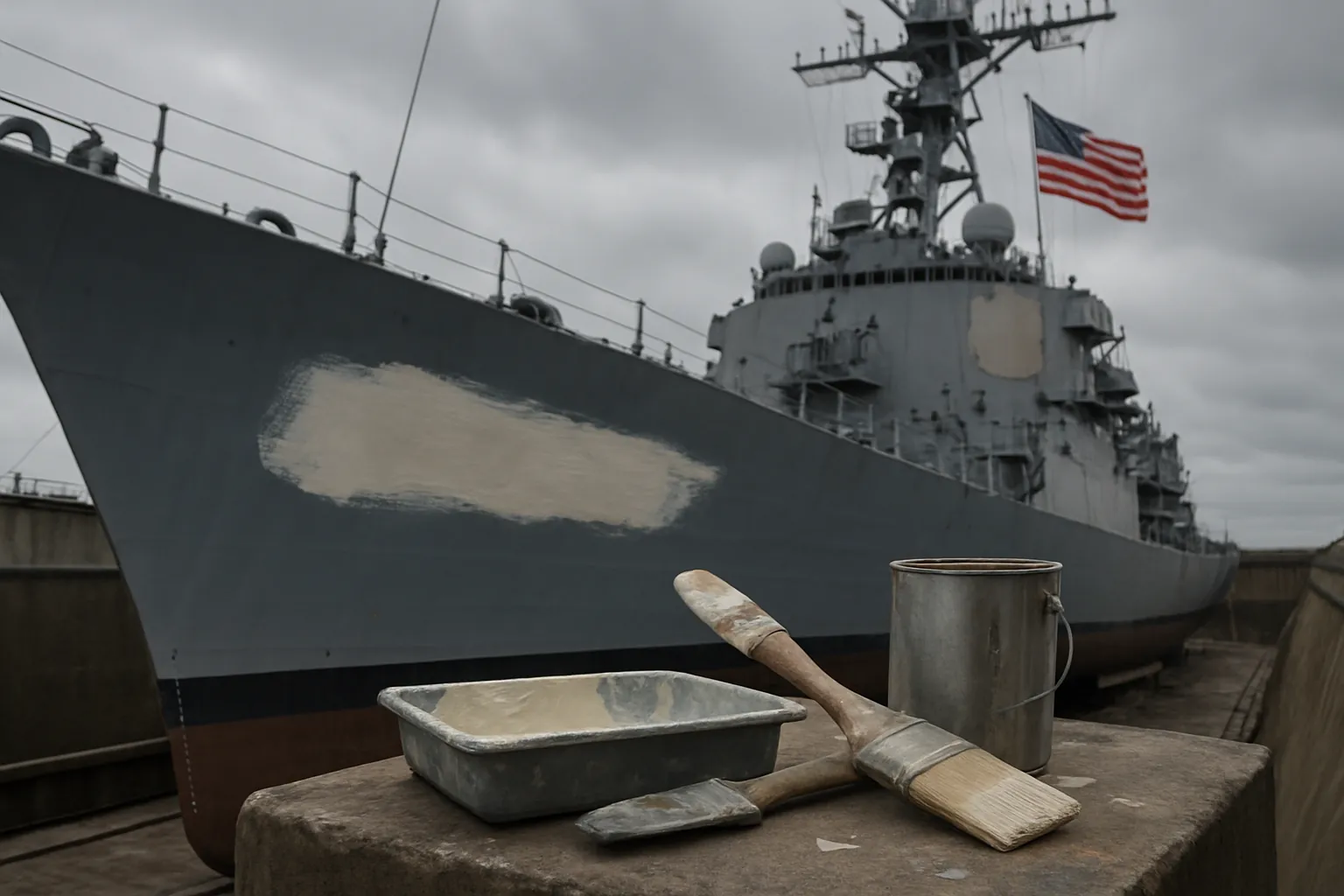
Erasing a Legacy: Harvey Milk’s Name Removed from Navy Ship
A decision that seemed almost tailor-made to ignite controversy landed with a thud last week, as Defense Secretary Pete Hegseth announced the renaming of the USNS Harvey Milk. Where once the hull bore the name of the pioneering gay civil rights activist and Navy veteran, it now reads USNS Oscar V. Peterson—honoring a World War II Medal of Honor recipient. Unveiled with the stated aim of “taking the politics out of ship naming,” Hegseth’s move cast not just a shadow over naval tradition, but a troubling message about whose stories are allowed visibility in America’s armed forces.
The decision rewinds years of progress toward recognizing soldiers whose struggles weren’t just on the battlefield, but also in the fight for equality. Harvey Milk, forced to accept an “other than honorable” discharge simply for being gay, became the first openly gay elected official in California. His assassination in 1978 cut short a life dedicated to breaking barriers—a part of American history that, for many, belongs in the fabric of national honor as much as battlefield valor does.
Each new christening and rechristening of a Navy ship is more than administrative shuffle. It signals to thousands who serve, and millions watching, whose service is seen and valued. Hegseth’s decision, rolled out conspicuously during LGBTQ Pride Month, did not go unnoticed. According to Rep. Nancy Pelosi, who called the move “vindictive erasure,” the attack on Milk’s legacy follows a pattern.
Backlash and the Battle for Representation
A closer look reveals that the choice to rename the USNS Harvey Milk is as political as any made in recent memory. Grit and heroism are not mutually exclusive with advocacy for justice. As historians and veterans alike have pointed out, military tradition is steeped in evolving ideas about whose service is heroic. The Obama-era policy that originally named the oiler after Harvey Milk reflected a growing willingness to acknowledge courage outside of combat—recognizing the depth of sacrifice made by those who fought, and still fight, for equality within the ranks.
Current and former military leaders, including those who served under Milk-era policies, have voiced disappointment. New York Democrat Ritchie Torres slammed the move as “discrimination dressed up as neutrality.” LGBTQ advocacy groups, along with prominent figures like former Navy Secretary Ray Mabus (who initially named the ship after Milk), see these actions as more than symbolic: they are steps to make the military less inclusive, less reflective of the nation’s great diversity.
Harvard historian Timothy Stewart-Winter explains, “What’s erased here isn’t only Harvey Milk’s name, but the recognition that acts of courage—moral, social, and political—are vital to our military’s evolution. By narrowing honor to battlefield heroism alone, we ignore the broader arc of American progress.”
The announcement comes amid a wider rollback of diversity, equity, and inclusion initiatives in the military—a central plank of the Trump-era campaign now carried on by Hegseth. That effort, according to reporting by Politico and the Associated Press, includes proposals to cut $50 billion in DEI-related programs, and could soon extend to other Navy ships named for civil rights icons. Thurgood Marshall, Ruth Bader Ginsburg, Cesar Chavez, and Medgar Evers are, by Hegseth’s own admission, now under review.
“This isn’t just about a name on a hull. It’s about who we honor and recognize as central to our nation’s values.” — Nancy Pelosi, former Speaker of the House
The Costs of Choosing What—and Who—to Remember
Historical memory is not fixed. In the wake of the Vietnam War, marginalized service members—women, people of color, LGBTQ Americans—fought for both visibility and dignity. Naming a ship after Harvey Milk wasn’t just about correcting the record; it was an affirmation that America’s strength lies in its diversity and capacity for self-critique.
By contrast, the claim of “removing politics,” as Hegseth stated, is itself a political choice—one that marginalizes the already marginalized. Beyond that, the timing points to a calculated messaging effort: this announcement during Pride Month, an occasion meant to both celebrate progress and reckon with unfinished business, telegraphs that certain legacies are seen as disposable, even threatening, by those seeking to “restore the warrior culture.”
Real unity and pride come from inclusivity, not erasure or revision. Imagine the message sent to LGBTQ service members, present and future, seeing the story of Harvey Milk scrubbed from the Navy’s honor roll. For them, Milk’s life was not “just politics”—it was the chiseled stone on which hope was built during some of the nation’s least inclusive decades.
Polls by Pew Research and Gallup demonstrate that a strong majority of Americans support both LGBTQ rights and efforts to broaden historical representation in public life. The Navy’s own recent recruiting challenges could well be exacerbated by such moves, alienating younger generations for whom diversity is non-negotiable. Social justice and military readiness are not diametric opposites. As historian Lillian Faderman writes, “Visibility and respect for all who serve is not political correctness but national maturity.”
Honoring Oscar V. Peterson’s undeniable wartime valor does not require the erasure of Harvey Milk. The two stories, intertwined, could inspire a more honest and inclusive portrait of American heroism. Naming matters. Who we choose to remember, and how, defines the nation we hope to become.
