
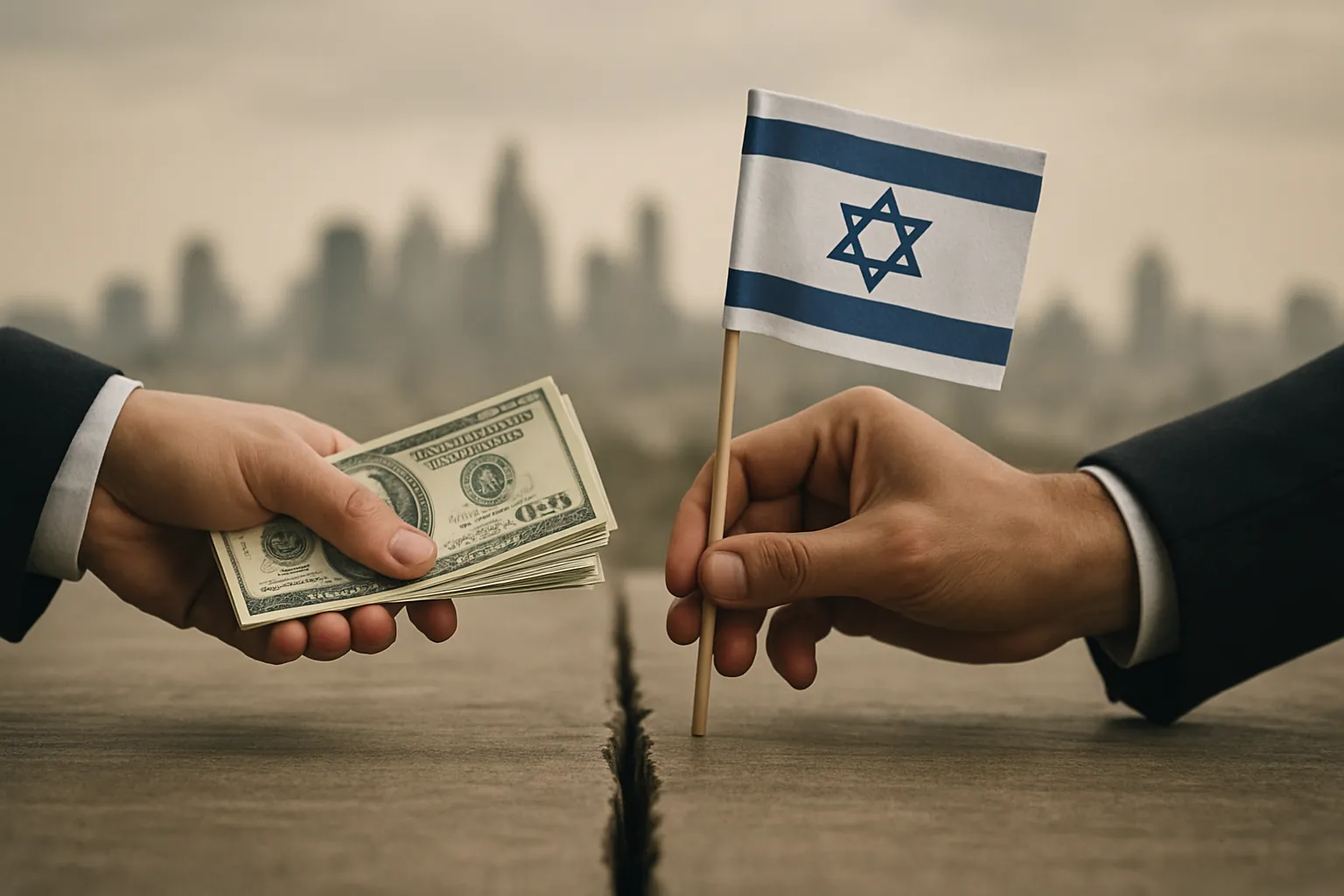
The Rift Behind the Aid: What’s Driving Netanyahu’s Gambit?
Few alliances in modern geopolitics are as storied—or as fraught with tension—as that of the United States and Israel. Even casual observers recognize the handshake deals, red-carpet arrivals, and the all-but-sacred $4 billion in annual U.S. military aid flowing to Jerusalem. Yet, inside a tense meeting of Israel’s Knesset Foreign Affairs and Defense Committee, Prime Minister Benjamin Netanyahu uttered something that’s rattling both Washington and Tel Aviv: the idea that Israel should start “weaning off” U.S. military assistance. These were not off-the-cuff remarks but a strategic signal amid a rapidly shifting diplomatic landscape.
The subtext of Netanyahu’s proposal says as much about domestic politics as it does about international relations. The prime minister is under intense domestic scrutiny for his handling of the Gaza war and his increasingly public disagreements with President Donald Trump’s administration. According to sources cited by The Times of Israel, Trump has reportedly severed direct contact, convinced that Netanyahu was attempting to manipulate him. This dramatic break comes as the two men clash not only on Gaza but also Iran, the Houthi rebels, and what the U.S. views as intransigence over ceasefire efforts.
What’s at stake isn’t just the next round of diplomatic sparring; it’s the very foundation of Israel’s security architecture. For a nation that has molded its defense posture around the expectation of consistent American backing, the notion of phasing out U.S. assistance represents a seismic shift, both symbolically and strategically.
Praise, Pressure, and Posturing: Parsing a Complex Relationship
Beneath the icy exterior of current U.S.-Israel relations lies a labyrinth of grievances, insecurities, and performative gratitude. Only weeks ago, Netanyahu publicly thanked Trump for assisting in the high-profile release of U.S.-Israeli captive Edan Alexander, a reminder that the relationship—while strained—isn’t entirely frayed at the edges. Still, such gestures can’t mask what Harvard political scientist Shibley Telhami describes as an “acute erosion of trust, built up over decades and now unraveling in real time.”
Trump’s envoy to the Middle East, Steve Witkoff, openly accused the Netanyahu government of “drawing out a war the U.S. wants to end.” To many in Washington, these words ring like an indictment—not just of war strategy, but of Israel’s willingness to heed its most crucial ally. This is not the first time a president and an Israeli premier have clashed, but the scale and public nature of the spat are unprecedented in recent memory.
“To walk back from U.S. military assistance would be to signal a transformation in Middle East strategy, but also to risk economic and diplomatic instability,” warns Georgetown’s Professor Tamara Cofman Wittes. “There’s no way to sugarcoat that.”
A closer look reveals that the scriptural framework of American largesse—established since the Camp David Accords and deepened in every war since—was never just about weapons or money. It was about implicit guarantees: a strategic umbrella against existential threats, a lever in Washington’s influence across the region. Now, this intricate ballet is stumbling. The Trump administration’s recent moves—questioning arms transfers, holding back on military hardware, and even skipping high-profile diplomatic visits—are signals of a relationship in uneasy transition.
Beyond Dollars: What Happens if Israel Walks Away?
Beyond that immediate diplomatic drama lies the critical question: Can Israel realistically “walk away” from U.S. aid without triggering a cascade of unintended consequences? Some supporters of Netanyahu’s stance argue that cutting military assistance could encourage self-reliance and stimulate domestic military innovation, as happened when economic aid was phased out more than a decade ago. “It’s about sovereignty—an overdue step,” insisted Likud lawmaker Tzachi Hanegbi during a Knesset debate. But history, and hard numbers, complicate this narrative.
Since the 1970s, the U.S. military aid package has enabled Israel to maintain a qualitative military edge, access top-of-the-line technologies, and deter both conventional and asymmetric threats. According to RAND Corporation analyst Raphael S. Cohen, much of Israel’s procurement is so tightly entwined with American systems that “an abrupt break would threaten readiness, and force years—if not decades—of costly transition.” Even the suggestion of a gradual phaseout, experts caution, could unsettle financial markets and raise urgent questions among Israel’s neighbors about regional power balances.
What’s more, cutting aid doesn’t occur in a vacuum. A swing toward military autonomy could push Israel to seek alternative alliances—most likely with illiberal actors like Russia or China, both eager to deepen their commercial and strategic ties in the Middle East. Is this what advocates of aid reduction truly want? Or is the threat to walk away from U.S. largesse merely a negotiating tactic, meant to extract more favorable terms while playing to nationalist sentiments at home?
U.S. progressives, meanwhile, are grappling with their own misgivings about the status quo. The debate over military aid to Israel—once a third rail in Washington—has entered mainstream discourse. According to a 2023 Pew Research report, a substantial plurality of Democrats now support conditioning or even cutting aid over human rights concerns—a sea change from even five years ago. The humanitarian crisis unfolding in Gaza and growing unease over Netanyahu’s policies have demolished earlier taboos about questioning the aid package.
The broader lesson? Both nations are undergoing their own convulsions about identity and responsibility. Americans, especially those committed to values of justice and equality, are no longer willing to provide unconditional support for actions they find deeply troubling. Israelis face a crossroads: embrace a more independent—if riskier—security posture, or work to restore a partnership that has defined its place in the world for half a century.
