
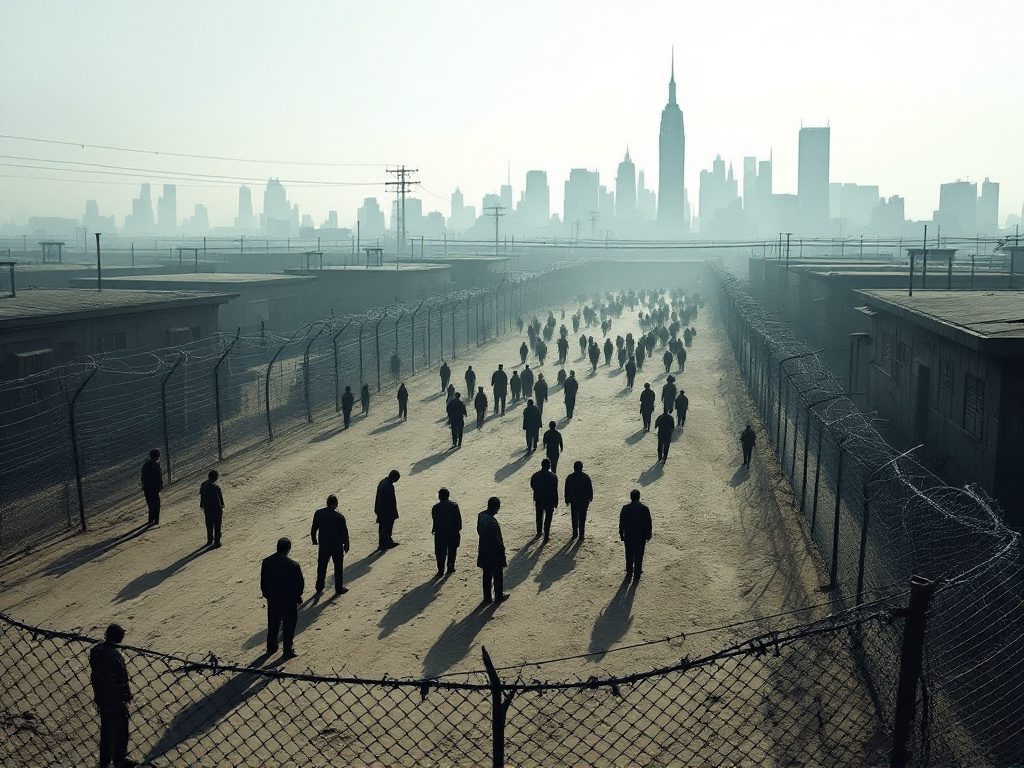
In the heart of a mounting staffing crisis in New York State’s correctional facilities, a controversial new directive has emerged: the early release of certain inmates. Setting off heated debates on public safety and penal reform, the decision by the Department of Corrections and Community Supervision (DOCCS) follows a tumultuous few months, stirred originally by a labor strike aimed at highlighting poor working conditions and untenable forced overtime for corrections officers.
An Unprecedented Staffing Crisis
The current situation stems from a 22-day legal showdown beginning on February 17, during which more than 2,000 correction officers chose to participate in an unsanctioned strike, demanding better working conditions and stable schedules. The state responded harshly, terminating those employees after they refused orders to return—a move casting an aggressive stance against the labor action yet significantly deepening the existing staffing shortages.
The New York State prison system already faced dire staff shortfalls before the strike, with 3,800 vacant positions including 1,900 vital correction officer roles. Now, with the number of active staff dwindling dramatically—from around 13,500 to nearer 10,000—the safety of remaining workers and inmates alike hangs in precarious balance, spurring DOCCS into drastic remedial action.
Balancing Safety and Public Concern
Corrections Commissioner Daniel Martuscello, facing undeniable strains within his department, recently authorized early releases for inmates nearing the end of their sentences. According to new guidelines, inmates within 15 to 110 days of their scheduled release dates are eligible—provided they’ve been convicted of minor offenses, excluding violent felonies, sex crimes, or serious Class A crimes.
In defense of this measure, Martuscello clarified its necessity stating, “in order to have the appropriate balance between the safety and well-being of those working and residing in DOCCS correctional facilities and public safety.” It’s a plea for understanding, reflecting how intricate and desperate the situation within correctional facilities has become.
However, conservatives were quick to criticize this policy. State Senator Dan Stec branded the early release program as a “slap in the face to correction officers,” accusing Governor Kathy Hochul’s administration of turning New York’s criminal justice system into a “national laughing-stock.”
Yet, historically, early inmate releases due to staffing issues have occasionally occurred in various states, and no significant uptick in crime rates directly linked to these practices has been conclusively proven. Successful inmate re-integration often hinges on stable and supportive environments—a factor that New York State appears mindful of by requiring released individuals to have approved residences, explicitly excluding shelters or Department of Social Services placements.
A Lakeside Storm with Far-Reaching Ripples
The administration of Governor Kathy Hochul, wrestling with these challenges, has communicated plans to close up to five correctional facilities. Though the closures are yet to be precisely identified, this initiative underscores the administration’s willingness to tackle systemic issues by streamlining resources, managing workforce shortages responsibly, and potentially diverting funds saved toward rehabilitation programs.
Still, ripple effects from the inmate releases may be profound. Advocacy groups and criminal justice reform proponents see this as an inadvertent step toward rectifying long-standing issues. They argue the crisis highlights chronic problems in the penal system—pointing to overcrowding, excessive sentences for minor offenses, and ineffective rehabilitation methodologies. To them, the recent releases are not merely crisis-driven but a necessary, controversial step towards implementing broader reform.
“The situation lays bare a broken system—one that punishes nonviolent offenders too harshly and systematically underfunds rehabilitation,” says Maria Dominguez, a justice reform advocate from New York Alliance for Prison Reform.
Conversely, progressive critics urge caution—advocating for comprehensive reform rather than rushed, crisis-mode actions. They stress the importance of supportive infrastructure like re-entry programs, mental healthcare services, and employment training to ensure any early release would meaningfully affect long-term outcomes positively.
As these debates continue, they’re bound to confront foundational questions: What purpose should punishment serve in our society? How equipped is our penal system to foster true rehabilitation? And importantly, how should a state responsibly balance immediate crises against long-term systemic reform?
New York’s crisis—both brutal and instructive—may be an alarm bell for a nation grappling with similar crises in countless communities. It remains crucial to watch closely, not just to address immediate challenges but to foster an enlightened approach to incarceration reform for the future.
